Subaru owners in San Antonio deal with a specific mix of stress on their vehicles. Sustained South Texas heat, stop and go traffic on corridors like Loop 1604 and Interstate 410, and suburban short trip driving in neighborhoods like Alamo Ranch all wear on a Subaru differently than they would in a milder climate. Ruben’s Auto Repair has diagnosed and repaired these exact issues across the CVT, Boxer engine, AWD system, and cooling system on Subarus throughout the San Antonio area.
This guide walks through the major systems and ownership decisions that matter most for a locally driven Subaru. Each section below covers a topic at a high level and links out to a full breakdown, so you can go deeper on whichever issue actually applies to your vehicle.
What This Guide Covers
- CVT and AWD drivetrain wear specific to San Antonio driving patterns
- Boxer engine oil consumption and leak related issues
- Cooling and climate control performance under sustained heat
- Electronics, sensors, and safety system reliability
- Maintenance timing built around real San Antonio commute routes
- Ownership costs, resale value, and long term repair decisions
- Smart diagnostics and connected vehicle technology
Drivetrain and Transmission Health
A Subaru’s CVT and Symmetrical AWD system carry most of the burden of San Antonio’s stop and go traffic. Sustained heat and repeated merge and brake cycles on routes like Highway 151 and Loop 1604 wear these components faster than steady highway driving would. Catching that wear early usually means the difference between a fluid service and a full transmission repair.
Highway 151 commuters in particular show a distinct pattern of CVT fluid overheating, covered in detail in Subaru CVT Overheating on Highway 151 San Antonio. For owners looking to extend CVT life over the long term,How to Extend Subaru CVT Life Near Braun’s Farm breaks down the driving habits and fluid intervals that actually matter. Timing that service correctly, before a small issue becomes an expensive one, is covered in When to Schedule Subaru CVT Service to Avoid Big Repairs.
On the AWD side, Alamo Ranch driving patterns produce a measurable differential wear signature, explained in Subaru AWD Differential Wear in Alamo Ranch San Antonio. Before any Government Canyon trip, a readiness check matters more than most owners expect, covered inHow to Prep Subaru AWD Before a Government Canyon Trip. For a closer look at what live scan data reveals during actual driving, see Real Time AWD Monitoring in Subaru Drivetrain Diagnostics.
Understanding drivetrain wear is only part of the picture though, since the Boxer engine underneath it all carries its own San Antonio specific risks.
Engine and Boxer System Care
The Subaru Boxer engine’s horizontally opposed layout behaves differently under South Texas heat than a standard inline engine. Short trip driving through neighborhoods like Alamo Ranch accelerates oil consumption in ways a generic maintenance schedule does not account for. Left unaddressed, a small gasket seep can escalate into a much larger repair.
Oil consumption trends specific to local heat exposure are covered in Subaru Boxer Oil Consumption Risk in San Antonio Heat. For WRX and XT owners, sustained summer heat soak affects turbo performance directly, explained in Subaru Turbo Boost Loss in San Antonio Summer Heat. And for any owner noticing a small spot on the driveway, Small Subaru Oil Leaks That Become Engine Repairs explains why that small leak deserves attention sooner rather than later.
Engine health and cooling system performance are closely connected, which is exactly where San Antonio’s climate creates the most pressure.
Cooling and Climate Related Wear
Sustained stop and go congestion, especially on corridors like Interstate 410, pushes a Subaru’s cooling system past what it would face in steady highway driving. Combined with peak summer temperatures well above 100 degrees, that congestion accelerates everything from radiator efficiency loss to A/C compressor strain. Catching these issues early is almost always cheaper than waiting for a full failure.
Interstate 410 congestion specifically raises overheating risk, covered in Subaru Overheating Risk on Interstate 410 San Antonio. When a cooling issue does get flagged, understanding the real cost difference between early repair and a delayed one matters, explained in Subaru Cooling Repair Now vs. Engine Rebuild Later. Summer traffic near SeaWorld produces its own A/C specific strain, covered in Subaru A/C Performance Loss Near SeaWorld San Antonio. For a full view of how these heat driven risks should reshape a standard maintenance schedule, see Climate Adjusted Subaru Maintenance for South Texas.
Heat does not just affect mechanical systems though. It reaches into electronics and sensors too.
Electronics, Sensors, and Safety Systems
Modern Subarus rely on a growing set of sensors and driver assist electronics, and South Texas conditions test all of them. Spring pollen season, sudden thunderstorms, and sustained heat each stress a different part of this system. A problem here often shows up as a drivability complaint long before it becomes a check engine light.
After a windshield replacement or a heavy storm, EyeSight camera calibration can drift out of tolerance, covered in Subaru EyeSight Calibration Issues After San Antonio Storms. During peak pollen season, MAF sensor contamination near wooded areas like Government Canyon causes its own drivability issues, explained in Subaru Pollen Season MAF Sensor Issues in San Antonio. Families in the Great Northwest area see a distinct battery failure pattern tied to heat and short trip driving, covered in Subaru Battery Failure Risk in Great Northwest San Antonio [LINK: subaru-battery-failure-great-northwest]. And when a check engine light does appear, going beyond a generic code read matters, explained in Advanced Subaru Check Engine Diagnostics in San Antonio.
Knowing what to watch for is one thing, but building a maintenance routine around actual San Antonio driving patterns is what keeps small issues from becoming big ones.
Maintenance Planning for San Antonio Driving Patterns
A generic manufacturer maintenance schedule assumes moderate climate driving. San Antonio commuters running routes like Loop 1604, Alamo Ranch, or Leon Valley school zones put their Subarus through a different pattern entirely. Building a maintenance plan around the actual route, not just the odometer, produces more predictable results.
Alamo Ranch commuters face a specific combination of brake, CVT, and cooling wear, covered in Subaru Maintenance Priorities for Alamo Ranch Commuters. Frequent short trip school zone driving in Leon Valley creates its own battery, condensation, and brake pattern, explained in Reliable Subaru Ownership for Leon Valley School Zones. Daily Loop 1604 commuters benefit from a combined inspection approach, covered in Subaru Maintenance Timing for Daily Loop 1604 Traffic. And before any longer trip out of town, a proper readiness check matters, explained in How to Prep Your Subaru for a Road Trip From Helotes.
Maintenance planning eventually connects to a bigger question most owners face at some point, what all of this actually costs over the life of the vehicle.
Ownership Costs, Resale Value, and Long Term Planning
Every Subaru owner eventually faces a repair versus replace decision, or wonders what a well documented service history is actually worth at resale. These questions matter more the longer a vehicle stays on the road, especially past the 100,000 mile mark. A little planning ahead of time tends to save real money later.
Consistent documentation carries measurable weight with local dealerships, explained in Subaru Service Records That Preserve Resale Value. For aging components approaching the end of their service life, Subaru Repair vs. Replace Decisions for High Mileage Cars breaks down the actual cost thresholds involved. Owners planning for the long haul should also read Subaru Ownership Costs Beyond 100000 Miles in San Antonio. And for a closer look at how years of tracked history compound in value over time, see Digital Service History vs. No Records at Subaru Resale.
Beyond cost planning, the diagnostic technology available on a modern Subaru is changing how these decisions get made in the first place.
Smart Diagnostics and Connected Vehicle Technology
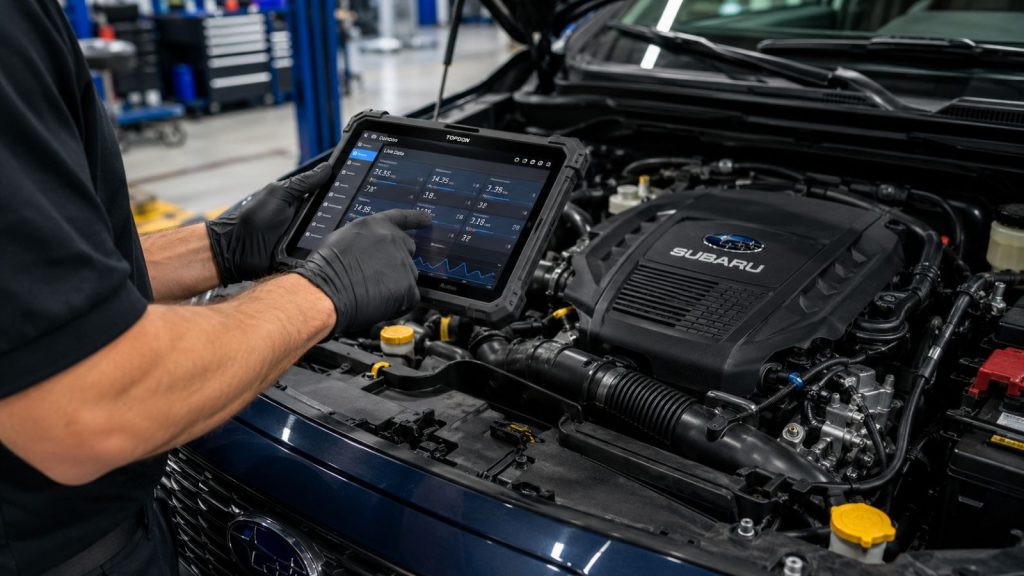
Newer Subarus generate far more diagnostic data than older models ever did, and that data changes how repairs get planned. Pattern recognition, predictive forecasting, and connected alerts each give an owner and a shop earlier visibility into a developing issue. None of this technology replaces a hands on inspection, but it does change when that inspection happens.
Pattern matched trend data narrows down likely causes faster than manual diagnosis alone, covered in AI Powered Diagnostics for Subaru Repair in San Antonio. Sensor trend data can forecast a developing failure well before it becomes symptomatic, explained in Predictive Maintenance Technology for San Antonio Subarus. Newer models also send real time alerts directly to an owner’s phone, covered in Subaru Connected Vehicle Alerts for San Antonio Owners. For a deeper look at what specific sensor categories reveal, see Sensor Data Analytics for Early Subaru Failure Detection. And for Interstate 410 commuters specifically, telematics data captures driving behavior and engine load trends unique to that corridor, covered in Telematics Benefits for Subaru Drivers on Interstate 410 [LINK: subaru-telematics-interstate-410].
Schedule Your Subaru Service in San Antonio
Whatever your Subaru needs, from a CVT fluid check to a full pre trip inspection, Ruben’s Auto Repair handles it locally in San Antonio. Call or schedule an appointment at 7210 Polar Bear, San Antonio, TX 78238, at (210) 647-1148. Our team has diagnosed and repaired these exact issues across hundreds of San Antonio driven Subarus.
Frequently Asked Questions
What are the most common Subaru repair issues in San Antonio?
CVT overheating, AWD differential wear, Boxer engine oil consumption, and cooling system stress all show up more often locally due to sustained heat and stop and go traffic.
How does South Texas heat affect Subaru maintenance schedules?
Sustained heat accelerates fluid degradation across the CVT, cooling system, and brakes, which is why a climate adjusted schedule often catches issues earlier than the standard factory interval.
Is it worth repairing an aging Subaru instead of replacing components outright?
It depends on the component’s age relative to its documented lifespan and how repair cost compares to full replacement, both of which are covered in detail in our repair versus replace guide.
Does a documented service history really affect Subaru resale value?
Yes, consistent digital tracking carries real weight with local dealerships and buyers, especially the longer that tracking history runs.
Can a local shop diagnose Subaru electronics and driver assist issues?
Yes, EyeSight calibration, sensor contamination, and connected diagnostic data are all things Ruben’s Auto Repair evaluates as part of a full inspection, not just the mechanical systems.