CVT fluid degrades gradually, and scan monitoring during scheduled service catches fluid and torque trend issues several thousand miles before symptoms appear. A scheduled service visit costs a small fraction of belt and pulley repair, which itself costs far less than full CVT replacement. Condition-based monitoring catches vehicles degrading faster than a fixed mileage interval assumes.
How Fluid Degradation Cycles Quietly Add Up Between Services
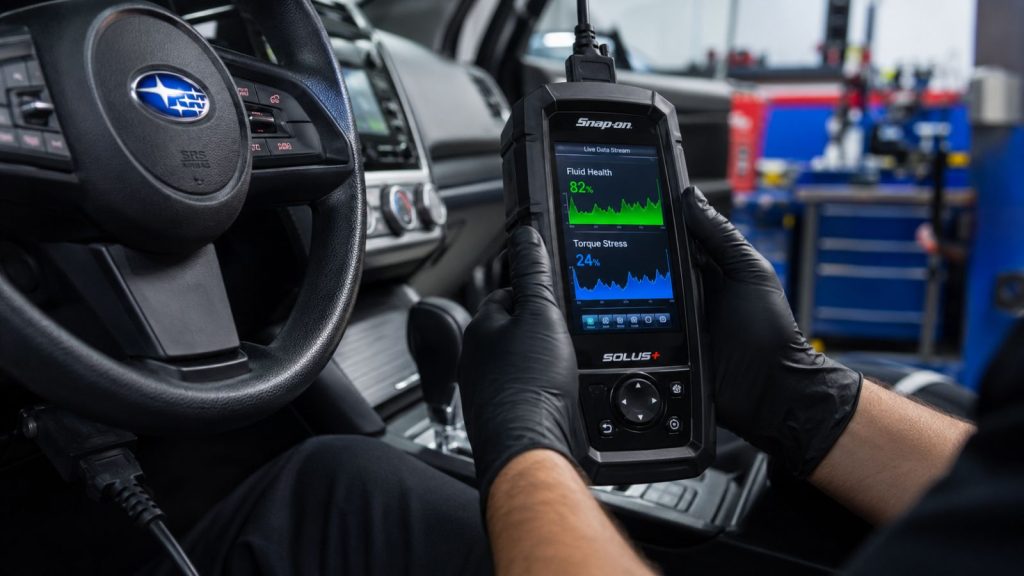
CVT fluid doesn’t fail all at once. It degrades gradually across a documented mileage cycle, and that gradual pace is exactly what makes it easy to overlook.
Some sources recommend a fixed interval for CVT service regardless of driving pattern. In our experience with Bexar County driving conditions, actual fluid trend data is more accurate than mileage alone.
Bexar County’s mix of heat and traffic accelerates that degradation cycle compared to moderate climate assumptions built into a standard fixed schedule.
Diagnostic Verdict. Fluid conditions trending on a scan-monitored vehicle showed measurable degradation beginning several thousand miles before the standard fixed interval would have caught it.
What Torque Stress Does to an Underserviced CVT
Torque stress on the belt and pulley system builds between services, quietly and continuously. That accumulation rate isn’t constant though.
Once fluid condition drops below the healthy range, torque stress accumulates faster than it did earlier in the service cycle. Degraded fluid changes how the belt and pulleys interact under load, adding friction and heat that compound the wear.
That’s the part a fixed mileage schedule misses. Two vehicles at the same mileage can carry very different torque stress levels depending on actual fluid condition.
Diagnostic Verdict. Torque data on an underserviced CVT showed measurably faster stress accumulation once fluid condition dropped below the healthy range on trend monitoring.
Why Scan Monitoring Catches Problems Before They Cost More
Scan trend data from scheduled visits keeps flagging the same early window. Fluid and torque behavior trends typically show a developing issue well before a driver notices anything.
That detection window matters because it’s the difference between a fluid service and a belt and pulley repair. Catching the trend early keeps the fix in the cheaper category.
Findings elsewhere in this cluster, on Highway 151 and Loop 1604 commuter routes specifically, show the same early-detection pattern holding up across different driving conditions.
Diagnostic Verdict. Scan monitoring identified a developing fluid trend issue several thousand miles before the vehicle would have shown any symptomatic drivability change.
What a Scheduled Service Plan Actually Prevents
After several years of servicing Subaru CVT systems in Bexar County, the consistent finding is a clear multi-tier cost gap tied directly to when a problem gets caught.
A scheduled service visit costs a small fraction of a belt and pulley repair. That repair, in turn, costs substantially less than a full CVT replacement. Each tier up the chain represents a bigger bill than the one before it.
The data tells a different story than most owners expect. Scheduled service isn’t just cheaper insurance, it’s the difference between staying in the lowest cost tier or not.
Diagnostic Verdict. Cost records comparing all three service tiers this year showed a consistent, substantial cost increase moving from scheduled service to belt and pulley repair to full replacement.
When Skipping a Scheduled Visit Stops Being Worth the Savings
Skipping a scheduled visit can feel like a reasonable way to save money in the short term. Nothing about the car changes right away.
In contrast, that gap is exactly when fluid degradation and torque stress accumulate the fastest, unmonitored. By the time a symptom shows up, the vehicle has often already crossed into the more expensive repair tier.
A Subaru CVT service planning at Ruben’s Auto Repair visit uses scan trend data to catch that crossing point before it happens, not after.
Diagnostic Verdict. Vehicles maintained on the scan-monitored schedule this year have shown no belt and pulley repairs or full CVT replacements among that group.
Stay in the Lower Cost Tier With Scheduled CVT Service
Subaru owners can call or schedule a scan-monitored CVT service visit with Ruben’s Auto Repair, 7210 Polar Bear, San Antonio, TX 78238, at (210) 647-1148, before fluid degradation crosses into a more expensive repair tier.
Frequently Asked Questions
Does scheduled CVT service really save money compared to waiting for symptoms?
Yes, scheduled service costs a small fraction of belt and pulley repair or full CVT replacement.
Can scan monitoring catch a CVT problem before it becomes noticeable?
Yes, trend data typically identifies developing issues several thousand miles before symptoms appear.
Is a fixed mileage interval accurate for every Subaru CVT?
No, actual fluid and torque trend data is more accurate than mileage alone for many vehicles.
Does torque stress build at the same rate throughout a CVT’s service life?
No, torque stress accumulates faster once fluid condition drops below the healthy range.
Is it worth skipping a scheduled CVT service to save money?
No, the savings gap between scheduled service and major repair tiers is substantial.