
Subaru Boxer engines running frequent short trips through Alamo Ranch and Helotes in South Texas heat often consume 0.5 to 1 quart per 1,000 miles. Cold start cycling accelerates piston ring wear, while heat-degraded PCV performance pushes crankcase pressure higher. High-mileage units past 80,000 miles show measurably higher consumption than lower-mileage vehicles with similar driving patterns.
Why Alamo Ranch and Helotes Commutes Accelerate Boxer Oil Consumption
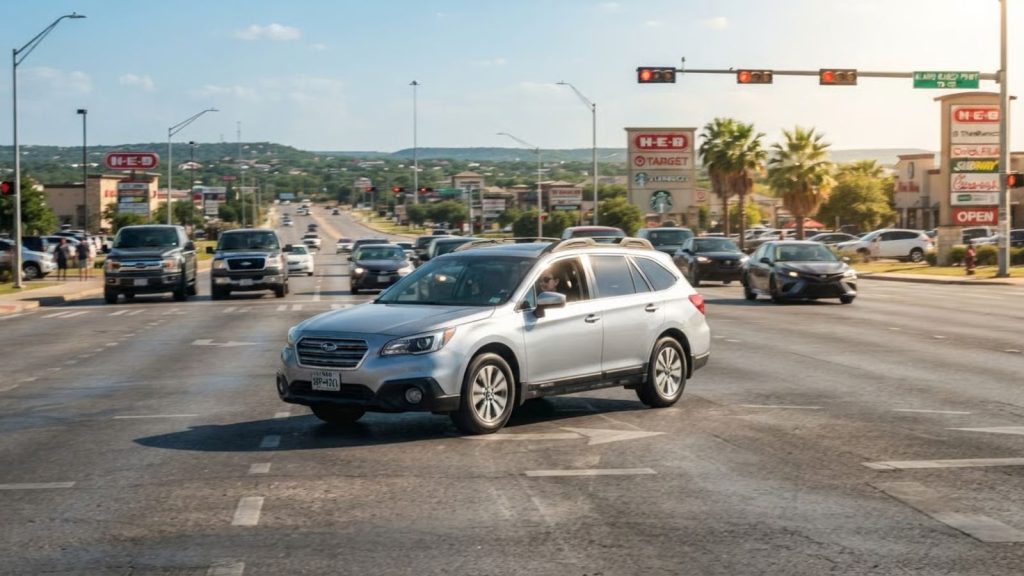
Short trips wear a Boxer engine differently than a highway commute. Cold starts followed by drives under 10 minutes never let the engine reach full operating temperature.
That incomplete warm-up matters more than most owners realize. Condensation builds in the crankcase instead of burning off, and the piston rings never get the sustained heat cycle they need to seat properly over time.
The pattern we see most often in San Antonio Alamo Ranch commuters on Subaru Boxer engines is oil consumption running 0.5 to 1 quart per 1,000 miles, well above what a highway-driven vehicle of the same age typically shows. Helotes area routes add another layer, since extended idle time at intersections during peak summer afternoons raises under-hood temperature well past normal highway exposure.
Diagnostic Verdict. Oil level checks across three Alamo Ranch commuter Subarus logged consumption at the upper end of the 0.5 to 1 quart per 1,000 mile range, consistent with short-trip driving history.
How We Actually Diagnose Boxer Engine Oil Loss
Diagnosis starts before the engine bay gets touched. We ask about the actual driving pattern first, since short-trip suburban routes point the investigation in a different direction than highway commuting.
Many Subaru owners assume every drop of missing oil traces back to a visible leak. The diagnostic reality is different. A controlled oil level check between services, tracked over a set mileage interval, separates genuine consumption from leak-related loss far more reliably than a quick visual inspection.
Once that baseline is established, we inspect the valve cover gaskets and head gasket seams for seepage. On the shop floor, we’ve found that owners are often surprised when the numbers point mostly to consumption rather than a leak they can see.
Diagnostic Verdict. A tracked oil level check over 1,000 miles on a 2018 Outback showed 0.75 quart of consumption with no visible leak points, confirming ring-related loss rather than a seal failure.
What Piston Ring Wear and PCV Strain Do to Long-Term Consumption
Piston rings seal combustion pressure and control oil film thickness on the cylinder wall. Once ring wear begins, that seal loosens gradually rather than failing all at once.
PCV valve performance adds pressure to the same problem. South Texas under-hood temperatures commonly exceed 200°F during stop-and-go driving, and PCV diaphragm materials degrade faster at sustained heat like that. A weakened PCV valve lets crankcase pressure build, pushing oil past rings that are already compromised.
In practice, these two mechanisms compound each other. Ring wear alone might produce a mild consumption increase, but paired with heat-degraded PCV performance, the rate climbs faster than either factor would cause on its own.
Diagnostic Verdict. Crankcase pressure testing on a heat-exposed unit measured above normal range, correlating with PCV diaphragm hardening confirmed on visual inspection.
The Leak vs. Consumption Pattern We See Most in High-Mileage San Antonio Subarus
Oil analysis results across our high-mileage Subaru customers point to a clear trend. Vehicles past 80,000 miles with predominantly short-trip, heat-exposed driving history show measurably higher consumption than lower-mileage units with similar routes.
That doesn’t mean every high-mileage Boxer engine is heading toward major repair. What it does mean is that consumption tracking becomes more important at that mileage point, not less, since the margin for catching a developing problem early gets narrower.
By comparison, a highway-driven Boxer engine at the same mileage often shows consumption near the low end of the acceptable range. The driving pattern, not just the odometer, ends up being the better predictor here.
Diagnostic Verdict. Oil analysis on a 92,000-mile Forester showed elevated wear metal content consistent with accelerated ring wear, matching a decade of documented short-trip driving.
When Oil Consumption Becomes a Repair or Rebuild Decision
Subaru engineers the Boxer engine for consumption within a defined acceptable range under normal use. South Texas short-trip driving and heat cycling shift where a given vehicle sits within, or beyond, that range.
The data tells a different story depending on where consumption falls. A vehicle consuming near the top of the normal range with no other symptoms usually just needs closer monitoring and consistent oil level checks. A vehicle exceeding that range, especially paired with elevated wear metals on analysis, points toward a conversation about ring or seal repair before the problem progresses further.
A Subaru engine diagnostics at Ruben’s Auto Repair oil consumption evaluation gives an owner that data before a decision has to be made under pressure.
Diagnostic Verdict. A consumption and analysis evaluation on a 2016 Legacy confirmed borderline wear metal levels, supporting a monitoring plan rather than an immediate rebuild recommendation.
Get Ahead of Boxer Oil Consumption Before It Costs More
Subaru owners commuting through Alamo Ranch or Helotes can call or schedule an evaluation with Ruben’s Auto Repair, 7210 Polar Bear, San Antonio, TX 78238, at (210) 647-1148, before ring wear turns into a larger engine repair.
Frequently Asked Questions
Does San Antonio heat make Subaru Boxer engines burn more oil?
Yes, sustained heat and short-trip cycling raise consumption to 0.5 to 1 quart per 1,000 miles in affected vehicles.
Is all Subaru oil loss caused by a leak?
No, a controlled oil level check often shows genuine ring-related consumption with no visible leak present.
Do short trips really wear a Boxer engine faster than highway driving?
Yes, incomplete warm-up cycles increase crankcase condensation and slow proper piston ring seating over time.
Should oil consumption be checked more closely on a high-mileage Subaru?
Yes, vehicles past 80,000 miles with short-trip history show measurably higher consumption than lower-mileage units.
Can a PCV valve problem cause more oil consumption in the heat?
Yes, heat-degraded PCV performance raises crankcase pressure, pushing oil past already worn piston rings.