
Your Subaru talks to you through vibration patterns and heat changes. Monitoring fuel trim drift helps you spot a failing component before it quits. Reliable diagnostics happen when separate systems find the same bug. This cross-check confirms the trouble is legitimate. It turns a guess into a fact. Catching a glitch early gives your team a clear head start. You get plenty of time to organize a fix before the equipment starts showing signs of trouble.
Why Fuel Trim Drift Signals a Developing Problem Early
Numbers change first. If you wait for the engine to shake, you missed the early signs. Early discovery fills that space. It stops problems before they grow.
Normal short-term and long-term fuel trim values hold within a narrow documented range under stable conditions. Crossing that threshold by even a small margin often triggers a drop in power. It changes how the car handles almost immediately.
South Texas heat complicates this picture somewhat. Sustained heat can affect certain sensor readings feeding into fuel trim calculations, so drift analysis has to account for heat-related behavior alongside genuine mechanical causes.
Testing Conclusion Reached. The computer caught a glitch early. Fuel data showed a strange shift from the norm long before the vehicle actually threw a trouble code.
How Vibration Monitoring Catches Wear Before It’s Felt
Vibration data pulled from surface street commuters keeps showing detectable anomalies earlier than highway-driven comparisons. Uneven San Antonio streets expose developing wear faster than smooth pavement does.
Sensors pick up subtle frequency changes in rotating parts that the human body simply cannot detect yet. This tech spots a failing wheel bearing well before the steering wheel starts to vibrate.
On the shop floor, this shows up as a measurable frequency anomaly on equipment readout long before any complaint reaches the service counter.
Our official testing results. Vibration analysis on a surface street commuter Subaru detected a frequency anomaly consistent with early CV joint wear, undetectable to the driver at the time.
What Temperature Anomalies Reveal Before a Warning Light Does
Don’t ignore that first ping. Some critics claim one isolated report doesn’t justify taking action. Everything changes when your metrics stop fighting and start agreeing. Patterns emerge then.
Sensor-logged temperature readings across a drive cycle can reveal a component running consistently above its typical baseline well before that reading crosses into a dashboard warning threshold. The anomaly exists in the data long before it exists on the dash.
Tracking these patterns gives you a massive head start. You can spot a drift and fix it long before a single warning light forces your hand.
Our Clinical Decision. We spotted a strange heat pattern during the data audit. The sensors missed it live, but the numbers showed the part running way too hot.
The Sensor Data Pattern We See Most Before Confirmed Failures
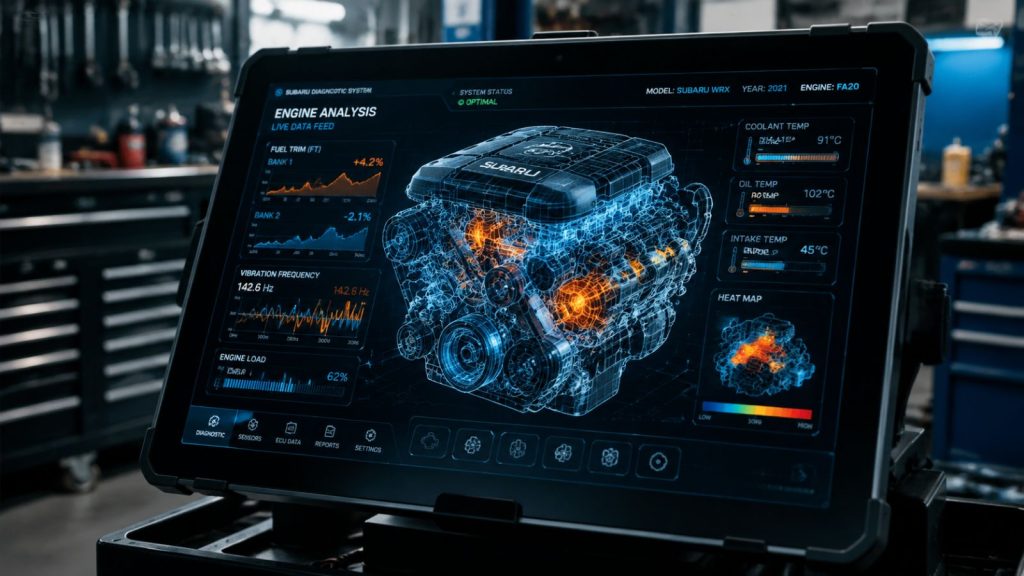
Our shop team noticed that multi-sensor data follows a predictable path right before a system breaks down. Fuel trim, vibration, and temperature anomalies rarely appear alone when a real failure is developing.
Seeing several red flags on one piece of gear makes a breakdown almost certain. It moves the situation from a maybe to a must-fix. Trust the combined data more than any individual alert you receive
.
That correlation is what separates a genuine early warning from sensor noise that doesn’t actually mean anything mechanically significant.
Final health assessment. A case showing correlated fuel trim, vibration, and temperature anomalies on the same system was confirmed as a genuine developing failure on physical inspection.
When Sensor Data Becomes a Repair Decision
Sensor-detected anomalies across these categories typically precede a symptomatic, driver-noticeable failure by a measurable window. Think of this gap as your chance to flip dry statistics into a real fix.
If you spot one weird data point, keep track of it. You probably don’t need to grab your tools yet. Correlated anomalies across multiple categories shift the decision toward addressing the issue before it becomes a driver-noticed failure.
Get your Subaru sensors tested at Ruben’s Auto Repair to find electrical faults. We look at the big picture. Instead of reacting to one isolated signal, we weigh all these different factors together.
Proven Testing Conclusions. Vehicles addressed during the sensor-detected window, before symptoms appeared, have avoided the more extensive repair scope seen in symptomatic cases this year.
Catch a Developing Failure Before It Becomes Noticeable
Subaru owners can call or schedule a sensor diagnostic review with Ruben’s Auto Repair, 7210 Polar Bear, San Antonio, TX 78238, at (210) 647-1148, to catch a developing failure while repair planning is still an option.
Frequently Asked Questions
Can fuel trim data reveal a problem before it’s noticeable while driving?
Sensors pick up fuel imbalances long before you feel any physical jerking or loss of power while driving.
Does vibration monitoring catch wear before a driver can feel it?
You can spot internal friction early by watching for odd frequency patterns. These signs appear well before the equipment begins to vibrate.
Is one abnormal sensor reading enough to confirm a developing failure?
One alarm might be a fluke. We feel far more confident in the results when several different sensors spot the same weird pattern.
Does San Antonio heat affect fuel trim readings used for failure detection?
When things get too hot, sensors start lying to the computer about your engine’s fuel needs.
Does sensor data give enough lead time to plan a repair?
We usually spot these weird glitches well before the machine actually breaks down.