
Subaru CVTs commuting through Highway 151 and Loop 410 congestion run 15 to 20°F above normal fluid temperature. Frequent throttle modulation and reduced airflow below 15 mph prevent proper cooling. Sustained heat accelerates fluid breakdown, sometimes appearing by 22,000 to 25,000 miles instead of the standard 30,000-mile interval, straining the belt and pulley system over time.
Why Highway 151 Congestion Pushes Subaru CVT Fluid Past Normal Range
Highway 151 traffic runs hot on Subaru CVTs. A steady highway cruise keeps fluid temperature near its normal operating range. Stop-and-go congestion on Highway 151 and Loop 410 changes that picture entirely.
In Subarus we service from the Highway 151 corridor, we consistently find CVT fluid temperatures running 15 to 20°F above baseline after evening commute traffic. The pattern shows up most in vehicles making that drive daily rather than occasionally.
Two things drive this. Congestion forces roughly 2 to 3 times more partial-throttle inputs per mile compared to steady cruising. At the same time, vehicle speeds below 15 mph cut ram-air cooling to the radiator, and CVT fluid cooling on most Subaru models shares that same circuit.
Diagnostic Verdict. Scan tool readings on Highway 151 commuter vehicles show fluid temperature 15 to 20°F above baseline within the first 20 minutes of sustained congestion.
How We Actually Run the CVT Temperature Diagnostic
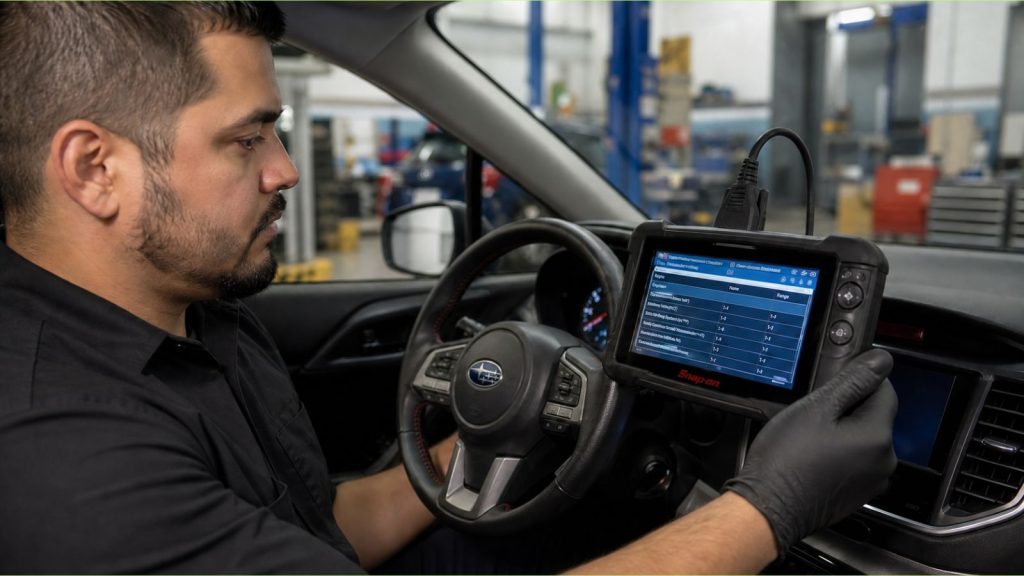
The process starts with a scan tool connection to pull live CVT fluid temperature data, not just stored trouble codes. A single snapshot reading tells us little on its own.
What matters more is watching that temperature climb over a simulated stop-and-go cycle, matching the actual Highway 151 driving pattern the owner described. We log the climb rate, the peak reading, and how long it takes to return to baseline once the vehicle reaches steady speed.
From there, we pull a fluid sample. Color and smell tell us more than most owners expect, since dark, burnt-smelling fluid points to friction modifier breakdown well before any dashboard warning appears. We cross-check that against the mileage and driving pattern to judge how far along the wear cycle actually sits.
Diagnostic Verdict. A fluid sample pulled at 24,000 miles on a Highway 151 commuter vehicle showed early discoloration consistent with heat-accelerated breakdown, well ahead of the standard 30,000-mile inspection point.
What Sustained Heat Does to CVT Fluid and the Belt and Pulley System
Heat breaks CVT fluid down chemically over time. The friction modifiers that let the belt grip the pulleys properly lose effectiveness as temperature climbs.
After several years of servicing Subaru CVTs in Bexar County, the consistent finding is that vehicles logging heavy Highway 151 or Loop 410 commutes show belt surface wear noticeably ahead of vehicles with mostly steady highway miles. It is not a dramatic difference in any single inspection. It shows up as a trend across repeat visits.
That wear pathway matters because a slipping belt under load produces symptoms most owners notice long before a warning light appears. A subtle shudder or hesitation at low speed is often the first sign, and it tends to show up first during exactly the kind of stop-and-go driving that caused the heat exposure in the first place.
Diagnostic Verdict. Teardown inspection on a high-mileage commuter unit showed belt surface glazing consistent with sustained thermal exposure, matching the vehicle’s logged Highway 151 driving history.
The Loop 410 Merge and Brake Pattern We See Most in San Antonio Subarus
Loop 410 adds its own variation on the same problem. Merge points near major interchanges force repeated acceleration followed immediately by braking.
That cycling keeps the CVT moving between load and idle without ever settling to a stable temperature. Unlike steady Highway 151 congestion, which holds a fairly constant low-speed load, Loop 410 merge traffic produces sharper, more frequent temperature swings within a single commute.
We see this most clearly in vehicles whose daily route runs through the Great Northwest toward a Loop 410 interchange before continuing onto Highway 151. The combined exposure, sharp cycling followed by sustained congestion, produces some of the highest sustained fluid temperatures we log on any commuter route in the service area.
Diagnostic Verdict. Data logging across a full Great Northwest to Highway 151 commute showed three distinct temperature spikes at Loop 410 merge points, each adding to the overall heat load before the vehicle reached sustained congestion.
When CVT Heat Stress Becomes a Service or Replacement Decision
Subaru service literature calls for CVT fluid inspection near 30,000 miles under normal conditions. That interval assumes moderate driving conditions, not daily Highway 151 exposure.
In our experience with Bexar County commuters, a 22,000 to 25,000-mile inspection window is more accurate for vehicles running this corridor daily. Waiting for the standard interval on a high-exposure commute risks catching fluid breakdown after belt wear has already started, rather than before it.
The decision point comes down to catching the problem at the fluid stage instead of the mechanical stage. A Subaru repair service at Ruben’s Auto Repair CVT inspection at the earlier interval typically means a fluid service rather than a belt or pulley replacement.
Diagnostic Verdict. Vehicles inspected at the 22,000 to 25,000-mile window on this route have shown fluid-stage wear only, with no belt or pulley replacement required at that visit.
Schedule a Subaru CVT Diagnostic Before Heat Damage Spreads
Subaru owners commuting through Highway 151 or Loop 410 can call or schedule a CVT diagnostic appointment with Ruben’s Auto Repair, 7210 Polar Bear, San Antonio, TX 78238, at (210) 647-1148, before elevated fluid temperatures turn into a costly transmission repair.
Frequently Asked Questions
Does San Antonio heat cause Subaru CVT problems faster than other regions?
Yes, sustained stop-and-go heat raises CVT fluid temperature and accelerates fluid breakdown by roughly 15 to 20% compared to moderate climates.
Can Highway 151 traffic actually damage a Subaru transmission?
Yes, sustained congestion on that corridor raises CVT fluid temperature 15 to 20°F above baseline, accelerating fluid and belt wear over time.
Is a CVT shudder at low speed always a sign of transmission failure?
No, early shudder often reflects fluid breakdown that a fluid service can resolve before belt or pulley damage occurs.
Should CVT fluid be checked before the standard 30,000-mile interval on a commuter Subaru?
Yes, vehicles with heavy Highway 151 or Loop 410 exposure often show breakdown signs by 22,000 to 25,000 miles.
Does Loop 410 merge traffic affect a Subaru CVT differently than steady congestion?
Yes, repeated merge and brake cycling produces sharper temperature spikes than sustained low-speed congestion alone.