
A generic OBD-II scanner reads a stored code and little else on a Subaru. Freeze frame data captures engine load, coolant temperature, and fuel trim at the exact moment a fault triggers. Manufacturer PIDs expose transmission, AWD, and EyeSight parameters generic tools can’t reach, and a logged drive cycle catches intermittent faults a single static scan often misses.
What Generic OBD-II Scanners Miss on a Subaru Check Engine Light
A generic scanner does one job well. It reads the stored trouble code.
What it usually doesn’t provide is context. The code tells us a system triggered a fault, but not the engine load, temperature, or fuel trim reading at the moment that happened.
That missing context matters most on intermittent faults. A code alone can point toward several possible causes, and without more data, diagnosis often turns into a guessing game between parts.
Diagnostic Verdict. A generic code read on a customer vehicle returned a single stored DTC with no supporting data, consistent with the limited field set generic scanners typically provide.
What Freeze Frame Data Actually Tells Us About an Intermittent Fault
Freeze frame data captures a snapshot the instant a fault triggers. Engine load, coolant temperature, RPM, and fuel trim all get recorded at that exact moment.
Some shops treat a cleared code as a resolved problem. In our experience, the freeze frame data usually tells a different story. It often points to a specific operating condition, not a random one-time glitch.
That condition might be a particular load range, a temperature threshold, or a fuel trim value already drifting before the code stored. Freeze frame data turns a vague fault into a specific, repeatable diagnostic target.
Diagnostic Verdict. Freeze frame data on a 2021 Outback showed the fault triggering consistently at a specific engine load and coolant temperature combination, not at random.
Why Fuel Trim Numbers Matter More Than the Code Itself
After several years of servicing Subaru fuel systems in Bexar County, the consistent finding is that fuel trim drift often shows up well before a code ever stores. The number moves first. The code comes later.
Normal short-term and long-term fuel trim values hold within a narrow range under stable conditions. A deviation of several percentage points beyond that range is a warning sign worth acting on, even without a code present yet.
South Texas heat adds another layer here. Certain sensor readings feeding into fuel trim calculations can shift with sustained high temperatures, so a drifting number doesn’t always mean a fuel delivery problem.
Diagnostic Verdict. Fuel trim data on a vehicle with no active code showed a deviation of several percentage points beyond the normal range, two weeks before a code was eventually stored.
What Manufacturer PID Analysis Reveals That a Generic Scanner Can’t
Generic scan tools read standardized OBD-II PIDs. That data set covers the basics but stops well short of manufacturer-specific parameters.
Manufacturer PIDs open up data streams generic tools simply can’t access. That includes certain transmission behavior, AWD torque distribution values, and EyeSight system parameters relevant to intermittent faults tied to those systems.
On the shop floor, this distinction shows up constantly. A fault that looks identical on a generic scan often reveals a completely different root cause once manufacturer PID data enters the picture.
Diagnostic Verdict. Manufacturer PID data on a vehicle with a generic transmission-related code revealed a specific parameter outside normal range, information the generic scan tool had no way to show.
How Ruben’s Auto Repair Actually Runs an Advanced Scan Workflow
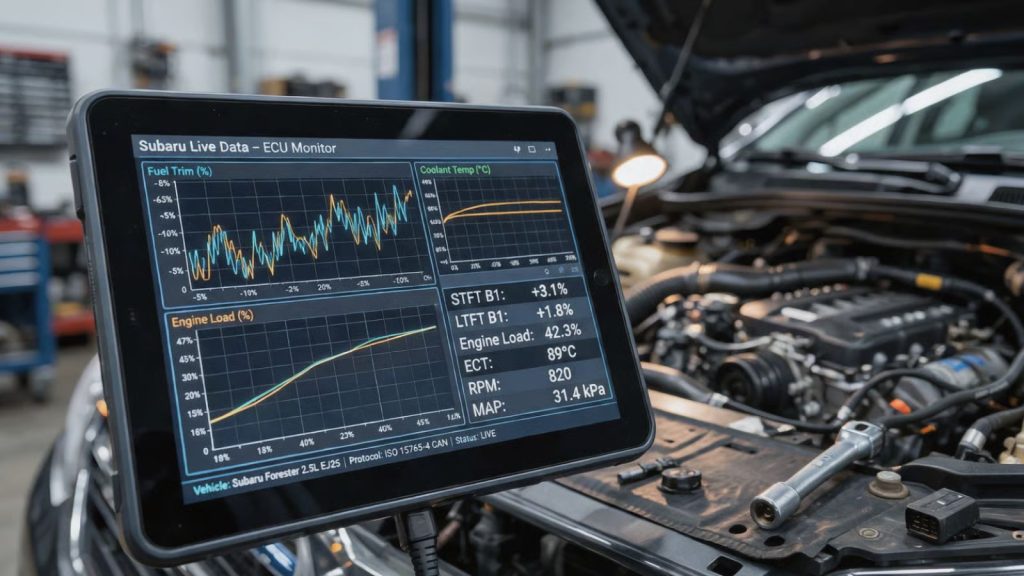
Comparing repeat visit records tells a pretty clear story here. Vehicles diagnosed with a single static code read return for a second visit more often than vehicles diagnosed through a logged drive cycle.
The workflow starts with a bidirectional scan tool pulling both generic and manufacturer PID data together. From there, a logged drive cycle replicates the conditions that seem to trigger the fault, often stop-and-go traffic similar to Interstate 410 congestion, since that combination of load and heat frequently reproduces intermittent issues.
That continuous data capture increases the odds of catching the fault condition directly, rather than relying on a single static snapshot that may or may not line up with the actual trigger.
Diagnostic Verdict. A logged drive cycle replicating stop-and-go, heat-heavy conditions captured an intermittent fault that three prior static scans at other shops had missed entirely.
Get an Intermittent Fault Diagnosed Right the First Time
Subaru owners dealing with a recurring check engine light can call or schedule an advanced diagnostic scan with Ruben’s Auto Repair, 7210 Polar Bear, San Antonio, TX 78238, at (210) 647-1148, before another code reset just delays the real answer.
Frequently Asked Questions
Can a generic scan tool diagnose an intermittent Subaru fault?
No, a generic tool often misses faults that only appear under specific driving conditions.
Does fuel trim drift always show up before a check engine code?
Yes, fuel trim often deviates from normal range days or weeks before a related code stores.
What does manufacturer PID data show that a generic scanner can’t?
Manufacturer PIDs expose transmission, AWD, and EyeSight parameters outside the standard OBD-II data set.
Does South Texas heat affect fuel trim readings?
Yes, sustained high temperatures can shift certain sensor outputs that feed into fuel trim calculations.
Why does a logged drive cycle work better than a single scan for intermittent faults?
Continuous data capture during real driving conditions increases the chance of catching the fault as it happens.