
Why Weak AC Makes Your Summer Commute Worse
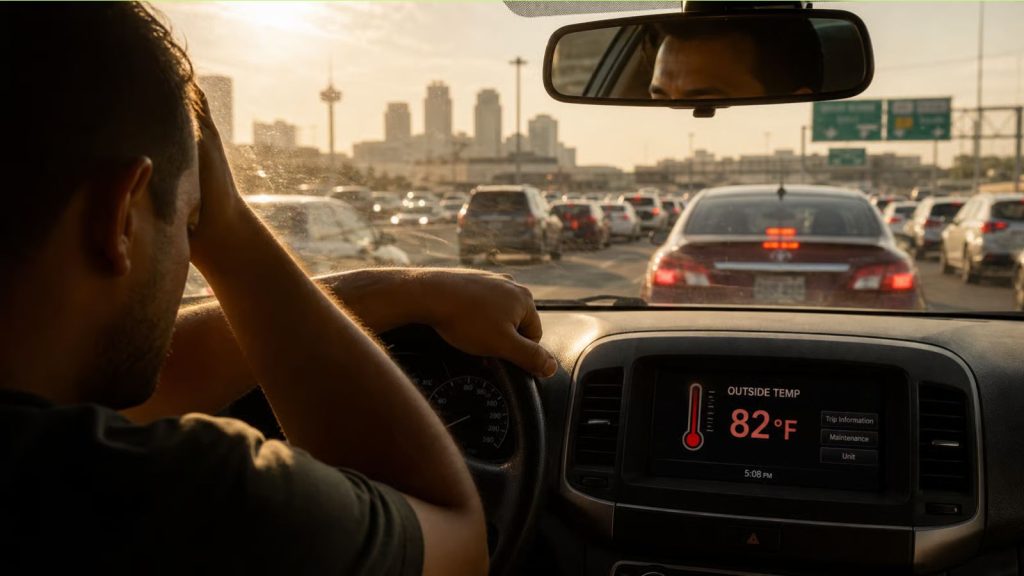
Reduced AC performance during San Antonio summer commutes measurably increases driver fatigue and slows reaction time, not just comfort. Sustained cabin temperature above 80°F during congestion raises core body temperature enough to affect sustained attention. Logging cabin temp across a full commute reveals degradation a single reading would miss. We constantly hear customers describe arriving […]
Why Compressor Replacement Saves More Than Repair

Choosing between AC compressor repair and full replacement on a high mileage commuter vehicle depends on more than the upfront price tag. Surrounding component wear and remaining vehicle lifespan both factor into true cost. A repair above 60 to 70 percent of full replacement cost often favors replacement given added reliability and warranty coverage. We […]
Why South Texas AC Timing Beats Annual Checkups

AC issues that stay mild through spring often become urgent failures once South Texas hits sustained July heat, since marginal problems lose their operating margin as ambient temperature climbs. A refrigerant charge below 90 percent of spec in spring reliably predicts a summer failure. Scheduling inspection in May or early June catches these issues before […]
Coolant Leak Detection Alerts Before Breakdown in San Antonio
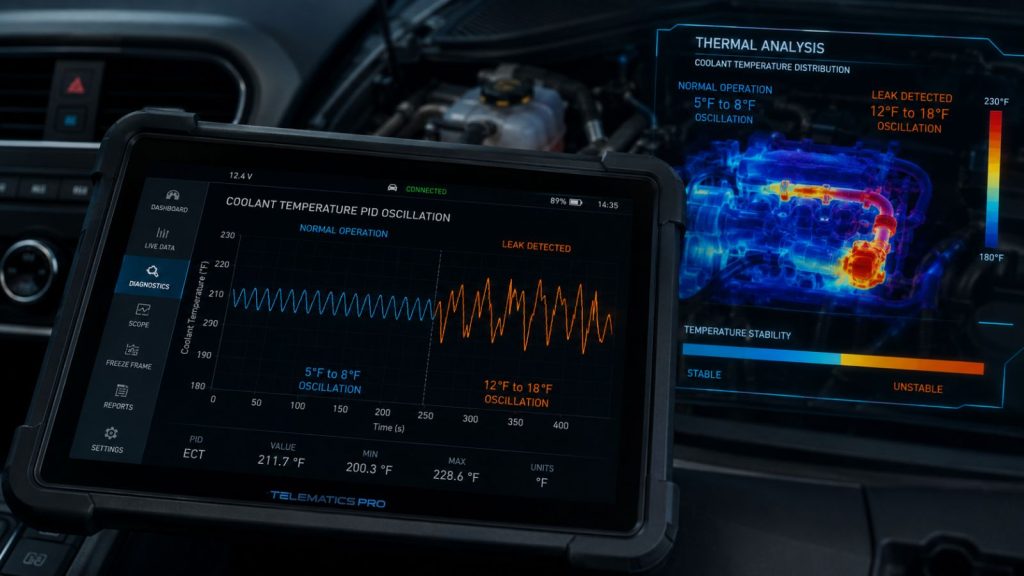
A pinhole coolant leak reduces system pressure by 1.5 PSI to 2.0 PSI before any puddle appears on the ground. That pressure drop shifts OBD-II coolant temp PID oscillation from a normal 5°F to 8°F band to 12°F to 18°F within the first 10 minutes of a drive cycle. Telematics systems logging PID data at […]
Thermostat Failure Risks That Warp Engine Heads in San Antonio
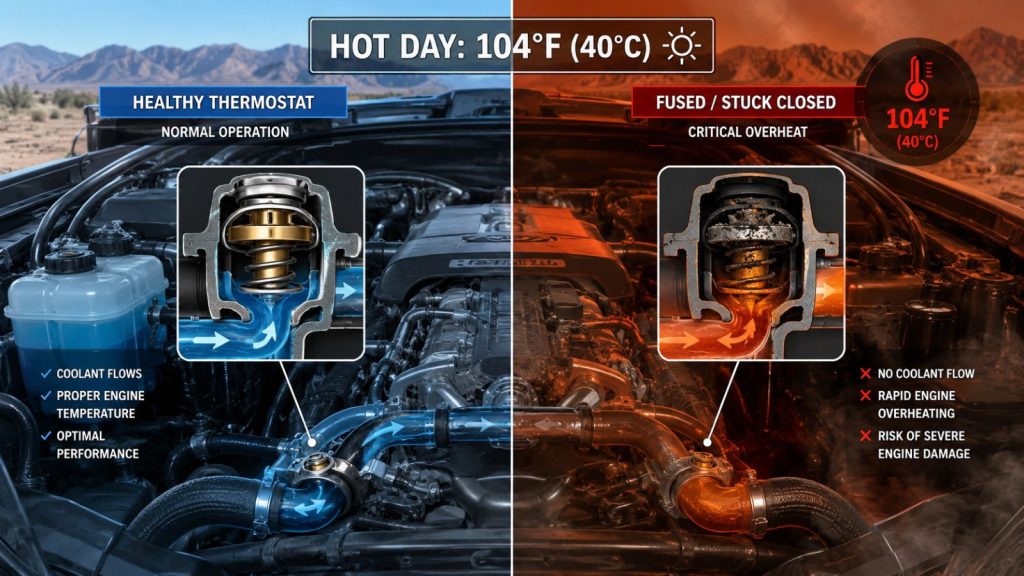
A stuck-closed thermostat in South Texas heat eliminates the coolant temperature buffer between normal operation and engine head damage. At 104°F ambient, that buffer shrinks to 30°F to 45°F before distortion begins. A $50 part replaced proactively costs 20x to 40x less than the head gasket repair that follows a full overheat event. How a […]
Turn Signals Fail on San Antonio Downtown Delivery Routes
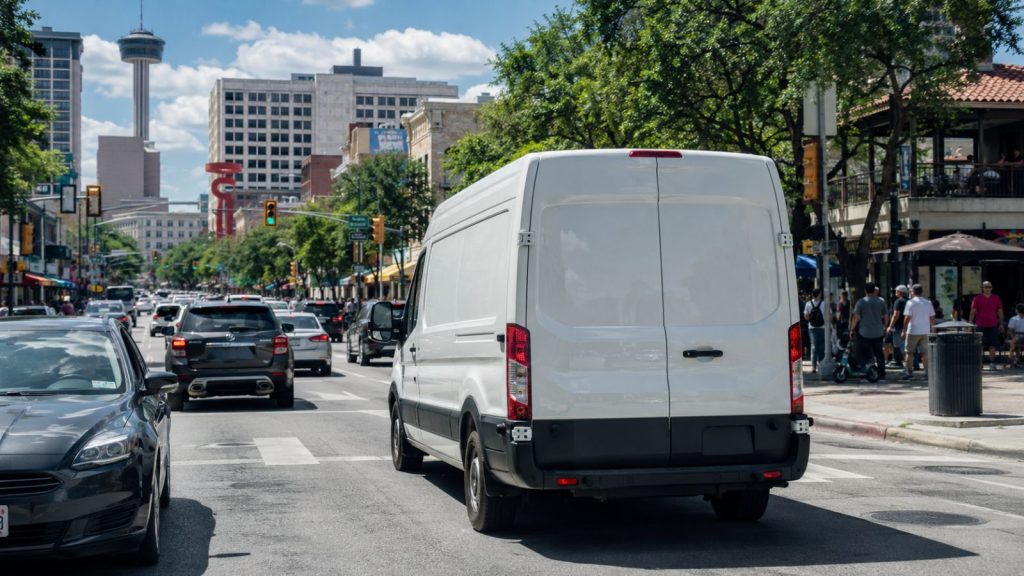
Turn signal failure on downtown San Antonio delivery routes traces to relay contact fatigue from 400 to 640 switching cycles per shift, multifunction switch stalk contact wear from the same activation frequency, and flasher module thermal cycling from repeated short-duration activations at loading zone entries. A second-tap requirement on the stalk before the signal activates […]
Sudden MPG Drop on the Loop 1604 South San Antonio Commute
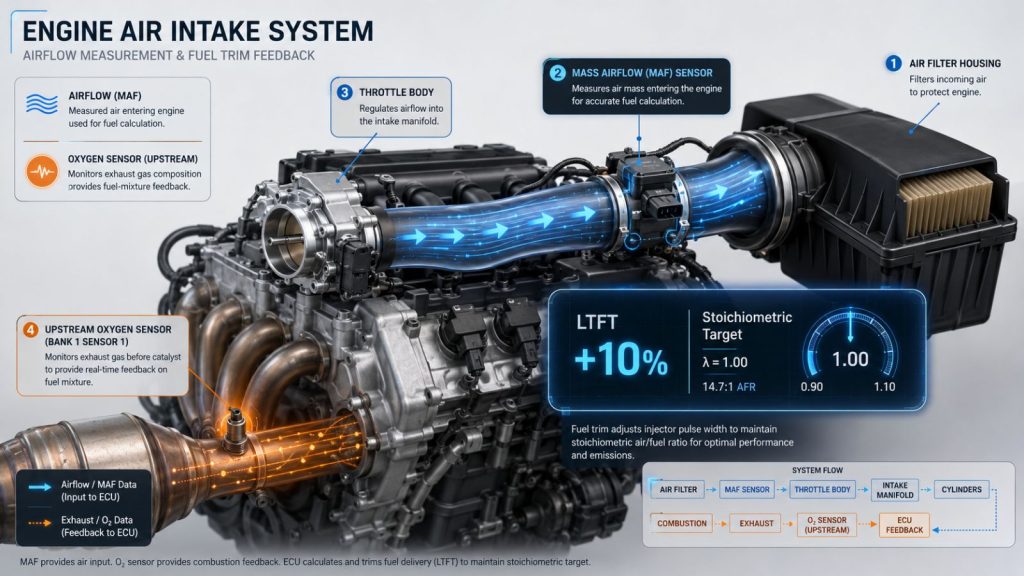
A sudden MPG drop on the Loop 1604 South to Bandera Road commute traces to long-term fuel trim above plus 10% from oxygen sensor response lag, MAF sensor contamination producing airflow readings 10 to 20% below actual, and injector deposit buildup increasing pulse width beyond the OEM efficiency baseline. The MPG drop is load-specific. It […]
Hard to Start After Errand Stop in San Antonio Heat
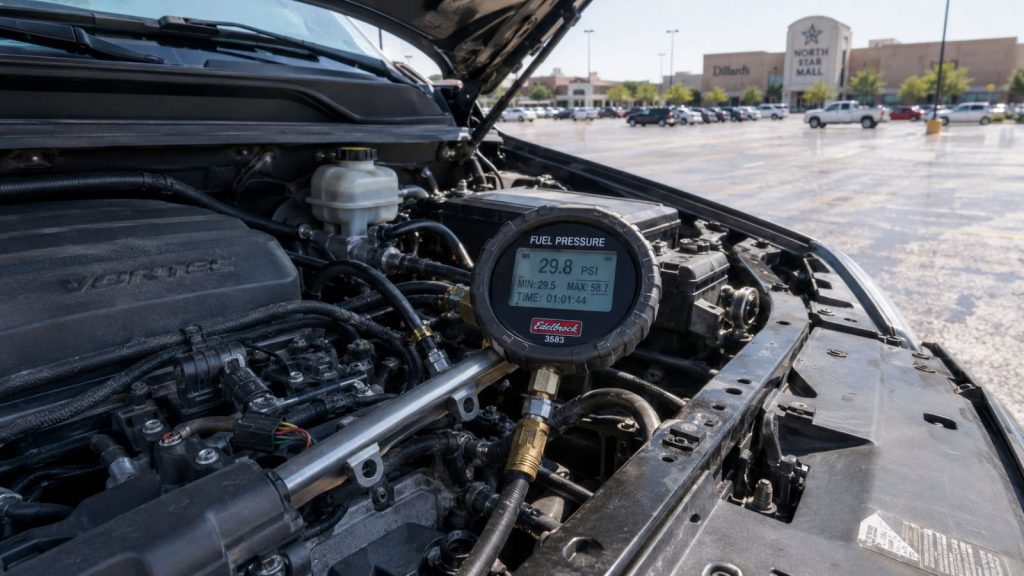
A hard restart after a South Park Mall errand stop in July heat traces to fuel rail vapor formation from check valve pressure decay, ignition coil output reduction under sustained underhood heat soak, and battery CCA derating compounded by extended crank demand. The diagnostic signature is normal cranking speed with delayed fire and a brief […]
Dashboard Lights Flicker at Idle San Antonio Medical Center Fix
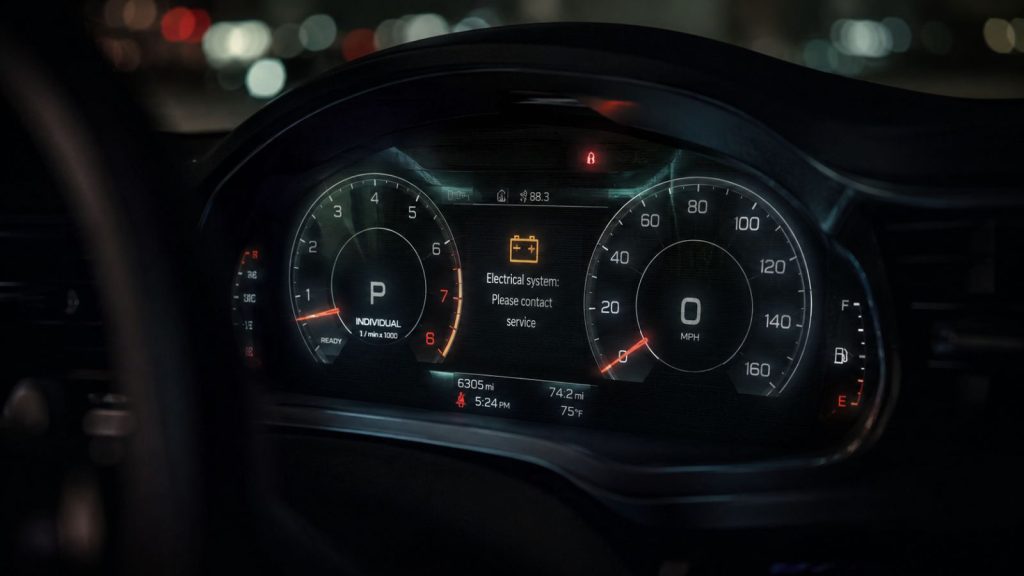
A vehicle electrical system requires steady voltage to power digital components safely. Prolonged idling at busy South Texas intersections places a massive load on the charging circuit. When your dashboard displays a rhythmic or sudden flicker, the vehicle is warning you of a brewing underhood electrical failure. Medical District Traffic Demands and Alternator Output Drop […]
Car Surges at Idle in San Antonio Drive Thru Lines
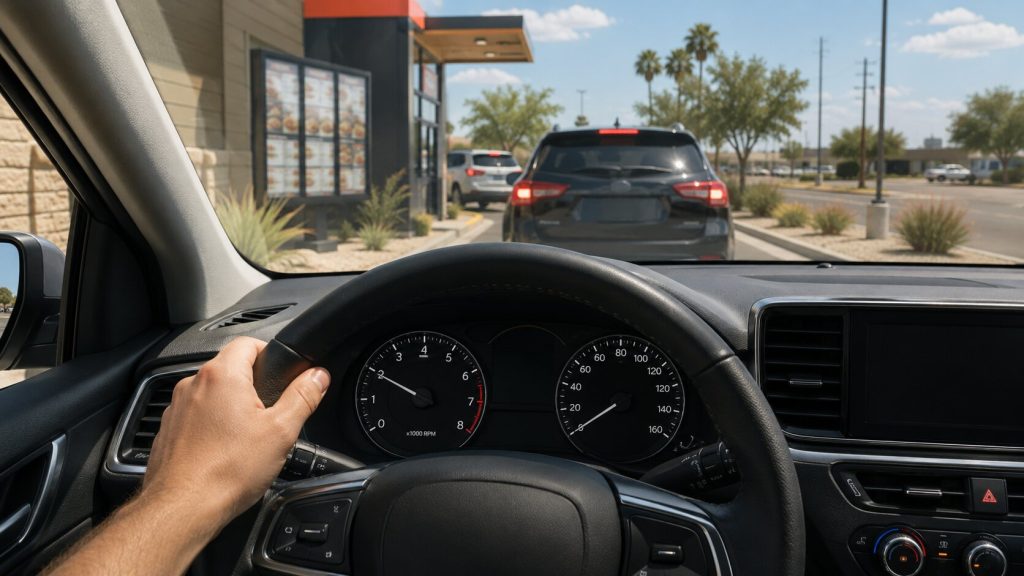
A car surging at idle during extended Culebra Road drive thru waits traces to IAC valve hunting compounding over multiple minutes of brake-held idle, AC compressor cycling every 30 to 90 seconds in July heat, and throttle body carbon restriction above 1.0 mm narrowing the system’s compensation margin. RPM fluctuation of 150 to 300 RPM […]