
Telematics Benefits for Subaru Drivers on Interstate 410

Telematics data logs acceleration, braking, and engine load across a drive, capturing behavior patterns tied to Interstate 410’s documented stop-and-go congestion. Engine load runs measurably higher during that congestion than steady highway cruise. Fleet-style monitoring logic, normally used across multiple vehicles, applies just as well to one vehicle compared against its own historical baseline. What […]
Sensor Data Analytics for Early Subaru Failure Detection
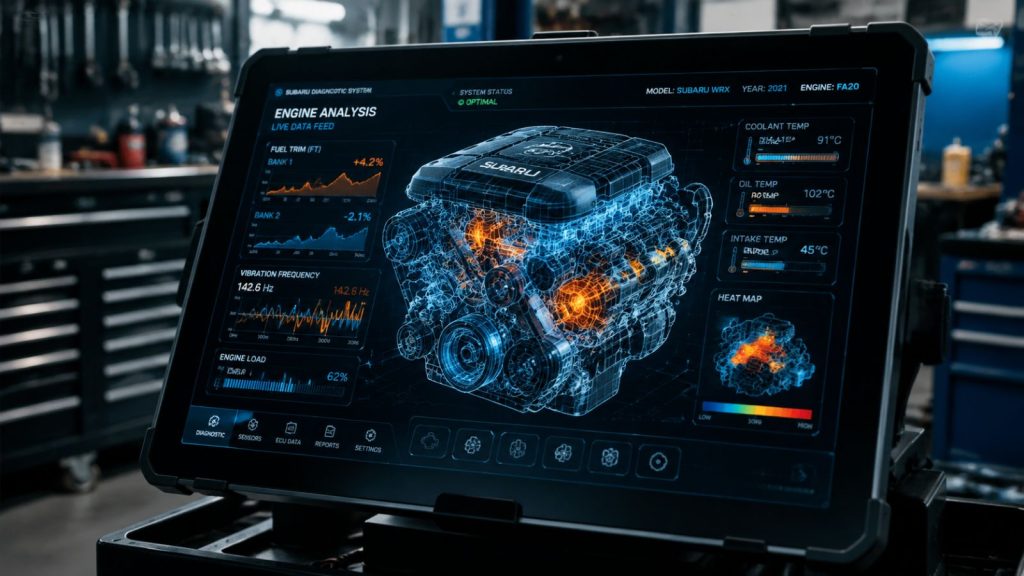
Your Subaru talks to you through vibration patterns and heat changes. Monitoring fuel trim drift helps you spot a failing component before it quits. Reliable diagnostics happen when separate systems find the same bug. This cross-check confirms the trouble is legitimate. It turns a guess into a fact. Catching a glitch early gives your team […]
Digital Service History vs. No Records at Subaru Resale
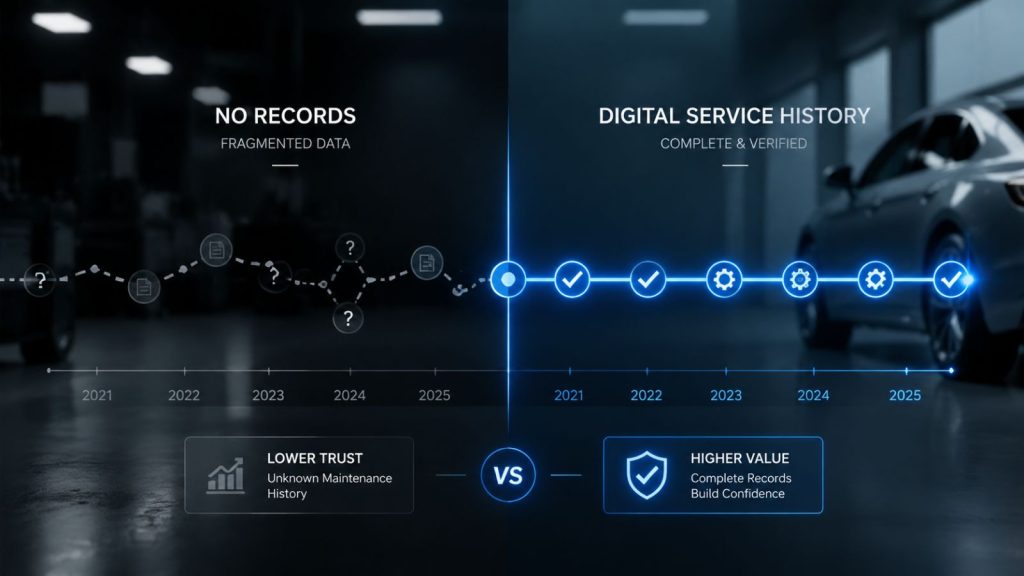
A single service record shows one moment, but years of continuous digital tracking show a trend of consistent care. Dealership appraisals weigh tracking continuity more than total service count alone, and that transparency benefit compounds the longer it runs. Starting digital tracking only shortly before resale delivers less benefit than tracking consistently from early ownership. […]
Subaru Connected Vehicle Alerts for San Antonio Owners
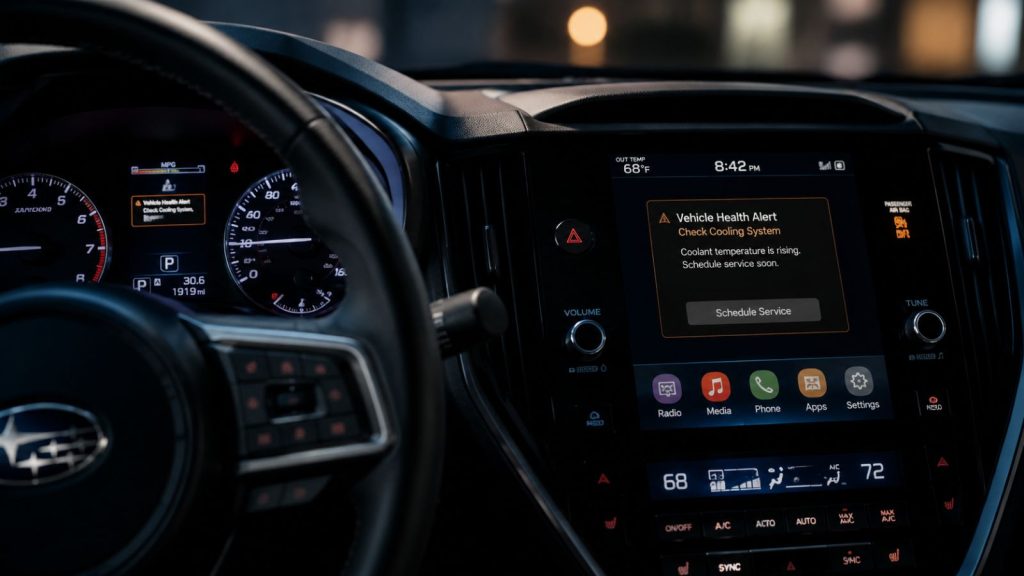
Connected Subaru systems transmit real-time diagnostic data and service notifications, sometimes ahead of a dashboard warning light. Remote monitoring covers a defined parameter set, not the full scope of an in-person scan. Your car tracks how you drive to change its service dates. We never start a repair based on a software notification alone. A […]
AI Powered Diagnostics for Subaru Repair in San Antonio
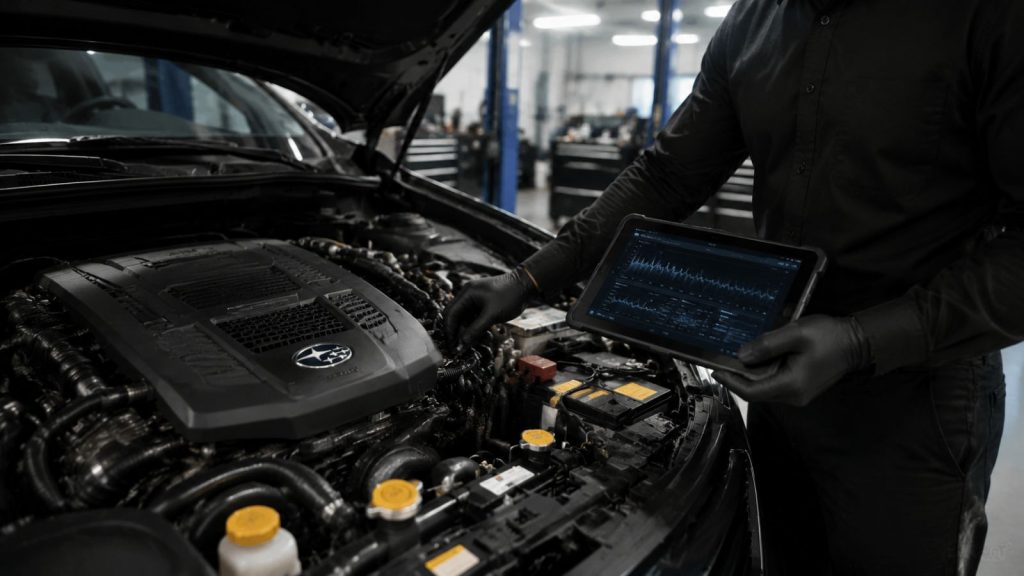
Instead of guessing, software compares your Subaru’s diagnostic codes to thousands of similar cases. It cuts through the noise and finds the fix while a manual search would still be at square one. This proves most useful on intermittent faults tied to heat and stop-and-go driving. Software provides a great head start, but it does […]
Climate Adjusted Subaru Maintenance for South Texas
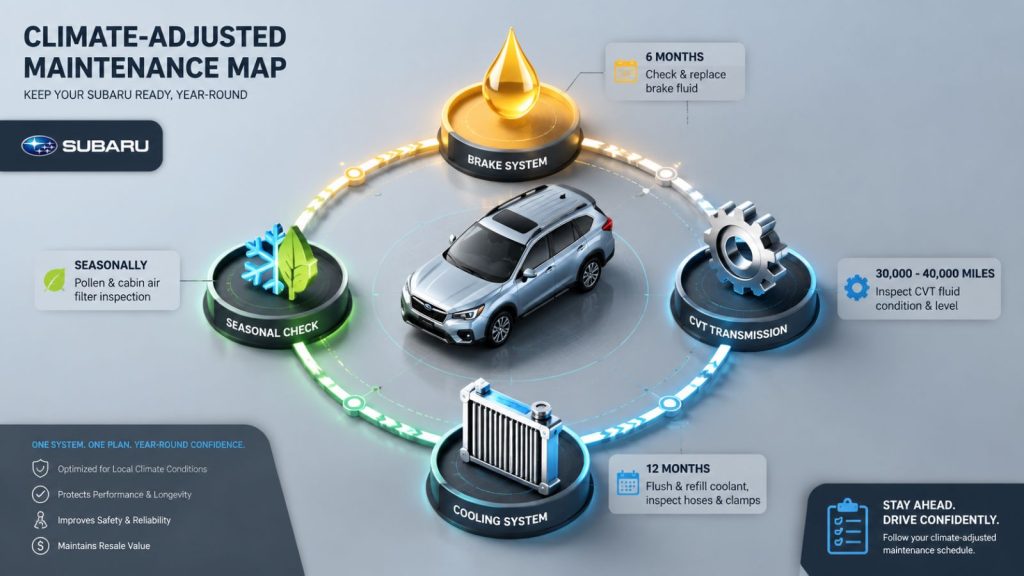
South Texas heat accelerates brake fluid moisture absorption, CVT fluid degradation, and cooling system stress beyond standard interval assumptions. Spring pollen season adds a separate seasonal checkpoint for cabin filter and MAF sensor checks. Hot weather and rough trails mean you should check your AWD system much sooner. We bundle all four adjustments into one […]
Predictive Maintenance Technology for San Antonio Subarus
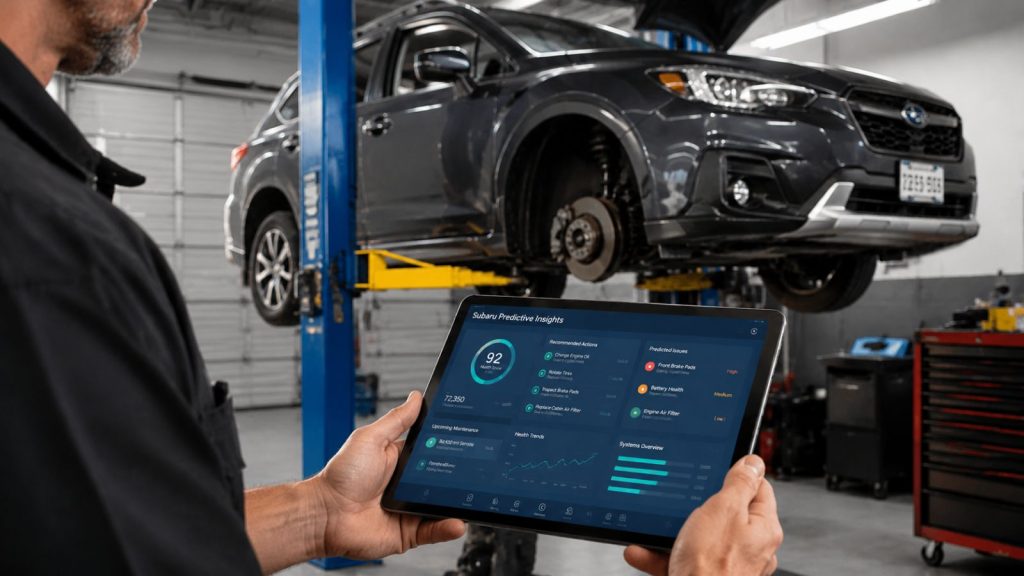
Sensor trend data logged across multiple visits reveals gradual drift toward a failure threshold well before a single reading looks abnormal. By checking your route against common driving cycles, our software builds a much sharper picture of when you will arrive. Drift happens way quicker in the South Texas heat than it does in milder […]
Subaru Ownership Costs Beyond 100000 Miles in San Antonio
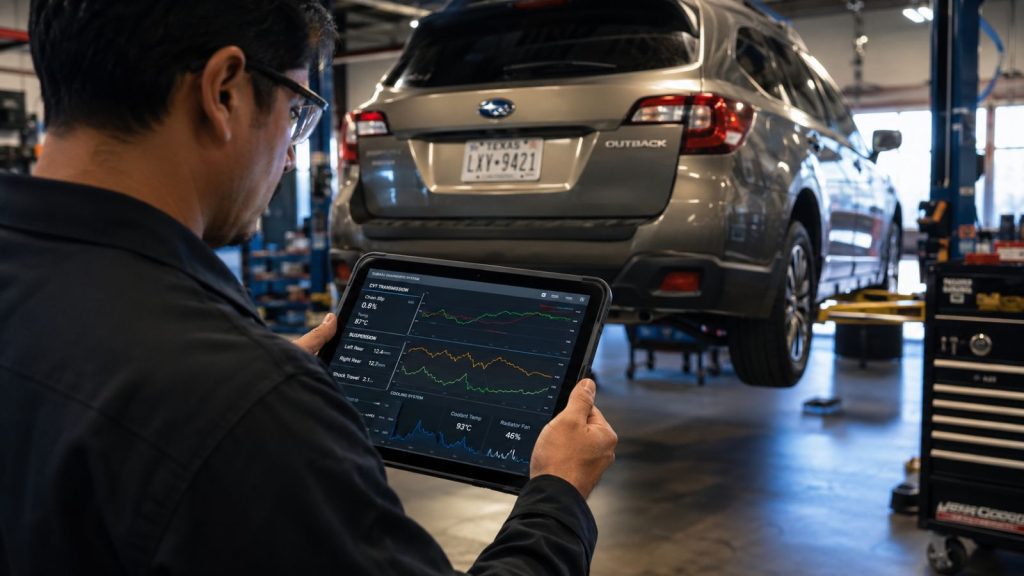
Past 100,000 miles, San Antonio Subarus face a combined cost profile across CVT fluid degradation risk, suspension wear from uneven surface streets, and cooling system fatigue from cumulative heat cycling. Owners who plan maintenance across all three systems together typically manage total cost more predictably than those addressing each one reactively as it fails. Why […]
Small Subaru Oil Leaks That Become Engine Repairs
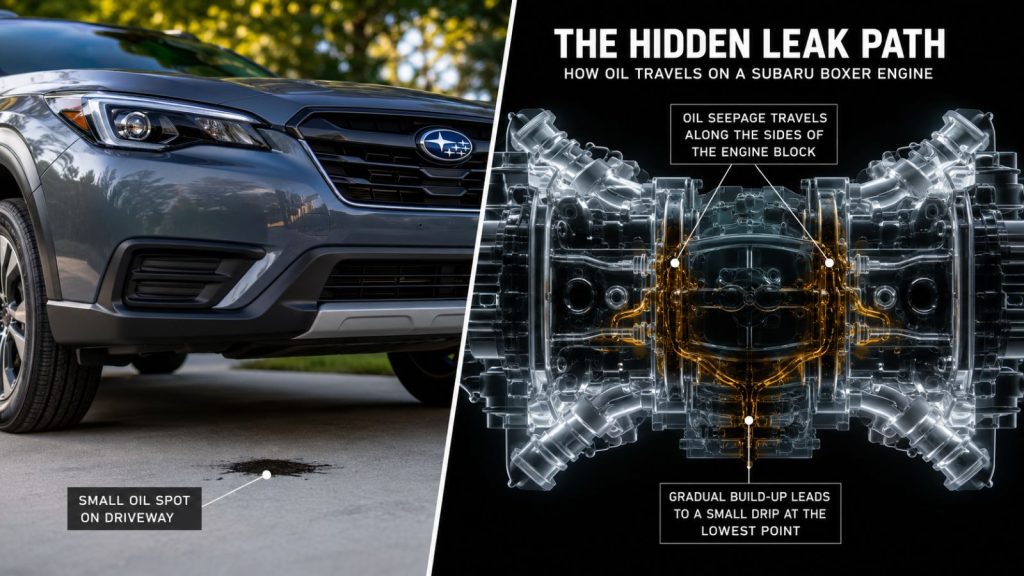
A small Boxer engine oil leak rarely stays small. Gasket seepage travels along the block before dripping, so the visible spot often misrepresents the actual source. Sustained heat accelerates gasket wear, and unaddressed leaks gradually reduce oil pressure below normal range, increasing bearing wear risk. Early gasket replacement costs far less than repairing damage from […]
Subaru Repair vs. Replace Decisions for High Mileage Cars
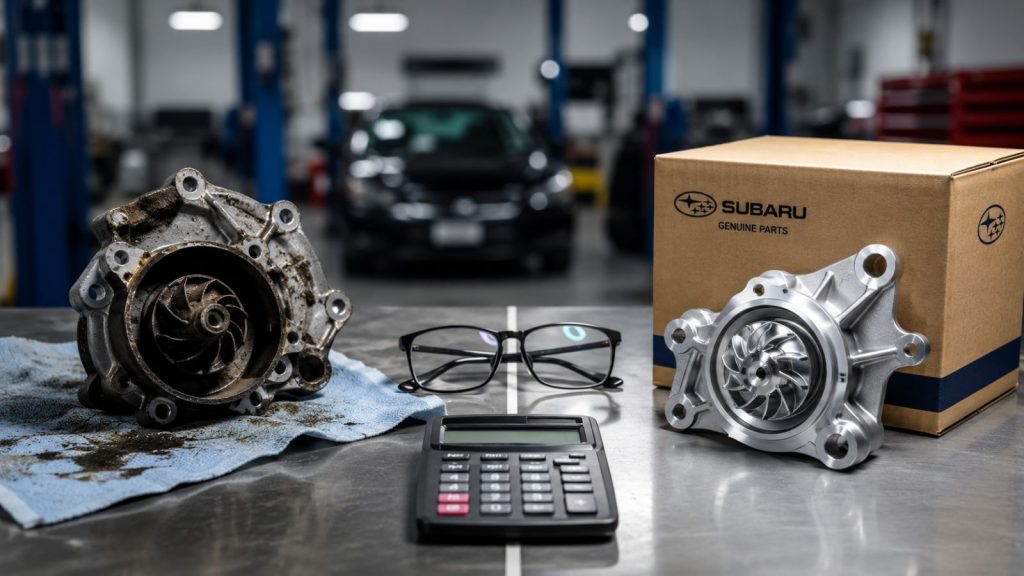
Aging Subaru components near or past OEM lifespan carry measurably higher failure risk, even when currently passing inspection. When repair cost approaches a substantial share of replacement cost, or labor exceeds part cost, replacement often becomes the more economical choice. High mileage vehicles frequently show multiple components aging together, turning a single repair decision into […]