Interstate 410 stop-and-go congestion, combined with 102°F to 108°F summer heat, pushes Subaru cooling systems past their normal operating range. Below 15 to 20 mph, radiator airflow drops sharply, forcing the electric fan to run continuously instead of cycling. That sustained load raises coolant temperature and pressure, and debris buildup on the radiator face makes the problem worse over time.
Why Interstate 410 Congestion Pushes Subaru Cooling Systems Past Normal Range
A radiator depends on airflow to move heat away from the engine. Highway speed provides most of that airflow for free.
Below roughly 15 to 20 mph, that free airflow drops off sharply. The electric cooling fan has to pick up nearly the entire cooling load on its own, and Interstate 410 congestion holds vehicles in that low-speed range for extended stretches.
Fan duty cycle data tells a consistent story on Interstate 410 commuter Subarus. During sustained summer congestion, the fan often runs continuously instead of cycling on and off the way it does in normal highway driving.
Diagnostic Verdict. Scan tool data on an Interstate 410 commuter vehicle showed the cooling fan running at full duty cycle for over 20 consecutive minutes during afternoon congestion.
How We Actually Test Radiator Efficiency and Fan Performance
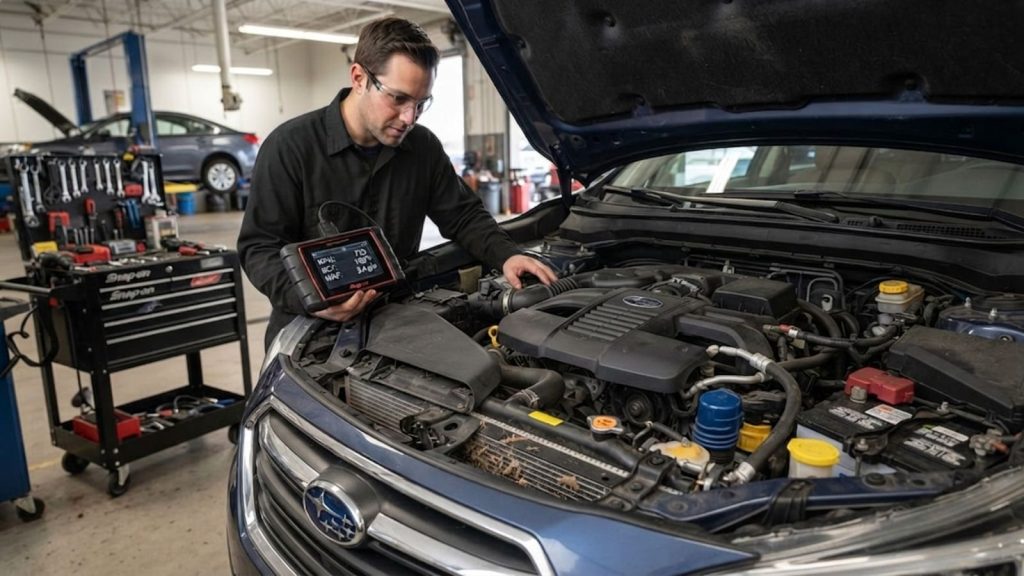
Testing starts with a scan tool pull for fan duty cycle and coolant temperature data during a simulated stop-and-go cycle. A quick idle check alone won’t reveal what happens under sustained load.
From there, we inspect the radiator face directly. Debris, pollen buildup, and bent fins all reduce heat transfer efficiency, and that reduction shows up as a measurable gap between expected and actual cooling performance.
Airflow testing across the radiator face confirms how much of that gap comes from physical restriction versus fan performance. Both numbers matter, since they point to different fixes.
Diagnostic Verdict. Airflow testing on a radiator with visible debris buildup measured output well below the manufacturer’s expected range for a clean unit.
What Reduced Airflow Does to Coolant Pressure and Engine Temperature
Many Subaru owners assume a normal-reading temperature gauge means the cooling system has no problem. The diagnostic reality is different, and the readings show why.
Coolant pressure can climb toward the radiator cap’s release threshold well before the dashboard gauge shows anything unusual. Sustained heat load from congestion, combined with extreme ambient temperature, pushes pressure higher even while the gauge still sits in its normal range.
Coolant temperature itself can climb several degrees above the normal operating point during a long congestion cycle. It typically recovers once traffic clears, but the stress on hoses, gaskets, and the radiator cap accumulates with each cycle.
Diagnostic Verdict. Coolant pressure testing on a vehicle with a normal-reading gauge measured near the upper end of the radiator cap’s release threshold after 30 minutes of Interstate 410 congestion.
The Overheating Pattern We See Most in San Antonio Summer Traffic
Radiator inspections on high-mileage commuter Subarus tend to turn up the same story. Debris accumulation builds gradually, well before any dashboard warning ever appears.
That gradual buildup matters most on routes like Interstate 410, where sustained low-speed congestion during summer months compounds the effect of a partially restricted radiator. A radiator running at reduced efficiency simply can’t keep pace with sustained heat load the way a clean one does.
By the time a driver notices a temperature warning, the radiator restriction has often been building for months. The warning is the last stage, not the first sign.
Diagnostic Verdict. A radiator pulled for cleaning after a customer-reported overheating event showed fin restriction consistent with months of accumulated debris, not a sudden failure.
When Cooling Stress Becomes a Repair or Preventive Service Decision
Catching radiator restriction before a temperature warning changes the outcome. A cleaning and inspection at that stage often resolves the issue without any parts replacement.
Waiting past that point raises the stakes. Sustained coolant pressure near the release threshold, paired with elevated temperature cycles, increases the risk of hose failure or gasket stress that a simple cleaning won’t fix anymore.
A Subaru cooling system service at Ruben’s Auto Repair evaluation before peak summer congestion season gives an owner the chance to catch restrictions early.
Diagnostic Verdict. Vehicles serviced with a preventive radiator cleaning before summer congestion season have shown normal fan duty cycle behavior on follow-up testing.
Get Ahead of Cooling System Stress Before Peak Summer Traffic
Subaru owners commuting through Interstate 410 can call or schedule a cooling system evaluation with Ruben’s Auto Repair, 7210 Polar Bear, San Antonio, TX 78238, at (210) 647-1148, before radiator restriction turns into an overheating repair.
Frequently Asked Questions
Does Interstate 410 traffic really make Subaru overheating worse?
Yes, sustained low-speed congestion cuts radiator airflow and forces the cooling fan to run continuously.
Can a Subaru overheat without the temperature gauge showing a problem?
Yes, coolant pressure can climb toward its release threshold before the gauge shows anything unusual.
Why does radiator debris matter if the fan still works?
A clogged radiator restricts heat transfer even when the fan runs at full duty cycle.
Should the radiator get checked before summer traffic season starts?
Yes, a preventive cleaning before peak congestion often resolves early restriction without parts replacement.
Is a sudden overheating warning usually a new problem?
No, radiator restriction typically builds for months before a warning ever appears.