
Hard shifting after parking in direct sun traces to transmission fluid viscosity dropping below 10 cSt above 120°C, delaying valve body line pressure buildup by 2 to 4 seconds on the first departure shift. Stone Oak’s exposed shopping lots push fluid past that threshold during a typical 30 to 60 minute visit. The hard shift resolves once fluid temperature normalizes during the drive.
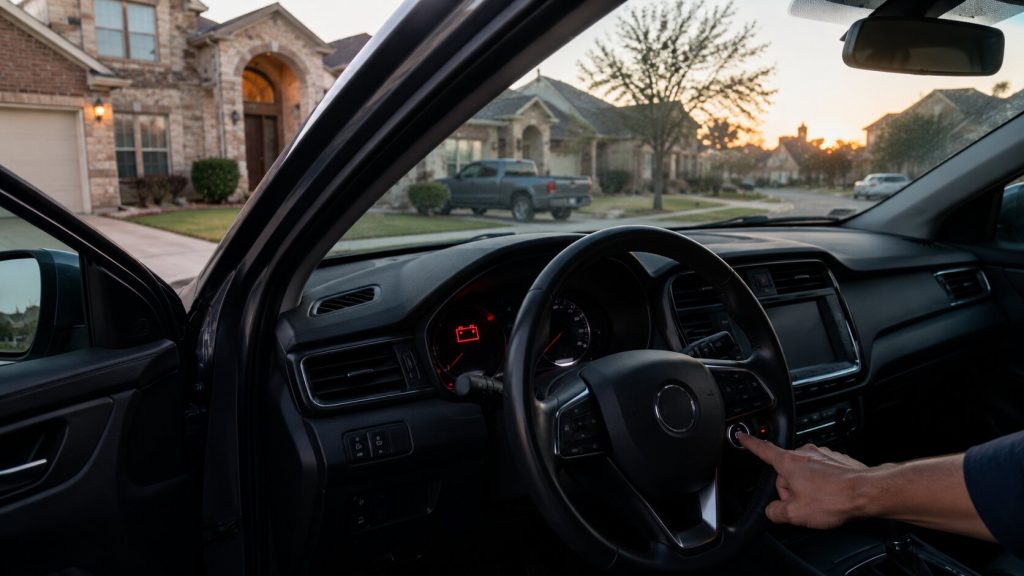
What Transmission Fluid Heat Soak Does to Hydraulic Pressure and Gear Engagement
Transmission fluid does two jobs at once. It lubricates moving parts and it transmits hydraulic pressure to apply the clutch packs that engage each gear. OEM automatic transmission fluid viscosity specification for most modern platforms falls between 30 and 40 centistokes at 104°F operating temperature, providing the film strength needed for clean clutch pack engagement.
At fluid temperatures above 120°C (248°F), viscosity drops below 10 cSt. That thinning reduces hydraulic pressure transfer efficiency at the valve body. A functional valve body builds line pressure to its operating range of 60 to 90 PSI within 1 to 2 seconds of the first gear engagement after startup. On heat-soaked fluid, that pressure buildup is delayed because thinned fluid takes longer to fill the hydraulic circuit and seat the clutch pack pistons.
Shift solenoids add a second layer to the delay. Solenoids respond to PCM commands within 50 to 100 milliseconds under normal fluid temperature. At fluid temperatures above 120°C, that response time extends because thinned fluid changes the hydraulic resistance the solenoid valve works against. The combined delay from valve body pressure buildup and solenoid response produces the flare or hard clunk drivers feel pulling out of a hot parking space.
Transmission fluid level compounds the effect on a system already running low. A transmission running 0.5 to 1.0 quart below the OEM fill specification has reduced thermal mass to absorb heat soak. That reduced volume reaches peak heat-soak temperature faster and at a higher value than a properly filled system, producing a more pronounced hard shift on the first engagement.
Diagnostic Verdict. On vehicles presenting with Stone Oak parking lot hard shift complaints, scan tool transmission fluid temperature data confirms readings above 120°C at the first post-parking gear engagement in the majority of cases, with line pressure buildup delayed 2 to 4 seconds compared to the 1 to 2 second OEM specification on the same vehicles.
How Stone Oak Shopping Area Parking Conditions Create Peak Transmission Heat Soak
Stone Oak’s parking environment is built for heat soaking. The Stone Oak Pkwy shopping corridor near Loop 1604 hosts extensive surface parking lots with minimal tree shade coverage. A vehicle parked in an unshaded space during a 30 to 60 minute shopping visit in June ambient temperatures of 98°F to 104°F absorbs radiant heat from both direct sun and the surrounding asphalt surface, which itself reaches temperatures of 140°F to 160°F.
Vehicles approaching the Stone Oak shopping corridor via Loop 1604 in June stop-and-go traffic arrive with transmission fluid already elevated above the cool baseline from the drive itself. That pre-arrival temperature elevation reduces the thermal margin available before the parking lot heat-soak period pushes fluid past the viscosity degradation threshold. The parking session does not start the heat-soak process from a cold baseline. It compounds an already-warm system.
Stone Oak and Shavano Park residents running errands at the shopping corridor during June weekday afternoons represent the highest-frequency exposure to this pattern in Ruben’s service area. Multiple short shopping stops in sequence, each involving a parking heat-soak period followed by a first-gear hard shift on departure, repeat the thermal cycle several times within a single afternoon errand run.
In vehicles we service from the Stone Oak and Shavano Park area with hard shift complaints, transmission fluid condition on inspection consistently shows oxidation discoloration and a burnt smell on vehicles where the fluid has not been serviced within the OEM interval. The complaint arrives most frequently after June and July afternoon shopping trips, matching the peak heat-soak parking window at the Stone Oak Pkwy corridor.
Diagnostic Verdict. On Stone Oak and Shavano Park area vehicles with repeated afternoon errand patterns, transmission fluid inspection confirms oxidation discoloration and degraded smell in the majority of hard shift cases, with fluid service interval exceeding OEM specification on the same vehicles.
The Hard Shift Pattern From Fluid Viscosity Drop to Valve Body Pressure Delay
The hard shift has a specific shape. It happens once, at the first gear engagement after leaving a hot parking space. It does not repeat for the rest of the drive. That single-event behavior is the key diagnostic signal.
When the driver pulls out of a Stone Oak parking space, the transmission attempts to engage drive or first gear with fluid still at or near peak heat-soak temperature. Viscosity is at its lowest point. Line pressure buildup is at its slowest. Solenoid response is at its most delayed. All three factors stack at the exact moment the transmission needs them to work together cleanly, and the result is the flare or clunk the driver feels.
As the drive continues, fresh fluid circulates through the cooler and the radiator-mounted transmission cooler line. Fluid temperature drops back toward the normal operating range within a few minutes of moving traffic. By the second or third shift, viscosity has recovered enough that line pressure builds within the normal 1 to 2 second window, and the shift feels completely normal again.
The pattern we see most often on Stone Oak area vehicles with heat-soak hard shift complaints is exactly this single hard clunk or flare into gear on the initial departure from a parking space, followed by normal shifting for the rest of the drive. That single-event pattern that resolves after the first shift is the diagnostic signature of fluid heat soak rather than a progressive mechanical failure inside the transmission.
Diagnostic Verdict. On vehicles where the hard shift occurs exclusively at first engagement after extended parking and does not repeat through the remainder of the drive, scan tool fluid temperature trace confirms a return to normal operating range within 5 to 8 minutes of continued driving, consistent with heat-soak recovery rather than internal mechanical degradation.
What the Diagnostic Process Confirms Before Transmission or Solenoid Service
Internal clutch pack wear gets blamed for hard shifting more often than the evidence supports. A worn clutch pack produces a hard or slipping shift that is present consistently across multiple drive cycles, not isolated to the first shift after a hot parking stop. That distinction matters because a transmission rebuild or replacement on a vehicle with a heat-soak fluid issue does not resolve the symptom.
Many drivers and some service advisors assume a hard shift means internal clutch pack wear or a failing transmission and expect a rebuild. Heat-soak fluid degradation produces a hard shift that occurs specifically on the first engagement after extended exposed parking and does not repeat on subsequent shifts once fluid temperature normalizes during the drive. A hard shift that persists across the entire drive regardless of fluid temperature points toward an internal mechanical fault requiring further diagnosis before any fluid service is performed.
The scan tool fluid temperature reading at the first post-parking shift is the diagnostic checkpoint. A reading above 120°C at the moment of the hard shift, combined with normal shifting for the remainder of the drive, confirms heat soaking as the source. A reading within normal operating range at the time of a persistent hard shift rules out heat soak and shifts the diagnostic focus to clutch pack wear, solenoid failure, or valve body wear that requires teardown inspection.
Drivers who need a San Antonio mechanic for transmission fluid and hydraulic pressure diagnosis near Stone Oak benefit from that scan tool checkpoint before a fluid service or a more invasive transmission repair is approved. Fluid condition inspection confirms oxidation and additive depletion as contributing factors when present, since degraded fluid reaches higher peak temperatures under the same heat-soak load than fresh fluid.
Diagnostic Verdict. On vehicles where the scan tool confirms fluid temperature above 120°C at the hard shift event and normal shifting resumes within minutes, transmission fluid replacement with OEM-specified ATF resolves the heat-soak hard shift in the confirmed majority of Stone Oak area cases, without solenoid or internal component replacement.
Stone Oak and Shavano Park drivers noticing a hard shift after parking in the sun can schedule a transmission fluid and hydraulic pressure diagnostic with Ruben’s Auto Repair,