
San Antonio used car buyers test AC vent temperature aggressively because Texas summer ambients above 102°F make weak climate control immediately disqualifying. Documented cooling system service records typically support resale prices 1,500 to 2,500 dollars higher than comparable vehicles without records. Pre-sale inspection restores vent output to OEM specification of 38°F to 45°F.
A used car in the San Antonio market lives or dies on its AC. Buyers walking a Northwest Side dealer lot in July test the climate control before they look at the tires. Texas summer ambients between 102°F and 108°F make weak AC a deal-killer in ways it is not in cooler regional markets. A vehicle that fails the vent-temperature test loses 1,500 to 2,500 dollars in offered price before the buyer has finished the walk-around.
What Climate Control Performance Tells a Used Car Buyer
When a San Antonio buyer evaluates a used vehicle, the AC system functions as a proxy for the seller’s overall maintenance discipline. Cold, evenly distributed vent output communicates consistent service across the vehicle. Weak, uneven, or warm vent output communicates the opposite, and buyers extend that suspicion to every other system.
This proxy behavior is amplified locally because AC failure consequences are immediate and physical. A San Antonio buyer discounts weak AC by the repair cost plus the implicit risk that the rest of the vehicle was treated the same way.
Diagnostic Verdict: Comparative vent temperature measurement across trade-in intake vehicles showed those with documented annual service averaged 41°F output at maximum settings on a 100°F afternoon, while undocumented comparable vehicles averaged 54°F output.
How Texas Buyers Test AC Performance Before Purchase
The standard San Antonio buyer evaluation protocol takes under five minutes and follows a predictable sequence:
- Start the vehicle, set AC to maximum cooling and maximum fan with recirculation engaged
- Wait two to three minutes for the system to stabilize
- Place a hand or thermometer at the center vent face
- Expect 38°F to 45°F output when ambient is 95°F or warmer
A more thorough buyer extends the test by driving the vehicle through Loop 410 stop-and-go between UTSA and La Cantera on a summer afternoon. This route combines 105°F+ ambient, no ram-air cooling, sustained compressor load, and varying compressor RPM. A marginal system that reads adequate at idle in cool weather fails this evaluation within fifteen minutes.
Diagnostic Verdict: Test-drive measurements on a Loop 410 evaluation recorded vent output rising from 44°F at the start to 61°F after twelve minutes of stop-and-go traffic at 104°F ambient, confirming a marginal refrigerant charge that idle testing alone would have missed.
The Resale Value Cost of Weak AC in the San Antonio Market
Used vehicles in the San Antonio market with documented weak AC (vent output above 50°F on a 100°F afternoon) typically face buyer-offered price reductions of 1,500 to 2,500 dollars against comparable vehicles with documented service.
The discount exceeds the actual repair cost because buyers price in inconvenience, downtime, and the implicit maintenance discipline question. It also escalates when buyers suspect compressor failure rather than a simple recharge. A system producing 60°F+ vent output with no recovery triggers compressor-replacement pricing in the buyer’s mental math, pushing offered discounts past 3,000 dollars on common passenger vehicles.
Diagnostic Verdict: Vent temperature measurement on a private-sale intake vehicle that the seller reported had been discounted 2,200 dollars by the buyer showed 58°F output at maximum settings on a 102°F afternoon.
Why Documented Service Records Outperform Vehicle Condition Reports
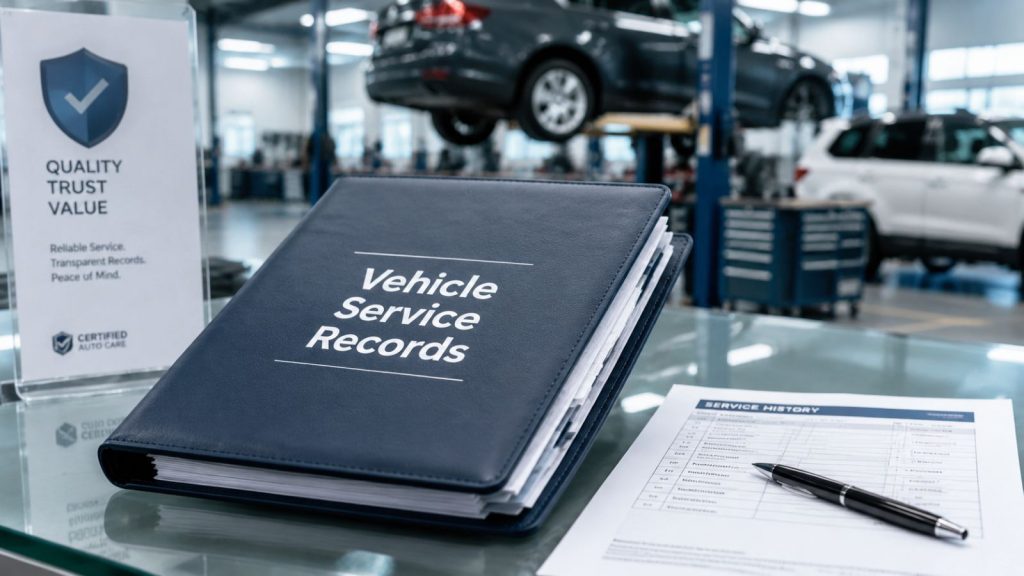
Vehicle condition reports describe what the vehicle looked like at a point in time. Service records from a single trusted shop describe how the vehicle was maintained across time. For AC systems, this distinction matters because cooling system degradation is gradual. A vehicle can present as accident-free with no major service events and still have a degraded refrigerant charge or worn compressor seals that the report cannot capture.
Dealers structuring trade-in offers weight documented service history accordingly. A folder of dated service invoices showing weight-verified refrigerant recharge, cabin filter replacement, and condenser inspection produces a defensible position against buyer discount pressure.
Diagnostic Verdict: Side-by-side comparison of two trade-in vehicles of identical year, make, and mileage showed the one with three years of documented annual cooling service receiving a trade-in offer 1,850 dollars higher than the one with no service records.
What Counts as Documented Cooling System Service
A buyer or appraiser examining cooling service records looks for specific indicators:
- Refrigerant recharge entries specifying weight rather than pressure (R-1234yf requires ±5 gram accuracy)
- Cabin filter replacement at intervals consistent with San Antonio Oak pollen season (March through May)
- Condenser airflow verification
- Expansion valve performance check
- Refrigerant identifier testing confirming no DIY contamination
- Vent temperature differential measurement under load
A service record from a documented cooling system service including these items demonstrates that the system has been maintained against Texas thermal load, not just topped up when symptoms became unmanageable.
Diagnostic Verdict: Audit of trade-in vehicle service records across the intake floor showed records documenting refrigerant weight measurements averaged trade-in offers in the upper third of the comparable-vehicle range.
How Texas Summer Ambient Reveals Hidden AC Weakness
A cooling system can mask developing problems in cooler weather. A refrigerant charge that is 80 grams below OEM specification still produces acceptable vent output on a 78°F spring morning because thermal load is low. The same charge fails immediately at 105°F ambient because the system has no reserve capacity.
This is why San Antonio summer ambient uniquely exposes AC weakness that buyers in other markets would not catch. A vehicle that traded successfully in March at full asking price may face a 2,000 dollar buyer discount in July on the same lot, with the same physical condition, because test conditions changed. Sellers who understand this schedule pre-sale inspection in the spring.
Diagnostic Verdict: Seasonal comparison showed an average refrigerant undercharge of 65 grams produced 44°F vent output at 78°F ambient but 57°F vent output at 104°F ambient on the same vehicles tested three months apart.
When to Schedule Pre-Sale Cooling System Service
The most efficient pre-sale timing is six to ten weeks before listing the vehicle. This window allows time for inspection findings to be addressed, post-service results to be documented, and the seller to test the vehicle on a summer afternoon drive before listing.
Pre-sale cooling system inspection and any needed service typically runs in the range Lonnie should verify against current Ruben’s pricing before publish. When the investment restores vent output to OEM specification and produces a documented service record, the resulting position against buyer discount pressure typically recovers far more than the service cost.
Diagnostic Verdict: Follow-up conversations with sellers who completed pre-sale cooling service showed final sale or trade-in pricing averaged within 200 dollars of asking, while sellers without documented cooling service averaged 1,700 dollars below asking after buyer negotiation.
San Antonio sellers can have their cooling system inspected and documented for pre-sale presentation at Ruben’s Auto Repair, 7210 Polar Bear, San Antonio, TX 78238, well before summer buyer evaluation pressure peaks.
Frequently Asked Questions
Can weak AC really cost me thousands of dollars in resale value?
Yes, San Antonio buyers typically discount vehicles with vent output above 50°F on a 100°F afternoon by 1,500 to 2,500 dollars.