Warped rotors are a common cause of brake pedal vibration, but they are not the only one. Wheel bearings, tires, worn suspension parts, and alignment problems can all create a similar feel. That is why we do not condemn rotors on the symptom alone. We want to confirm where the vibration actually comes from before anyone pays to replace a part.
Why Everyone Blames the Rotors First
When a car shakes while you brake, rotors are the obvious suspect. The vibration shows up when you press the pedal, and the rotors are right there doing the work, so the connection feels automatic. A lot of drivers walk in already sure they need rotors.
We understand the logic. A vibrating pedal makes rotors an obvious suspect, and often they are part of the story. But treating that first guess as the final answer is exactly how people end up paying for parts that were never the real problem.
The symptom gives us a clue, not the diagnosis. What we want to know is where you feel the vibration and when it happens, because those two details start separating the causes right away.
What the Rotors Actually Do When They Vibrate
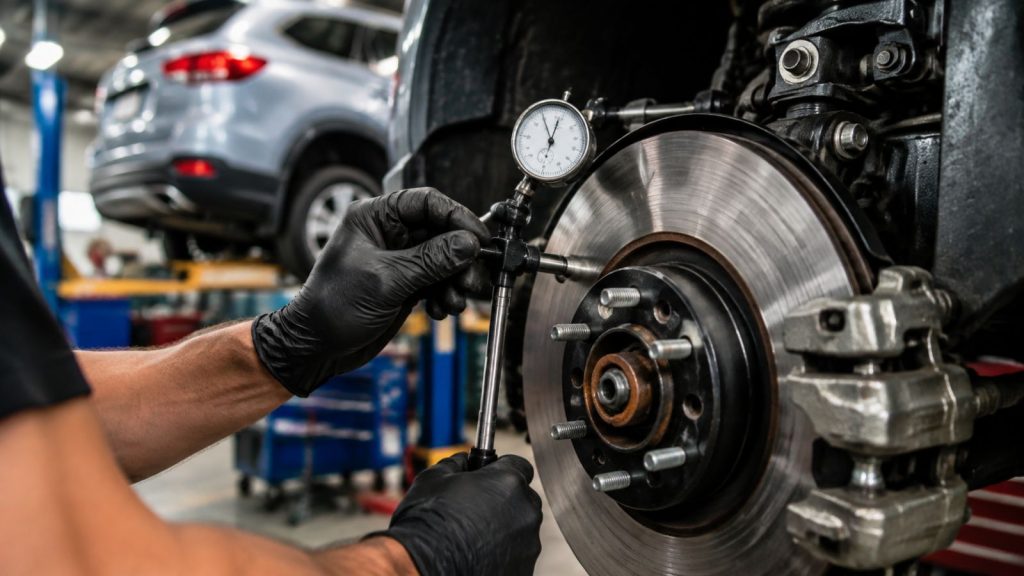
People say “warped rotors,” but true warping from heat is less common than the phrase suggests. More often the issue is thickness variation or runout, meaning the rotor is no longer perfectly uniform or no longer spins perfectly true. As the pad rides across those high and low spots, you feel a pulse through the pedal.
Here is the tell that points at the rotors specifically. This kind of vibration usually appears when you brake and fades when you let off. It is tied to the braking event itself.
The measurements that confirm it are vehicle specific. Rotor runout can be measured with a dial indicator, and thickness variation has limits that change by year, make, and model, so we would not quote a single universal number. The point is that the rotor either measures within its specification or it does not, and that reading tells us more than the way it feels on a test drive.
The Other Suspects a Symptom Can Hide
This is where it gets interesting, because several parts can produce a vibration that feels a lot like brakes.
Tires are the most common one people miss. A tire that is out of balance, or one with uneven wear or a belt problem inside it, will shake the vehicle. The difference is that tire vibration usually shows up at highway speed whether you are braking or not. If you feel it cruising on Loop 1604 with your foot nowhere near the brake, the rotors probably are not the culprit.
Wheel bearings are another. A worn bearing can create a vibration or a droning noise that changes with speed or shifts when you turn, because cornering loads the bearing differently. That is a different signature than a brake pulse.
Then there is the suspension and steering side. Worn tie rods, ball joints, or bushings can create or amplify vibration you feel at the wheel or through the seat, especially after San Antonio potholes have been working on those parts for a while. A vibrating pedal makes rotors an obvious suspect, but we would not stop there when the bearings, tires, and suspension can all mimic the same complaint. If the shake traces back to worn steering or suspension parts, that points toward suspension repair, not a brake job.
How We Narrow Down Where the Vibration Comes From
The fastest way to get this wrong is to replace a part based on the symptom and hope the vibration goes away. We would rather confirm the source first.
Two questions do most of the early sorting. Where do you feel it, and when? Vibration through the brake pedal only when braking leans toward the rotors. Vibration through the steering wheel at a steady highway speed leans toward tires or a front bearing. Vibration through the seat can point further back in the vehicle. None of these is a final answer on its own, but together they tell us where to look first.
A road test can help confirm when and where the vibration appears, and a complete inspection may include the bearings, tires, and suspension, not just the rotors. Alignment fits in here too, though a bit differently. A bad alignment does not usually create vibration by itself, but the uneven tire wear it causes certainly can, which is why a wheel alignment service sometimes ends up part of the picture even when the complaint started as “brake shake.” We want the repair to match what the vehicle is actually doing, not what the symptom seemed to suggest at the counter.
Why Guessing Gets Expensive
Here is the part that matters for your wallet. If the real cause is a tire or a bearing and someone replaces the rotors anyway, you pay for the rotors and still have the vibration. Now you are diagnosing the problem a second time, on top of parts you did not need.
The reverse happens too. Chasing a tire balance when the rotors are genuinely out of spec just delays the fix. Either way, skipping the diagnosis to save a step usually costs more, not less.
That is the whole reason we slow down before condemning a part. Confirming the source once is cheaper than replacing parts twice. If your car has developed a shake and you are not sure what it is telling you, that is worth checking before it turns into a guessing game.
Not Sure What Is Causing Your Brake Vibration
If your pedal or steering wheel has started shaking and you would rather know the real cause than guess at it, we can help sort it out. A proper brake system service starts with finding where the vibration actually comes from, so you fix the right thing the first time. You can reach the shop at (210) 647-1148 and we will walk you through it.
Frequently Asked Questions
Does brake vibration always mean I need new rotors?
No. Rotors are a common cause, but wheel bearings, tires, and worn suspension parts can create a very similar feel. The rotors are the right suspect only if the testing points there, which is why the source is worth confirming before replacing anything.
Why do I feel vibration in the steering wheel but not the brake pedal?
That pattern often points away from the rotors. Vibration felt through the steering wheel at a steady speed, especially when you are not braking, leans more toward tire balance, a tire problem, or a front wheel bearing than toward the brakes.
Can bad tires cause vibration that feels like a brake problem?
Yes, and this one fools a lot of people. An out of balance tire or one with uneven wear will shake the vehicle at highway speed. The clue is that tire vibration usually shows up whether you are braking or not, while rotor vibration is tied to the braking itself.
Can a wheel alignment fix brake vibration?
Not directly in most cases. Alignment does not typically create vibration on its own, but it causes uneven tire wear, and that worn tire can. So an alignment may be part of the solution when tires are involved, even though it is rarely the vibration source by itself.