EV heat pump refrigerant loop switching valves manage pressure transitions between heating and cooling modes while sharing loop capacity with the BMS chiller circuit. In San Antonio July ambient of 102°F to 108°F, battery thermal soak triggers BMS chiller activation before the first drive cycle ends, reducing available cabin cooling capacity by 15% to 25% in the first 8 to 12 minutes of operation.
What EV Heat Pump Switching Valves Do That Conventional HVAC Cannot
EV heat pump systems do not simply cool the cabin. They move thermal energy in both directions, extracting heat from outside air to warm the cabin in cool conditions and rejecting cabin heat to the outside in summer. A switching valve network manages which direction the refrigerant loop runs at any given moment.
A properly functioning switching valve completes a mode transition in 0.8 to 1.5 seconds. That transition is measurable via scan tool actuator test, producing a clean pressure equalization on the live data stream within the same window. A valve with early seal degradation shows transition times of 2.5 to 4.0 seconds, with a corresponding pressure equalization delay of 3 to 6 seconds following the mode switch command.
Conventional HVAC systems do not have switching valves. A standard R-1234yf system runs one refrigerant loop direction continuously. The diagnostic tools, actuator test sequences, and pressure monitoring protocols used on conventional systems do not apply to EV heat pump valve evaluation. Connecting standard HVAC diagnostic equipment to an EV heat pump system produces incomplete data at best and misdiagnosis at worst.
Diagnostic Verdict: A switching valve transition time above 2.0 seconds on scan tool actuator test, with a pressure equalization delay exceeding 3 seconds on live data, confirms early seal degradation requiring valve inspection before the next San Antonio summer demand season.
How San Antonio Humidity Affects EV Heat Pump Seal Condition Over Time
San Antonio spring humidity is the specific stress condition that shortens switching valve seal service life on EV heat pump systems. Morning humidity levels above 65% expose valve seals to moisture-laden refrigerant vapor during the first drive cycle. Afternoon temperatures climbing above 88°F then apply heat stress to the same seals within hours.
This moisture-then-heat cycling pattern repeats across the March through May Oak pollen and humidity season. Elastomeric seal materials in switching valves are rated for temperature and pressure cycling. They are not rated for the frequency of combined humidity and heat transitions that Leon Valley vehicles accumulate during a single San Antonio spring. The degradation timeline compresses accordingly.
In EV vehicles we service from Leon Valley vehicles and Westover Hills, we consistently find switching valve seal condition is the first heat pump component to show wear after two or more San Antonio spring humidity seasons. These vehicles present with reduced cabin cooling response time and delayed mode transitions on scan tool actuator tests. The seal degradation is not visible on a pressure-only gauge check. It requires actuator test timing data to confirm.
Diagnostic Verdict: EV heat pump switching valve seals on Leon Valley vehicles completing two San Antonio spring humidity cycles show actuator transition times averaging 2.8 to 3.5 seconds versus the 0.8 to 1.5 second baseline, confirming moisture-accelerated seal wear ahead of mileage-based replacement intervals.
What the BMS Chiller Circuit Demands From the Heat Pump Loop in July Heat
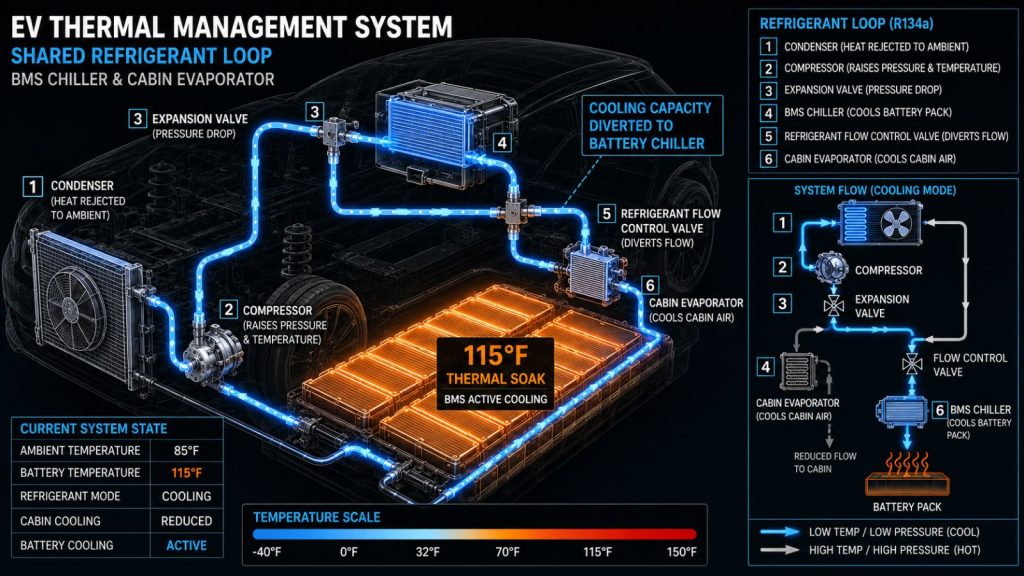
The BMS chiller and the cabin evaporator share the same refrigerant loop on most current EV platforms. That is the detail most EV owner manuals do not make clear. The manual describes cabin climate and battery cooling as independent functions. The refrigerant loop does not operate that way.
Many EV owners assume reduced cabin cooling in the first minutes of a July drive means the system is underperforming or losing refrigerant charge. The diagnostic reality is different. When a Leon Valley vehicle has been parked in direct sun and the battery reaches 110°F to 118°F before the first key cycle, the BMS activates the chiller circuit immediately. That chiller draw reduces available refrigerant capacity for cabin cooling by typically 15% to 25% during the first 8 to 12 minutes of operation. The cabin feels warmer than expected. The system is functioning as designed under South Texas thermal conditions the owner manual does not describe.
The Heating and Cooling Services diagnostic process at Ruben’s covers EV heat pump refrigerant loop evaluation with BMS chiller interaction as a standard diagnostic step, not an afterthought. Distinguishing between a refrigerant charge deficit and a BMS chiller priority event requires scan tool BMS data alongside refrigerant pressure monitoring. A pressure-only check during the first 10 minutes of a July drive will show reduced low-side pressure and produce a false low-charge indication on a vehicle that is fully charged and operating normally.
Diagnostic Verdict: A low-side pressure reading of 30 PSI to 38 PSI during the first 8 minutes of a July drive cycle, accompanied by BMS chiller activation confirmed on scan tool data, indicates normal BMS priority operation rather than refrigerant loss requiring recharge.
EV Heat Pump Compressor Load in Leon Valley Summer Commute Conditions
EV heat pump compressors draw more current in San Antonio July heat than any temperate-climate service document accounts for. In cooling mode at 105°F ambient, the high-voltage compressor controller draws 18 A to 26 A. That sustained draw runs from the moment the BMS chiller activates through the full commute on Hwy 151 to I-410.
The pattern we see most often in Leon Valley EV vehicles during July is compressor current draw trending toward the upper end of the 18 A to 26 A range within the first 10 minutes of the morning commute. These vehicles have been parked in direct sun. The battery is already at 110°F to 115°F before the first key cycle. The BMS chiller activates immediately, and the heat pump loop is managing two simultaneous thermal loads before the driver reaches the I-410 interchange. That is not a fault condition. It is the normal operating profile for this vehicle population in this climate.
What matters diagnostically is the trend across visits. A compressor drawing 19 A to 21 A on a July visit last season and 24 A to 26 A on a current July visit, at comparable ambient temperatures and BMS states, indicates inverter or compressor wear requiring further evaluation. Without a documented prior reading, the current value has no baseline for comparison. This is where digital HVAC service records become a functional diagnostic tool rather than a paperwork convenience.
Diagnostic Verdict: EV heat pump compressor current draw above 26 A in cooling mode at 105°F ambient, with BMS chiller confirmed inactive on scan tool data, indicates compressor inverter stress or internal mechanical resistance requiring high-voltage HVAC system evaluation.
What Leon Valley EV Owners Should Verify Before the Next Service Visit
Leon Valley EV owners have a specific set of system behaviors to understand before the next service appointment. The heat pump switching valves, the BMS chiller interaction, and the compressor current draw all produce symptoms that look like HVAC faults but require EV-specific diagnostic tools and data interpretation to evaluate correctly.
Three system behaviors are worth confirming at the next visit. First, cabin cooling response time in the first 10 minutes of a July drive should be evaluated against BMS chiller activation status, not assumed to reflect refrigerant charge. Second, mode transition response, the time between a temperature set point change and measurable cabin temperature shift, should be consistent across drive cycles. A transition that takes noticeably longer than prior visits warrants a switching valve actuator test. Third, any scan tool fault code referencing the heat pump refrigerant circuit or BMS thermal management should be diagnosed with both refrigerant pressure data and BMS chiller activation data reviewed together.
The vehicles we service from the Westover Hills and Leon Valley corridor on Hwy 151 carry passengers to SeaWorld San Antonio and La Cantera in summer heat with full HVAC demand across multiple occupants. A heat pump system running a degraded switching valve or a misdiagnosed low-charge condition under that load does not simply reduce comfort. It places sustained stress on the compressor inverter and refrigerant loop components that shortens system service life measurably.
Diagnostic Verdict: Leon Valley EV vehicles presenting with slow cabin cooling response in July, confirmed via scan tool as occurring during active BMS chiller operation, require refrigerant loop capacity evaluation under simultaneous BMS and cabin cooling demand before any recharge or valve replacement decision is made.
Leon Valley and Westover Hills EV owners can schedule a heat pump refrigerant loop diagnostic at Ruben’s Auto Repair, 7210 Polar Bear, San Antonio, TX 78238. Call the shop or book an appointment online at rubensautocare.com before July heat puts the switching valve and BMS chiller demand cycle to the test.
Frequently Asked Questions
Does San Antonio humidity damage EV heat pump switching valves faster than dry climates?
Yes, Leon Valley spring humidity above 65% combined with afternoon heat above 88°F creates moisture-then-heat seal cycling that compresses switching valve degradation timelines below standard mileage intervals.
Why does my EV feel less cool in the first few minutes of a July drive?
Yes, BMS chiller activation in vehicles parked in direct San Antonio sun reduces available heat pump refrigerant capacity by typically 15% to 25% during the first 8 to 12 minutes of operation.
Can a standard HVAC shop diagnose an EV heat pump switching valve problem?
No, EV heat pump switching valve evaluation requires scan tool actuator testing that measures transition times of 0.8 to 1.5 seconds, which standard HVAC pressure gauges cannot detect.
What current draw should an EV heat pump compressor show in San Antonio July heat?
Yes, a correctly functioning EV heat pump compressor in cooling mode at 105°F ambient draws 18 A to 26 A at the high-voltage compressor controller under normal BMS chiller conditions.
Does the EV battery cooling system share refrigerant with the cabin AC?
Yes, most current EV platforms route BMS chiller and cabin evaporator circuits through the same refrigerant loop, making simultaneous demand management a required diagnostic consideration in San Antonio July conditions.