A post-refueling no-start in San Antonio June heat traces to EVAP system vapor pressure imbalance from a leaking purge valve, saturated charcoal canister, or degraded fuel cap seal. The engine cranks at normal speed but does not fire because the intake charge is over-rich from fuel vapor bleed-through. The flooded-engine restart protocol confirms the diagnosis before any component is removed.
What EVAP System Pressure Imbalance Does to Fuel Delivery After Refueling
The EVAP system is a sealed pressure management circuit. Its job is to capture fuel vapor from the tank, store it in the charcoal canister, and deliver it to the intake manifold under PCM command through the purge valve during normal engine operation. At rest with the engine off, the purge valve must hold completely closed.
In San Antonio June conditions, fuel tank vapor pressure on a heat-soaked vehicle reaches 0.5 to 2.0 inH2O above ambient within 5 to 10 minutes of engine shutdown. A purge valve with internal seat wear or a stuck-open condition allows that pressure to push vapor through the closed valve and into the intake manifold. The intake charge arrives at the combustion chamber over-rich before the first crank attempt on restart.
The charcoal canister is the second failure point. A functional canister holds 60 to 250 grams of activated carbon, sized to absorb vapor from normal temperature cycles. Repeated San Antonio heat-soak cycles raise fuel tank temperatures above 110°F to 130°F, generating vapor at a rate that exceeds the canister’s designed absorption capacity on vehicles with high daily fueling frequency. Canister saturation above its design limit allows liquid fuel to migrate into the canister body and purge line.
The fuel cap seal is the third failure point. OEM EVAP system integrity requires the fuel cap to hold a pressure test of 14 to 16 inH2O. A cap with a degraded rubber O-ring from repeated San Antonio heat cycling holds only 8 to 10 inH2O. That reduced seal allows vapor to escape during heat soak and creates a pressure differential that draws fuel vapor into the canister vent path when the cap is opened for refueling.
Diagnostic Verdict. On vehicles presenting with post-refueling no-start complaints, scan tool data confirms one or more active codes from P0440, P0441, P0446, or P0172 at the time of the diagnostic visit, with fuel trim readings above plus 15% at idle confirming an over-rich intake condition from EVAP vapor bleed-through at the time of the no-start event.
How San Antonio Heat Soak at Loop 1604 and Bandera Road Fueling Stations Triggers No-Start
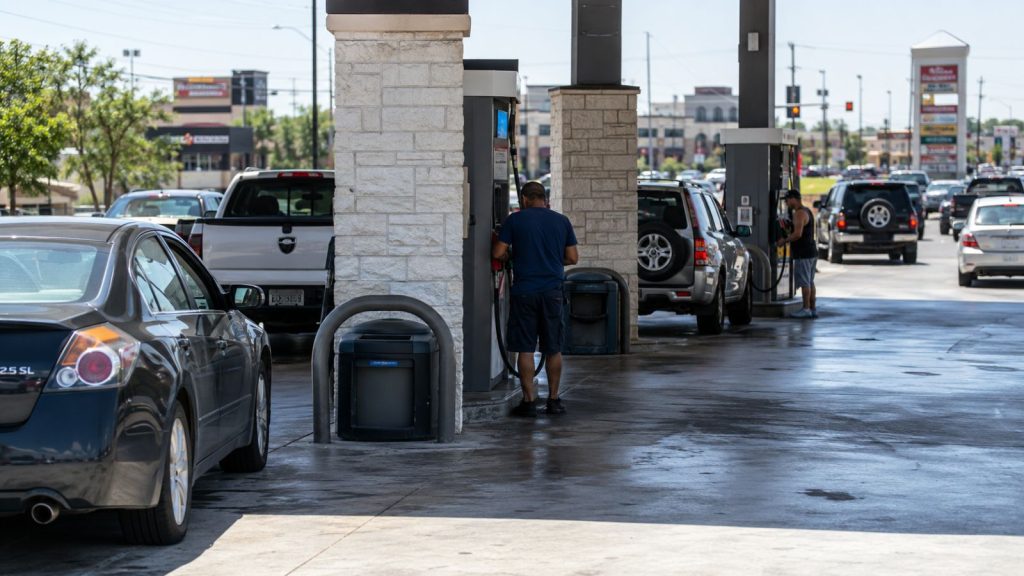
The fueling environment matters. The stations at the Loop 1604 and Bandera Road interchange serve the La Cantera and Westover Hills commercial corridor on exposed asphalt with minimal shade coverage. A vehicle arriving at these stations after sustained stop-and-go driving on Loop 1604 in June ambient temperatures of 98°F to 104°F carries underhood temperatures well above ambient at engine shutdown.
La Cantera shopping area traffic on Loop 1604 near Bandera Road creates a pre-fueling stop-and-go heat build that raises fuel system temperatures before the driver reaches the pump. A vehicle spending 20 to 30 minutes in La Cantera parking lot traffic arrives at the fueling station with the fuel system already at or near maximum heat-soak temperature. That pre-fueling heat build eliminates the cool-down margin that would otherwise allow the EVAP system to rebalance vapor pressure before the restart attempt.
The refueling event itself adds a pressure release. Opening the fuel cap releases the sealed tank pressure to the atmosphere briefly. That release draws ambient air into the tank through the canister vent path on a healthy system. On a vehicle with a saturated canister or a degraded vent valve, the pressure release instead draws liquid fuel deeper into the canister body, blocking the vapor absorption capacity that the system needs to manage the restart fuel charge.
In vehicles we service from the Castle Hills and Northwest Crossing area with post-refueling no-start complaints, scan tool findings consistently show P0440 or P0441 EVAP codes alongside fuel trim readings above plus 15% at idle. The complaint arrives most frequently in the afternoon hours during June, matching the peak heat-soak refueling window at the Loop 1604 and Bandera Road stations. Westover Hills vehicles show the same scan tool pattern after afternoon refueling events on the same corridor.
Diagnostic Verdict. On northwest side vehicles with afternoon post-refueling no-start complaints from the Loop 1604 and Bandera Road corridor, fuel cap pressure testing confirms seal integrity below 12 inH2O on the majority of vehicles presenting with P0440 or P0441 codes, with canister inspection showing liquid fuel contamination in the carbon bed on vehicles with repeated heat-soak refueling history.
The Vapor Lock Restart Failure Pattern From Refueling to Cranking Without Start
The symptom has a precise behavioral signature. The engine cranks at normal starter speed, typically 200 to 250 RPM on a healthy battery. It does not fire. The driver tries again. On the second or third attempt with the accelerator pedal held to the floor, the engine starts and runs normally. That sequence is not random.
Holding the accelerator pedal to the floor during cranking signals the PCM to command zero fuel injector pulse width, a flood-clear mode designed to purge an over-rich intake charge. When that protocol works, it confirms the intake was flooded with fuel vapor at the time of the first crank attempt. The engine did not fail to start because of weak cranking, no spark, or a mechanical fault. It failed to start because the air-fuel mixture was too rich to ignite on the first attempt.
The smell at the tailpipe on a failed first crank attempt confirms the finding. A strong raw fuel odor from the exhaust on the first crank attempt, followed by normal startup on the flood-clear crank, is the sensory confirmation of an over-rich intake condition from EVAP vapor bleed-through. That odor is not present on a battery, starter, or crankshaft sensor failure.
The pattern we see most often on San Antonio post-refueling no-start complaints is exactly this sequence. The driver reports normal cranking speed but no fire on the first attempt, then a successful start on the second or third try with the pedal to the floor. That flooded restart protocol working on the second crank is the behavioral signature of EVAP vapor bleed-through. It repeats consistently after refueling at the Loop 1604 and Bandera Road stations on the same hot-weather afternoons.
Diagnostic Verdict. On vehicles where the flood-clear restart protocol resolves the no-start on the second or third crank attempt, OBD-II scan tool short-term fuel trim at idle reads above plus 15% at the diagnostic visit, confirming the PCM was compensating for a persistently rich intake condition consistent with ongoing EVAP purge valve leakage.
What the Diagnostic Process Confirms Before EVAP or Fuel System Service
Three other crank-no-start causes get blamed for post-refueling no-start events. Fuel pump failure, battery failure, and crankshaft position sensor failure all produce a crank-no-start condition. None of them produce a crank-no-start that resolves with the flood-clear protocol and recurs specifically after hot-weather refueling events.
Fuel pump failure produces a no-start on every attempt at any temperature, any time of day, regardless of whether the vehicle was just refueled or has been parked overnight. A failed fuel pump does not care about refueling events or June heat. It fails consistently. Battery and starter problems produce slow or weak cranking, not normal-speed cranking at 200 to 250 RPM without fire. A crankshaft position sensor failure produces a no-spark condition that the flood-clear protocol does not resolve because the engine has no ignition signal, not a rich mixture.
Post-refueling EVAP vapor lock is the only crank-no-start cause that resolves with the flood-clear protocol, recurs specifically in hot-weather fueling conditions, and produces an over-rich fuel trim reading on the scan tool at the diagnostic visit. Those three characteristics together confirm the EVAP system as the source before any component is removed. Drivers who need a San Antonio mechanic experienced with EVAP and fuel system diagnosis on the northwest side benefit from that pattern-specificity test before a fuel pump or battery replacement is approved.
The diagnostic sequence after pattern confirmation is systematic. Fuel cap pressure test confirms seal integrity at 14 to 16 inH2O. Purge valve leak-down test under vacuum confirms whether the valve holds closed at rest. Canister inspection confirms whether liquid fuel contamination is present in the carbon bed. OBD-II code freeze frame data confirms whether the EVAP codes are set before or after the refueling event. Each step narrows the confirmed repair without guessing.
Diagnostic Verdict. On vehicles where the pattern-specificity test confirms EVAP vapor lock as the no-start source, purge valve leak-down testing finds the valve failing to hold vacuum at rest in the majority of confirmed cases, with fuel cap seal integrity below 14 inH2O and canister liquid fuel contamination present on vehicles with repeated heat-soak refueling complaints from the Loop 1604 and Bandera Road corridor.
Northwest side drivers who experience a no-start after fueling at Loop 1604 and Bandera Road in June heat can schedule an EVAP and fuel system diagnostic with Ruben’s Auto Repair, 7210 Polar Bear, San Antonio, TX 78238, at (210) 647-1148, before a leaking purge valve or saturated canister turns a hot-weather inconvenience into a repeated stranding event.
Frequently Asked Questions
Why won’t my car start after getting gas near Loop 1604 in San Antonio?
Yes, EVAP system vapor pressure imbalance from a leaking purge valve or saturated canister floods the intake with fuel vapor during heat-soak refueling events at the Loop 1604 and Bandera Road fueling stations.
What does it mean if my car starts on the second try with the gas pedal to the floor after fueling?
Yes, a successful flood-clear restart on the second crank attempt confirms an over-rich intake charge from EVAP vapor bleed-through, with scan tool fuel trim readings above plus 15% confirming the rich condition.
What OBD-II codes appear after a post-refueling no-start in San Antonio heat?
Yes, P0440, P0441, P0446, and P0172 are the most commonly confirmed codes on northwest side vehicles presenting with post-refueling no-start complaints after June heat-soak fueling events.
Can a bad fuel cap cause a car not to start after fueling in San Antonio?
Yes, a fuel cap seal holding below 14 inH2O instead of the OEM specification of 14 to 16 inH2O allows vapor pressure loss during heat soak that disrupts EVAP system rebalancing on post-refueling restart.
Is a post-refueling no-start in San Antonio heat a fuel pump problem?
No, fuel pump failure produces a no-start at any temperature and any time of day, while EVAP vapor lock no-start recurs specifically after hot-weather refueling and resolves with the flood-clear restart protocol.
Does June heat in San Antonio make EVAP system problems worse at fueling stations?
Yes, June ambient temperatures of 98°F to 104°F raise fuel tank temperatures above 110°F to 130°F during heat-soak refueling stops, accelerating canister saturation and purge valve vapor bleed-through beyond what moderate-climate EVAP systems experience.