Coolant pH acidity occurs when old glycol degrades into formic and glycolic acids, dropping pH levels from 9.0 to below 6.0. In San Antonio’s extreme heat, this acidic fluid turns the cooling system into a battery, generating 0.30 V to 0.80 V of electrolysis. This chemical voltage pulls ions from aluminum walls, creating heater core pinhole leaks that require specialized neutralization flushes to resolve.
Glycol Degradation and Electrolytic Failure Pathways
Domestic vehicles typically utilize HOAT (Hybrid Organic Acid Technology) coolant designed to maintain a stoichiometric balance between heat transfer and corrosion protection. However, sustained thermal cycling—such as idling in heat soak during afternoon traffic near North Star Mall—breaks down these chemical buffers. As the ethylene glycol oxidizes, the fluid’s pH level shifts from a protective alkaline state (8.5 pH) to an aggressive acidic state (below 7.0 pH). Once the fluid becomes acidic, it acts as an electrolyte. This allows an electrical current to flow between different metals in the engine block and the radiator, effectively turning the heater core into a sacrificial anode that dissolves from the inside out.
Diagnostic Verdict: Digital pH testing confirmed the fluid had dropped to 5.8 pH, transitioning from a lubricant to a corrosive acid capable of etching internal aluminum surfaces.
Measuring Acidic Voltage Drops and Coolant pH Levels
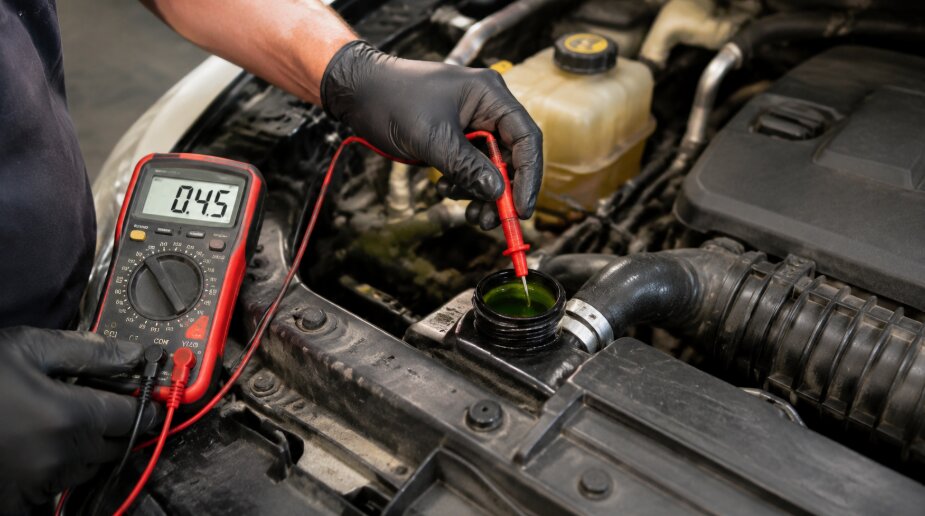
Diagnostic data confirms that chemical degradation is often invisible to the naked eye. We utilize a digital multimeter to measure the precise electrolytic activity within the system. By placing the negative lead on the battery ground and submerging the positive lead directly into the radiator fluid (without touching metal), we can record the stray voltage. A healthy cooling system should show less than 0.10 V. When we observe readings in the 0.30 V to 0.50 V range, it indicates that the coolant’s anti-corrosion additives are depleted, and the fluid is actively stripping ions from the heater core. This process creates microscopic “tunnels” through the metal that eventually result in a pressurized leak.
Diagnostic Verdict: Multimeter testing recorded a steady 0.45 V current flowing through the coolant, proving that electrolysis was actively degrading the internal cooling passages.
San Antonio Thermal Cycling and Heater Core Aluminum Pitting
The localized boiling of coolant during heavy loads—such as pulling a Domestic truck up a Texas Hill Country grade—accelerates aluminum pitting. When the pH level is out of balance, the protective oxide layer on the internal heater core walls cannot reform. This leads to deep, localized pits rather than uniform thinning. Because the heater core has the thinnest aluminum walls in the entire Heating and Cooling Services loop, it is usually the first component to fail. This pitting eventually creates a pinhole, allowing pressurized coolant to escape into the HVAC plenum.
Identifying the “Sweet Smell” of Vaporized Ethylene Glycol
Master technicians identify early heater core failure through the sensory signal of a faint, sweet smell inside the cabin, often accompanied by a greasy film on the interior windshield. This occurs when the pinhole leak is small enough that the coolant vaporizes instantly upon hitting the hot heater core fins. If left unaddressed, the acidity will continue to eat through the aluminum until the core suffers a structural failure, potentially soaking the cabin floorboards in hot glycol.
Diagnostic Verdict: We used an Infrared Pyrometer to record a 28°F temperature delta between the heater core inlet and outlet hoses, confirming an internal restriction caused by accumulated corrosion byproducts and localized pitting.
Verification Protocols for Neutralizing Acidic Cooling Systems
Restoring a system to a healthy 8.0 to 9.0 pH range requires more than a simple drain-and-fill. We execute a specialized neutralization flush that uses chemical buffers to counteract the formic and glycolic acids trapped in the engine block’s “dead zones.” We then refill the system with distilled water and concentrated HOAT coolant to ensure the 50/50 mix maintains a freeze point of −34°F. Final verification involves a second multimeter test to confirm the stray voltage has returned to the safe threshold of < 0.10 V, ensuring the electrolysis has stopped before the vehicle returns to the road.
Diagnostic Verdict: Post-flush testing confirmed the coolant pH stabilized at 8.8 and electrolytic voltage dropped to 0.04 V, halting the chemical corrosion process.
Drivers can contact Ruben’s Auto Repair, 7210 Polar Bear, San Antonio, TX 78238, to have their coolant pH and electrolytic voltage validated before chemical corrosion leads to a heater core failure.
Frequently Asked Questions
Can old coolant actually cause my heater core to leak?
Yes, as coolant ages and the pH drops below 7.0, it becomes acidic and eats through the thin aluminum walls of the heater core.
What does it mean if my mechanic finds electricity in my coolant?
Yes, readings above 0.30 V on a multimeter confirm electrolysis, which means the fluid is striping metal ions from your radiator and engine.
Is the sweet smell in my vents a sign of a coolant leak?
Yes, vaporized ethylene glycol from a pinhole heater core leak creates a distinct sweet odor and can cause a film on your windshield.
Does San Antonio heat make my coolant turn acidic faster?
Yes, peak summer temperatures of 102°F+ accelerate the chemical breakdown of glycol into formic and glycolic acids.
Can I just add water to my radiator if the level is low?
No, adding San Antonio tap water introduces minerals that shift the pH and increase the risk of scale buildup and electrolysis.