
Recharging a car’s AC seems simple. You buy a can, attach a hose, and add refrigerant. That’s what most drivers believe. But the truth is far different. Recharging the wrong way can raise system pressure, damage the compressor, create leaks, or hide a deeper AC failure. What feels like a “quick fix” often becomes the most expensive mistake a driver can make.
This guide explains what a recharge really does, when you should—and should not—add refrigerant, and how to spot signs of a bigger AC problem. The writing is simple and direct. No fluff. No jargon. Just the facts: drivers in San Antonio need to stay cool.
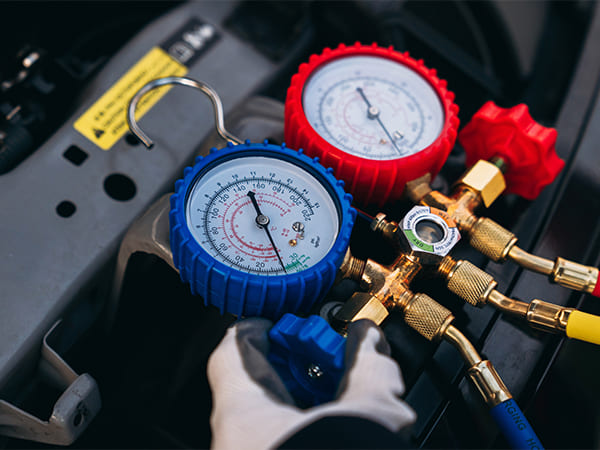
What Does Recharging a Car AC Actually Do?
Most people think the AC loses refrigerant naturally over time. It doesn’t. Refrigerants do not get “used up.” If the AC is low, there is a reason.
Recharging only replaces the lost refrigerant. It does not repair the leak or fix whatever caused the loss. That’s why many drivers recharge and see cold air return briefly—only to have the AC fail again days or weeks later.
A recharge is a remedy, not a repair.
How Do You Know When Your Car’s AC Actually Needs a Recharge?
People often assume every warm AC problem requires a recharge. But weak AC does not always mean low refrigerant.
The symptoms below are strong indicators that the system truly needs refrigerant:
AC blows cool but not cold
If it cools a little but not enough, the refrigerant may be low.
AC works well in the morning but fails in the afternoon
Heat increases pressure. Low refrigerant makes this worse.
AC runs cold while driving but warm at idle
This often means the system is struggling to maintain pressure.
You hear hissing inside the dashboard
This is the sound of refrigerant boiling too quickly due to low levels.
The AC clutch engages but cycles rapidly
The system is trying to protect itself from low-pressure conditions.
The key pattern: the AC cools inconsistently, especially during hot San Antonio afternoons.
What Problems Do NOT Mean You Need a Recharge?.
Here’s the contrary truth most drivers don’t expect:
Most AC failures today are not caused by low refrigerant.
If you see any of the issues below, a recharge will not fix the problem—and may cause damage.
Weak or no airflow
This points to a blower motor, cabin air filter, or duct issue.
Warm air even with full system pressure
This can be a bad blend door, clogged expansion valve, or control head failure.
Compressor not engaging at all
This could be a fuse, relay, pressure switch, or clutch failure—not low refrigerant.
High-pressure readings
Overcharging makes this worse. Adding refrigerant can cause compressor failure.
AC works only on certain fan speeds
This is a failing blower resistor.
Adding refrigerant in these cases hides the real issue—and strains the system further.
What Causes Refrigerant Loss in the First Place?
If your system is low, something is leaking. Here are the most common causes:
Aging rubber seals
The O-rings around connections dry out and shrink.
Hairline cracks in aluminum AC lines
Heat, vibration, and road debris create tiny leaks over time.
Leaking condenser
Stones and road debris hit the condenser, causing pinhole leaks. This is very common in Texas.
Evaporator leak
These occur inside the dashboard and are difficult to see without dye or electronic detection.
Faulty Schrader valves
These valves can leak slowly without obvious symptoms.
Previous improper repairs
If the system is opened without replacing the dryer, moisture can cause corrosion and weakness.
Leaks can be tiny or large. Either way, a recharge only replaces what escaped—it doesn’t stop the leak.
How Do You Safely Recharge a Car AC in 2025?
The safest approach is simple:
Recharge only when you know exactly how much refrigerant was lost.
Here’s the correct step-by-step process:
Confirm refrigerant levels with proper gauges
You must measure both high-side and low-side pressure. A single-gauge DIY kit cannot diagnose the system correctly.
Check for leaks
If the refrigerant is low, find out why before recharging.
Recover any refrigerant left in the system
Removing the old refrigerant prevents contamination.
Vacuum the system
This removes:
- moisture
- air
- contaminants
A vacuum ensures the new refrigerant performs properly.
Add refrigerant to the manufacturer’s exact specifications
Every vehicle has a specific number of ounces listed under the hood.
Monitor temperature and pressure as refrigerant is added
This prevents overcharging, the most common DIY mistake.
Test system performance
Check vent temperature, compressor cycling, and pressure balance.
Recharging is not about “adding until it feels cold.” It’s a precise fill amount.
Why Is DIY Recharging Risky in 2025?
Drivers buy DIY kits because they’re cheap and fast. But these are the risks:
Overcharging the system
Too much refrigerant raises pressure and damages the compressor.
Sealer additives clog components
Most DIY cans contain sealers. These include clog expansion valves, orifice tubes, and recovery machines.
Inaccurate low-side readings
Low-side gauges alone cannot diagnose high-side pressure.
Masking a real leak
DIY recharges create temporary cold air, tricking the driver into thinking the problem is solved.
Wrong refrigerant mixtures
Contaminated refrigerant creates long-term system damage.
In many cases, DIY recharges multiply repair costs later.
Case Study: How One Driver Saved $1,100 by Avoiding a DIY Recharge
Carlos, a delivery driver in San Antonio, noticed his AC blowing warm. He almost bought a DIY recharge kit from a parts store. Before doing it, he stopped by for a quick check.
Here’s what the technicians found:
- Refrigerant levels were only slightly low
- Pressures were too high, not too low
- The condenser fan was failing
- The expansion valve was beginning to stick
- Adding refrigerant would have overloaded the system
If Carlos added a DIY can:
- System pressure would have spiked
- The compressor would have failed
- The repair cost would have jumped above $1,200
Instead, the team replaced the condenser fan and flushed the system.
Cost: $230.
Cold air returned immediately—and without system damage.
Timing saved him from a major AC failure.
When Should You Recharge a Car AC—And When Should You NOT?
Here’s the simple rule:
✅ Recharge when the AC is low due to a small leak or natural seepage.
❌ Do not recharge when the AC has electrical, airflow, or mechanical issues.
Specific situations where recharging is appropriate:
- You confirmed a small leak
- The AC cools, but not enough
- Pressure readings show low refrigerant
- The system works better in cooler weather
Situations where recharging is a mistake:
- Compressor isn’t engaging
- Airflow is weak
- AC makes grinding noises
- Vent temp changes constantly
- High pressure readings
Adding refrigerant to the wrong scenario causes more harm than good.
When Should You Let a Professional Recharge Your AC?
Professional service is the best choice when:
- The AC is blowing warm at idle
- Pressures look abnormal
- The compressor cycles rapidly
- A leak may be present
- The system was previously opened or serviced
- You’ve recharged before, and the AC is failing again
Modern AC systems are more sensitive than older models. Incorrect refrigerant amounts and contamination cause fast damage.
If you want the AC to stay cold long-term, diagnosis matters more than the recharge.
Need a Safe, Accurate AC Recharge in San Antonio?
If your AC is blowing warm air or cooling inconsistently, now is the best time to fix it before the problem gets worse. For a clean, accurate recharge without overcharging or system damage, book an appointment with Ruben’s Auto Repair today.
Frequently Asked Questions
How do I know if my car needs an AC recharge?
If the AC blows cool but not cold or fails in the afternoon heat, you may be low on refrigerant. A pressure test confirms it.
Is it safe to recharge your car’s AC yourself?
DIY recharges can overcharge the system or mask leaks. They work temporarily but often cause bigger problems.