When your car’s AC fails, most people think the refrigerant is low or the compressor is weak. But one of the most overlooked AC failures—and one of the most expensive if ignored—is a clogged expansion valve. This small metal valve decides how much refrigerant enters the evaporator. When it clogs, the entire AC system loses balance, the pressures go wild, and cooling stops.
This guide explains why expansion valves clog, what symptoms indicate early failure, how they affect cooling performance in Texas heat, and the most innovative way to fix them before the compressor burns out. You’ll also see a real case study of a driver who avoided a major AC failure by catching a clogged valve early.
The goal is simple: clear, direct answers that help drivers understand what’s happening under the hood—without jargon, fluff, or technical fog.
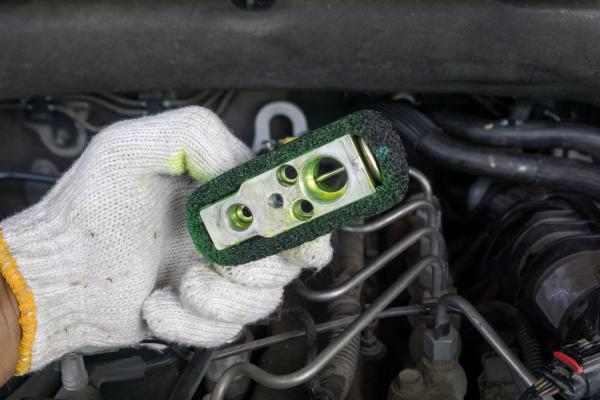
What Does the Expansion Valve Do in a Car AC System?
Your AC system works like a loop. First, the refrigerant absorbs heat inside the cabin. Then it releases that heat outside the vehicle. The expansion valve sits in the middle of this cycle and meters refrigerant into the evaporator. Think of it as the system’s “traffic controller.”
When it works, it allows the right amount of refrigerant to enter based on temperature and pressure. When it clogs, that flow is disrupted. Cooling collapses, pressure spikes, and the compressor is forced to compensate.
A clogged expansion valve is not a minor inconvenience. It is a system-wide failure waiting to happen.
What Are the Signs of a Clogged Car AC Expansion Valve?
Expansion valves rarely clog overnight. The symptoms appear gradually, but most drivers miss them until cooling fails.
Below are the most reliable signs:
AC blows cold sometimes and warm other times
A clogged valve restricts refrigerant inconsistently. Cooling becomes unpredictable.
One minute it’s cold; the next it’s warm.
Frost or ice buildup on the evaporator
When the refrigerant cannot flow properly, temperatures inside the evaporator drop too low, causing it to freeze.
High pressure on the high side and low pressure on the low side
This imbalance is textbook expansion valve failure. The system becomes starved on the low side.
AC compressor constantly cycles on and off
The system becomes unstable, forcing the compressor to shut down for protection.
Weak airflow or no cooling despite a working blower
If the blower is pushing air but the cabin stays warm, refrigerant flow is the issue—not airflow.
Hissing or bubbling noise from the dashboard area
This is the sound of refrigerant fighting to pass through a restricted valve.
AC takes too long to cool the cabin
Even in mild weather, the AC struggles to lower the cabin temperature because refrigerant cannot reach the evaporator efficiently.
These symptoms worsen in Texas heat, where AC systems work harder and pressure climbs faster.
Why Does the Car AC Expansion Valve Become Clogged?
Drivers often blame the valve itself, but the expansion valve is usually a victim, not the cause.
Here are the most common reasons clogging occurs:
Moisture inside the AC system
Moisture freezes inside the valve and blocks refrigerant flow. This often comes from:
- a failing receiver dryer
- improper evacuation during previous repair
- leaks that allowed air into the system
Debris or sludge contamination
Old refrigerant oil breaks down over time, especially in older vehicles. It becomes sticky and can clog the valve’s tiny openings.
Metal shavings from a failing compressor
When a compressor starts breaking down, it sheds metal particles. Those particles travel through the system and get trapped in the expansion valve.
This is the most dangerous form of clogging because it means a bigger failure is coming.
Improper refrigerant charging
Using contaminated or incorrect refrigerant introduces impurities into the system.
A blocked receiver dryer or accumulator
When these filters fail, contaminants reach the expansion valve.
AC system left open during repairs
If someone opened the lines and didn’t seal them properly, moisture entered the system.
A clogged expansion valve is rarely an isolated problem. It’s a warning of a deeper imbalance in the AC system.
How Do You Diagnose a Clogged Expansion Valve in 2025?
Expansion valve diagnosis is not guesswork. It’s a combination of pressure readings, temperature checks, and behavior patterns.
Here’s how a clogged valve is properly diagnosed:
Check high and low pressure readings
A clogged valve creates:
- Low pressure on the low side (refrigerant starvation)
- High pressure on the high side (heat trapped in the condenser)
This imbalance is the main diagnostic clue.
Check the temperature of AC lines
If the inlet side of the valve is hot and the outlet is cold—or completely frosted—that’s a strong sign of clogging.
Inspect the evaporator for icing
Ice means the refrigerant is not flowing correctly.
Check compressor behavior
If the compressor:
- clicks on and off rapidly
- refuses to engage
- runs hot
…the valve may be restricting flow.
Inspect the receiver dryer
If it is saturated or damaged, moisture and debris may already be in the system.
Use electronic probes or thermal cameras
These tools detect unusually cold or hot spots along the AC lines, showing where the restriction is.
A jammed expansion valve behaves consistently across vehicles, making it easier to diagnose once you understand the patterns.
How Do You Fix a Clogged Expansion Valve?
You cannot clean a clogged expansion valve. Once it’s blocked, replacement is the only reliable solution.
Here’s the proper repair process:
Replace the expansion valve
The new valve restores proper refrigerant flow.
Flush the AC system
A full flush removes:
- moisture
- sludge
- metal particles
- contaminated oil
Replace the receiver dryer or accumulator
This prevents future moisture contamination.
Vacuum the system
A deep vacuum removes all air and moisture.
Recharge the system with the correct refrigerant
Clean refrigerant ensures stable pressure.
Test for leaks
A leak test confirms the system is tight and safe.
Most clogged valve repairs take 2–4 hours, depending on vehicle design.
How Do You Prevent a Clogged Expansion Valve?
Cars do not need constant AC repairs. The key is prevention, not reaction.
Replace the cabin air filter regularly
A clogged filter makes the system run hotter.
Keep the system sealed
Never leave AC lines open during repairs.
Service the AC annually
Early detection prevents contamination.
Fix leaks immediately
Leaks introduce moisture and air.
Avoid DIY refrigerant kits
Most contain contaminants or incorrect quantities.
Change the receiver dryer when the AC is opened
This is a required step that many drivers skip.
Preventing a clog is far easier than fixing one.
Need Fast AC Expansion Valve Repair?
If your AC is weak, cycling, freezing up, or blowing warm air, your expansion valve may be clogged. The simplest fix is to act early. Call or book your appointment online with Ruben’s Auto Repair today.
Frequently Asked Questions
What happens when the AC expansion valve is clogged?
A clogged valve restricts refrigerant flow, leading to reduced cooling, freezing, pressure imbalance, and potential compressor failure.
How do I know if my expansion valve is bad?
Common signs include warm air, rapid cycling, ice on the evaporator, pressure imbalance, and hissing near the dashboard.
Can a clogged expansion valve be cleaned?
No. It must be replaced. Clogs are caused by debris, moisture, or metal particles trapped inside the valve.
Can I drive with a clogged expansion valve?
You can, but it’s risky. High pressure and overheating can damage the compressor and lead to costly repairs.
Is a clogged expansion valve expensive to fix?
Most vehicles fall between $350–$700 depending on parts and system contamination.