When your Land Rover window suddenly refuses to go up—or gets stuck halfway with a horrible grinding noise—it doesn’t just disrupt your day, it interrupts your sense of control. Whether you’re parked under the Texas sun or stuck in traffic along Loop 1604 during a storm, a malfunctioning window regulator is a problem that needs quick attention.
Let’s break down what causes window regulator failures in Land Rover vehicles, what signs to look out for, and what you can do to fix them—before things get worse.
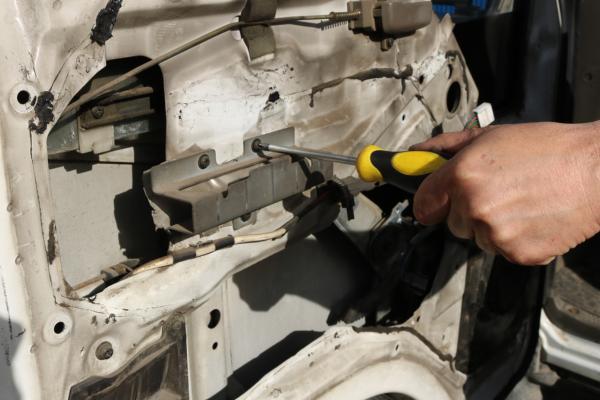
What Does a Window Regulator Do, Exactly?
Think of the window regulator like the pulley system in an elevator. You press a button (your call button), and the window moves up or down smoothly. But if that system breaks—if the cables snap, the motor fails, or the guides fall out of place—you’re left with a stuck, crooked, or completely unresponsive window.
In Land Rovers, especially models like the Range Rover Sport, Discovery, or LR3, regulators are powered by electric motors and use a scissor or cable-style mechanism to raise and lower the glass.
Why Do Land Rover Window Regulators Fail?
Like most parts in your vehicle, window regulators wear out over time. But in Land Rovers, there’s a higher-than-average failure rate due to a few key issues.
The most common reasons include:
- Worn-out plastic pulleys or guide clips that break under stress
- Cables that fray or snap from frequent use or high heat
- Faulty motors that stop receiving or responding to power
- Electrical issues that interrupt the switch-to-motor signal
In San Antonio’s hot and often humid climate, plastic components degrade faster, and constant AC use means those windows go up and down more often—leading to faster wear and tear.
Telltale Signs Your Window Regulator is the Problem
Not sure what you’re dealing with? Think of it like a garage door opener. When everything works, you push a button, and the door glides effortlessly. But when something’s off, it jerks, stalls, or doesn’t move at all.
Here are some signs your window regulator might be failing:
- You hear grinding or clicking inside the door
- The window slides down slowly or at an angle
- The glass stays stuck halfway and won’t move
- You press the switch and hear the motor, but the glass doesn’t respond
- The window drops suddenly or makes a thud when closing
These are early warnings that the regulator is losing its grip—literally.
Diagnosing the Issue: Where the Problem Starts
To fix a window regulator issue, first figure out whether it’s the motor, the cables, or the regulator mechanism itself.
Here’s how technicians approach the diagnosis:
- Confirm the switch signal. Does the switch light up? Does it work on other windows?
- Listen for motor noise. If the motor runs but the window doesn’t move, the cable or plastic gears may be broken.
- Remove the door panel. This gives access to the regulator assembly.
- Inspect for loose or snapped cables, broken pulleys, or misaligned tracks.
- Test motor voltage. If power isn’t reaching the motor, the issue may be electrical.
Skipping any of these steps can lead to unnecessary part replacements—costing more and fixing less.
Should You Repair or Replace the Regulator?
Some drivers wonder whether they can simply repair a part of the window regulator—maybe reattach a cable or glue a cracked clip. In most cases, though, it’s better to replace the entire regulator assembly.
Why? Because most factory regulators are built as sealed units. Once they break down, repairing one part doesn’t guarantee lasting performance—and may fail again within months.
Depending on the model, a new regulator typically costs $300 to $600 including labor in San Antonio. That price varies based on door location (driver’s side vs rear passenger) and whether you’re using OEM or aftermarket parts.
Real-World Example: 2014 Land Rover LR4
Vehicle: 2014 LR4, owned by a driver in the Alamo Heights area
Issue: Driver’s side window stuck halfway down, grinding noise when pressing the switch
Step 1: Technician verified power to the switch and motor
Step 2: Door panel removed; regulator cables found tangled and snapped
Step 3: Entire regulator replaced with OEM part; motor reused since it tested functional
Step 4: Tracks lubricated and alignment recalibrated
Step 5: Final test confirmed smooth, quiet window movement
Result: Total repair time was 1.5 hours. Cost: $425. The customer was back on the road the same day with working windows and a one-year parts warranty.
Why Timing Matters for Regulator Repairs
Driving around with a malfunctioning window isn’t just annoying—it can also become unsafe.
- If the window is stuck open, rain or dust can damage your upholstery and electronics.
- If it’s stuck closed and your vehicle goes underwater or catches fire (rare, but possible), it becomes a safety hazard.
- And in hot San Antonio summers, a stuck window can turn your car into an oven.
Procrastinating a fix may lead to motor burnout or even damage to the window glass itself.
Can You DIY a Land Rover Window Regulator Fix?
Technically, yes—but it’s tricky.
Replacing a regulator requires removing the door panel, disconnecting sensitive wiring, and aligning heavy glass within a narrow frame. One wrong move can shatter the window, break a connector, or cause the new part to misalign.
Unless you have proper tools and experience, it’s usually best to leave this job to professionals.
If you’re in San Antonio and need help fast, Ruben’s Auto Repair can quickly diagnose and repair your Land Rover’s window regulator issue with expert care and guaranteed results. Book your appointment today and avoid the risk of further damage or costly delays.
Frequently Asked Questions
- Why do Land Rover regulators break more often than other brands?
Land Rovers use plastic guide clips and cable-based systems, which wear down quickly under frequent use or extreme heat—both common in Texas. - Can I just replace the motor if my window isn’t working?
Only if the motor is the actual problem. If the regulator mechanism is jammed or broken, replacing just the motor won’t help. - What’s the difference between OEM and aftermarket regulators?
OEM parts are made by the same company that built your vehicle, while aftermarket parts come from third-party suppliers. OEM usually lasts longer but costs more. - My window works sometimes and fails other times. What does that mean?
This may point to an intermittent motor failure or a wiring issue. You’ll need a professional diagnosis to find out for sure.
Is there a warranty on window regulator repairs?
Yes. Most reputable shops, including Ruben’s Auto Repair, offer a parts and labor warranty—typically covering 12 months or 12,000 miles.