Your Land Rover might be known for its power and off-road prowess, but even the strongest engines rely on tiny components to keep everything running smoothly. One of the smallest but most essential parts? The spark plug.
Spark plugs may be no larger than your finger, but they play a huge role in starting your engine and keeping it efficient. If they’re worn out, your Land Rover won’t just lose power—it can suffer from misfires, sluggish acceleration, or higher fuel bills. Replacing spark plugs at the right time keeps your ride responsive, safe, and fuel-efficient.
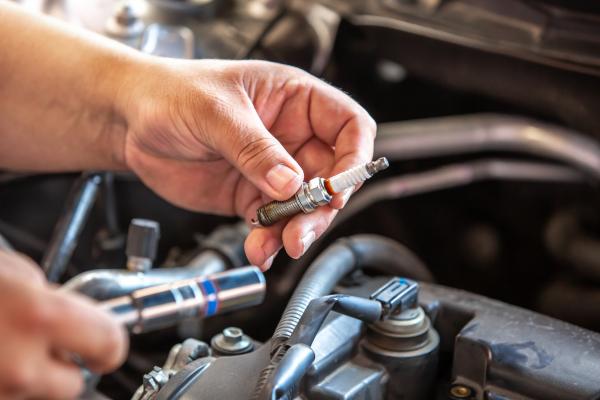
What Spark Plugs Actually Do (and Why They Matter)
Think of spark plugs as the tiny fire starters in your engine. Every time you turn the key, they create a small electrical spark that ignites the air-fuel mixture in the engine’s cylinders. That explosion pushes pistons down and sets the whole engine in motion.
If one spark plug misfires or wears out, your Land Rover might feel like it’s running with one leg tied. It stumbles, hesitates, and wastes fuel. For vehicles like the Range Rover Sport or Discovery, which depend on consistent performance across all cylinders, bad plugs can quickly lead to bigger engine issues.
How Often Should You Replace Spark Plugs in Land Rovers?
Most Land Rover models have spark plug intervals between 60,000 to 100,000 miles, depending on the engine and plug type. Turbocharged engines, like those found in newer Evoque and Velar models, might require more frequent attention.
In San Antonio, where extreme heat and long commutes are common, wear can accelerate. According to the National Institute for Automotive Service Excellence (ASE), spark plug performance can deteriorate faster under hot and dusty conditions.
If your engine starts to idle rough, misfire, or shows a drop in fuel economy, it might be time to pop the hood.
Types of Spark Plugs for Land Rover Models
Not all spark plugs are created equal. The most common types include:
- Copper: Cheapest, but shorter lifespan
- Platinum: Lasts longer, handles higher heat
- Iridium: Best longevity and performance, common in modern Land Rovers
High-performance models like the Range Rover Autobiography or Defender often use iridium plugs due to their durability and precise ignition capability. Always check your owner’s manual or consult a professional to ensure compatibility.
What Happens When Spark Plugs Wear Out?
Picture a marathon runner trying to sprint in flip-flops. That’s your engine with bad spark plugs. Here are some symptoms you might notice:
- Slow or difficult starts
- Rough idling or shaking at stoplights
- Poor throttle response
- Drop in fuel economy
- Check engine light coming on
These signs can sneak up gradually. Many San Antonio drivers don’t realize how far their spark plugs have declined until their fuel bill spikes or their car starts bucking on I-35.
Step-by-Step: Replacing Spark Plugs in a Land Rover
Let’s break it down using a 2016 Range Rover Evoque as an example. This model has a turbocharged 2.0L engine with four spark plugs:
Step 1: Let the engine cool
Never work on a hot engine. Let it sit for at least 30 minutes to prevent burns.
Step 2: Remove the engine cover
Most Land Rover engines have a plastic cover you can gently lift off to access the ignition coils.
Step 3: Disconnect the ignition coils
Each coil connects to a spark plug. Unclip the connector and unscrew the coil bolts.
Step 4: Remove the old spark plugs
Use a spark plug socket and extension bar. Turn counterclockwise and lift out each plug carefully.
Step 5: Check the gaps on new plugs
Even if they’re pre-gapped, use a feeler gauge to confirm the correct gap (usually around 0.028 to 0.032 inches).
Step 6: Install new plugs
Gently thread the new plug in by hand to avoid cross-threading, then tighten snugly with the wrench.
Step 7: Reconnect everything
Replace the coils, reattach wires, and put the engine cover back on.
Real-World Example: David’s Spark Plug Story in Alamo Heights
David drives a 2014 Land Rover LR4 and commutes daily across San Antonio. One morning, his SUV started hesitating at red lights and felt sluggish climbing the flyovers on Loop 410.
Step 1: He visited a local mechanic, who ran a diagnostic and found misfires on two cylinders.
Step 2: The spark plugs hadn’t been changed in over 80,000 miles. The electrodes were heavily worn.
Step 3: The technician replaced all eight spark plugs with OEM iridium plugs.
Result: David immediately felt better throttle response and gained nearly 3 MPG in fuel economy. The misfires disappeared, and his engine ran smoother than it had in years.
For just a couple hours and a few parts, he restored his SUV’s performance and avoided serious engine damage.
Common Mistakes to Avoid When Replacing Spark Plugs
- Over-tightening the plug, which can damage threads
- Using the wrong gap size, causing misfires
- Installing incompatible plugs that lead to premature failure
- Forgetting to torque to factory specs
Even small errors can cause headaches later. That’s why many San Antonio drivers rely on local professionals for peace of mind.
Professional Service vs DIY: What’s Best for You?
Replacing spark plugs isn’t extremely difficult, but it can be intimidating. Some Land Rover models, like the V8 Range Rover, have tightly packed engine bays that make plug access harder.
If you don’t have the tools, patience, or know-how, letting a certified tech handle the job can be the better choice. They check for coil wear, clean debris, and ensure every plug is torqued just right.
If you’re looking for reliable spark plug service in San Antonio, Ruben’s Auto Repair offers expert care and fast turnarounds to keep your Land Rover running its best.
Frequently Asked Questions
- Can old spark plugs damage the engine?
Yes. Misfires can lead to unburned fuel in the exhaust, damaging the catalytic converter over time. - Should I replace all spark plugs at once?
Absolutely. Changing just one or two can cause imbalance in engine performance. - Do newer Land Rovers have different spark plug needs?
Yes. Many use high-performance iridium plugs with longer service intervals. Always check the manual. - Is it okay to use aftermarket spark plugs?
Only if they match OEM specs. Poor-quality plugs can cause misfires or even void warranties.
How much does spark plug replacement cost in San Antonio?
Costs vary by engine type but generally range from $180 to $400 including labor and parts.