
A family SUV asks more of its brakes than a small car does. It weighs more, and it often carries passengers and cargo, so every stop turns more energy into heat. That added load wears pads and rotors faster and works the calipers and fluid harder. That is why we lean on condition-based inspection for a family hauler, rather than trusting a single mileage number.
Why a Heavier Vehicle Works Its Brakes Harder
Brakes do one basic job. They take all the energy of a moving vehicle and turn it into heat, which then dissipates into the air. The heavier the vehicle, the more energy there is to deal with on every single stop.
That is not a small effect. A family SUV can weigh considerably more than a compact car, and that extra mass means more momentum to bring down every time you brake. The brakes have to absorb and shed all of it as heat, and heat is the thing that wears pads, wears rotors, and stresses brake fluid.
So when people ask why SUVs seem to go through brakes, this is the root of it. It is not that the parts are weaker. It is that a heavier vehicle simply gives the brakes more work to do, over and over, every time you slow down.
The Load You Add Changes the Math
Here is where a family SUV gets interesting, because its weight is not fixed. The empty vehicle on a solo weekday commute is one thing. Load it with the whole family, a week of groceries, sports gear, and a packed cargo area for a weekend trip, and you have effectively made a heavy vehicle heavier.
Every pound you add is more mass the brakes have to stop. A fully loaded SUV heading out for a road trip is asking noticeably more of its brakes than the same SUV running empty across town. Towing a trailer or loading a roof rack pushes that demand higher still.
That variability is the part most maintenance advice ignores. When someone tells us they load up the SUV for weekend trips, that tells us the brakes are living a harder life than the odometer alone would suggest. The same vehicle can have two very different braking demands depending on the day, and the heavy days are the ones that drive wear.
What the Extra Heat Does to the System
All that added energy shows up as heat, and heat does not just wear the pads. It works its way through the whole braking system.
The pads and rotors take the brunt of it, wearing faster under repeated high-heat stops. But the calipers live in that heat too, and so does the brake fluid. Brake fluid has a boiling point, and the harder and hotter the brakes work, the more that fluid’s condition matters, because overheated fluid can lose some of its firmness at the pedal. A heavier, loaded vehicle pushes closer to those limits than a light car does.
That is why we look at pads, rotors, calipers, and fluid together on a vehicle like this, rather than just the pads. The added load stresses the whole system, so the whole system is worth looking at.
Bigger Brakes Are Not a Free Pass
A fair question is whether SUV brakes are just built bigger to handle all this. Often they are. Manufacturers frequently fit heavier vehicles with larger rotors and beefier brakes precisely because there is more mass to stop.
But bigger brakes manage the higher demand, they do not erase it. A larger rotor has more capacity to absorb and shed heat, which is exactly why it is there, yet it is still doing more work than a small car’s brakes because the vehicle it is stopping is heavier. The demand scaled up, and the brakes scaled up to meet it, so the wear and the inspection needs did not go away.
Thinking your SUV’s larger brakes make maintenance a non-issue is the kind of assumption that leads to a surprise. The bigger brakes are keeping up with a bigger job, not coasting.
Why Mileage Alone Misleads on a Family Hauler
Put the weight and the variable load together, and you can see why a single mileage number is a poor guide for a family SUV. A mileage rule treats every mile the same, but the miles are not the same. Ten thousand miles of empty highway cruising and ten thousand miles of loaded stop-and-go family driving are worlds apart in what they do to the brakes.
For a family hauler, we would rather go by the condition of the brakes than by a number on the odometer. Condition tells the truth about what the vehicle has actually been through, load and all. That is where a good SUV brake repair approach starts, with what the brakes actually look like, not just how far the vehicle has traveled. A thorough inspection covers pads, rotors, calipers, and fluid condition, which paints a far more accurate picture than mileage alone for a vehicle whose load changes week to week.
Keeping Up With a Family SUV’s Brakes
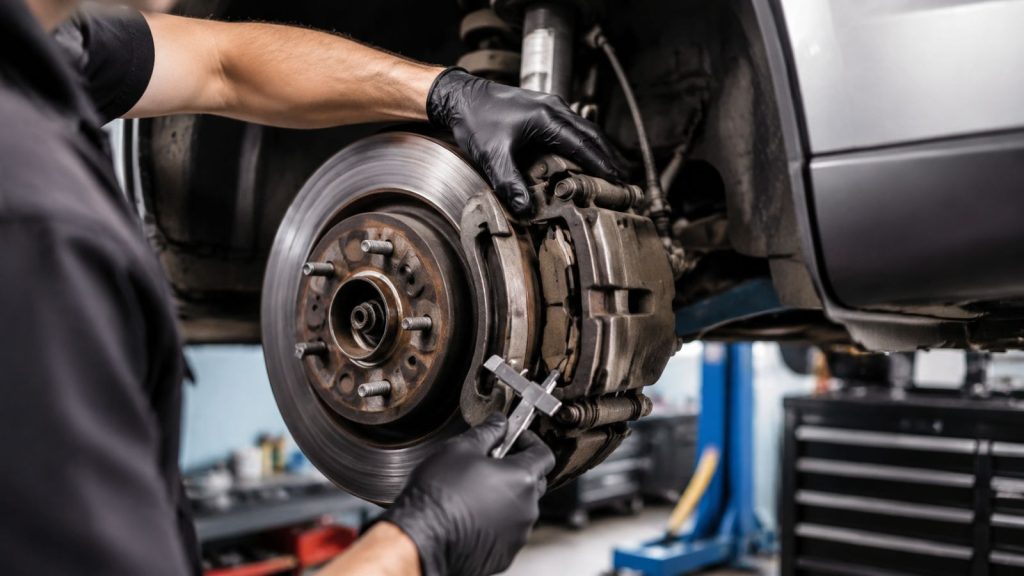
The practical takeaway is not complicated. A family SUV works its brakes harder than a lighter vehicle, and it does so unevenly depending on how it is loaded, so its brakes are worth paying attention to.
If your SUV spends its life around Alamo Ranch doing school runs and errands, then loads up for highway trips on weekends, especially in the summer heat when there is the least thermal margin to spare, that is exactly the usage that benefits from checking condition rather than waiting for a mileage milestone. Catching pads before they are gone protects the rotors. Knowing your fluid is in good shape protects the pedal feel on a loaded downhill stretch.
None of this means a family SUV is fragile. It just means the vehicle carrying your family deserves brakes you have actually looked at, not brakes you are assuming are fine because the odometer has not hit a certain number yet.
Wondering How Your SUV’s Brakes Are Holding Up
If you drive a family SUV and want to know where the brakes actually stand, especially if you load it up for trips or tow with it, we are glad to take a look. The goal is to check the real condition of the pads, rotors, calipers, and fluid, so you know what your vehicle has left rather than guessing from mileage. You can reach Ruben’s Auto Repair to schedule service or call the shop at (210) 647-1148.
Frequently Asked Questions
Do SUVs go through brakes faster than cars?
Often, yes. An SUV weighs more, so its brakes convert more energy into heat on every stop, and heat is what wears pads and rotors. Add passengers and cargo and the demand climbs further. It is not a rule for every vehicle, but the added weight generally means the brakes work harder than a light car’s.
Does carrying passengers and cargo really affect my brakes?
It does. Every pound of passengers, gear, or cargo adds to the mass the brakes have to stop, which means more heat and more wear. A fully loaded SUV on a road trip asks noticeably more of its brakes than the same SUV running empty, which is why how you load it matters.
Do bigger SUV brakes last longer?
Not necessarily. Larger brakes are usually fitted because the vehicle is heavier and needs more stopping capacity, so they are managing a bigger job rather than getting an easy one. They handle the added demand, but the wear and the need for inspection do not disappear just because the brakes are larger.
How should I decide when to check my SUV’s brakes
Condition is a better guide than a fixed mileage, especially for a family SUV whose load changes from day to day. Because a loaded, heat-soaked trip is much harder on the brakes than an empty commute, checking the actual condition of the pads, rotors, and fluid tells you more than the odometer does.