
Uneven brake pad wear is a symptom, not the root problem. When one pad wears faster than its partner, or the inner wears differently than the outer, the pad is usually pointing at something else, a sticking caliper, seized slide pins, dry hardware, or a hydraulic imbalance. That is why we read the pads as evidence rather than just replacing them and moving on.
Worn Pads Are Evidence, Not Just a Wear Item
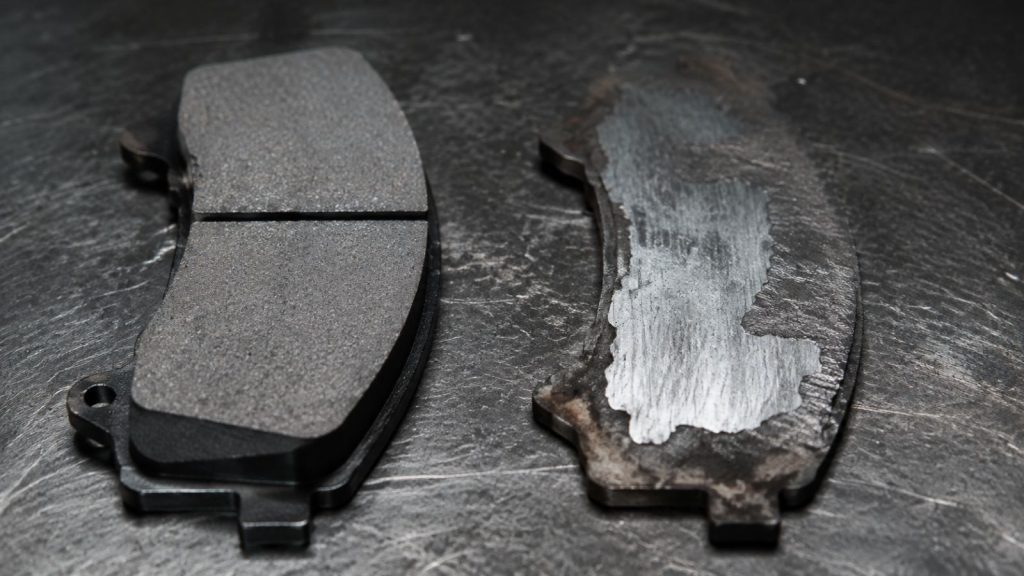
Brake pads wear out. That part is normal, and by itself it is not interesting. What tells us something is how they wear.
A set of pads that wore down evenly across the axle usually just lived a full life. But when one pad is far ahead of the others, or one side of a single pad is nearly gone while the rest still has material, that is the pad handing us a clue. It is telling us that something at that corner was not working the way it should.
So we do not look at a worn pad and stop at “time for new pads.” We look at the pattern and ask what caused it, because the answer decides whether new pads actually solve the problem or just reset the clock on it.
When One Side Wears Faster Than the Other
One of the more telling patterns is a side-to-side difference across the axle. The left pads still have plenty of life, the right pads are nearly gone, or the other way around.
When one wheel is doing more of the braking than its partner, something is making that corner work harder or keeping it partially applied. A caliper that is not releasing cleanly is a common reason. So is a hydraulic imbalance, where a restricted brake hose lets pressure into one corner but does not let it fully release, so that pad drags and wears while the others coast.
Comparing the two sides can reveal an imbalance the pad alone would not explain. That comparison is the difference between fixing the wear and fixing the reason for the wear.
When the Inner and Outer Pad Wear Differently
Now look at a single wheel. Each brake has an inner and an outer pad, and in a healthy setup they wear at a fairly similar rate. When one of them is dramatically more worn than the other, the caliper usually deserves a look.
A caliper piston that sticks can keep pushing the inner pad into the rotor without letting off, so the inner wears fast. Seized or corroded slide pins are the other frequent cause. The caliper is supposed to float and center itself over the rotor, and when the slides bind, it cannot, so the load lands unevenly across the two pads.
The pad shows you the result. The caliper and its slides explain why. That is the contrast we care about, the visible condition versus the mechanical reason behind it.
The Hardware Nobody Thinks About
Here is the part that gets overlooked most. A brake is not just pads, a caliper, and a rotor. There is a small set of hardware, the slide pins, abutment clips, and shims, that lets the pads move freely and retract after you let off the brake.
When that hardware is dry, corroded, or missing, a pad can bind in place instead of sliding back. It stays in light contact with the rotor and wears unevenly, sometimes with a bit of constant drag you never notice until the pad is gone early. South Texas humidity and heat cycling are hard on this hardware, and a short-trip car that never fully dries out can build corrosion on the very parts that are supposed to keep the brake moving smoothly.
This is why proper hardware lubrication is part of a complete pad job. Fresh pads sliding on neglected hardware is a setup for the same uneven wear to come right back.
Why New Pads Alone Can Bring You Right Back
Here is the practical payoff. If uneven wear was caused by a sticking caliper, seized slides, or dry hardware, and someone installs new pads without addressing that cause, the new pads inherit the same problem. A few months later you are looking at the same lopsided wear, sometimes a scored rotor to go with it.
That is the repeat-repair trap, and it is frustrating because it feels like the brakes were “just done.” They were, but only the symptom was treated. The corner that caused the wear was left exactly as it was.
We would rather fix the reason the pad wore unevenly than replace it and see you back before the season changes. Reading the wear correctly the first time is what keeps a brake job from becoming a recurring bill. If a shop shows you uneven pads, it is fair to ask what caused it, not just what it costs to replace them.
Seeing Uneven Wear on Your Brake Pads
If you have noticed uneven wear on your pads, or someone pointed it out during a service, it is worth finding out what is behind it before replacing anything. The pads are the easy part. The caliper, slides, and hardware are where the real answer usually lives. A thorough brake repair at Ruben’s Auto Repair looks at the whole corner so the fix actually holds. You can schedule service or call the shop at (210) 647-1148 and we will take a look.
Frequently Asked Questions
What causes one brake pad to wear faster than the others?
Usually something is keeping that corner partially applied or making it work harder. A sticking caliper, seized slide pins, dry hardware, or a hydraulic imbalance are the common culprits. The pad wearing fast is the symptom, and one of those is typically the cause worth confirming.
Can I just replace the pads if only one side is worn?
You can, but if the underlying cause is not fixed, the new pads tend to wear the same uneven way. Replacing pads on a sticking caliper or corroded hardware usually just resets the problem rather than solving it, so the corner itself is worth inspecting too.
Does uneven brake pad wear mean I need a new caliper?
Not always. Sometimes the caliper is fine and the real issue is dry or corroded slide pins and hardware that can be cleaned, lubricated, or replaced. A caliper is one possible cause, but it takes an inspection to know whether the caliper itself or its hardware is behind the wear.
Will uneven pad wear cause other problems if I ignore it?
It can. A pad that wears through can damage the rotor, and a dragging brake generates extra heat and wears that corner faster. Catching uneven wear early usually keeps it from turning a pad replacement into a larger repair.