
Touchless HVAC gesture interface failures on 2024 to 2026 BMW, Mercedes-Benz, and Audi platforms trace to four distinct failure pathways: IR proximity sensor signal loss, LIN bus communication dropout, thermal soak baseline drift, and supply voltage sag under compressor load. In San Antonio July heat, each pathway produces overlapping symptoms that require scan tool live data, oscilloscope LIN bus capture, and supply voltage measurement to separate correctly.
IR Proximity Sensor Signal Loss and the HVAC Interface Dropout Pattern
IR proximity sensors fail in two directions. A sensor returning 0.1 V to 0.3 V on the 5 V reference circuit indicates open circuit or lens contamination severe enough to block signal return. A sensor fixed at 4.8 V to 5.0 V indicates a short to reference or a module output fault at the HVAC control unit.
A correctly functioning IR proximity sensor returns 0.5 V to 4.5 V across the gesture detection range of 2 cm to 20 cm. That range is measurable in scan tool live data on BMW and Mercedes-Benz platforms without disassembling the center console. The voltage value at rest, with no hand in the sensor field, establishes whether the sensor is receiving reference voltage and returning a valid baseline signal.
The symptom in both failure directions is the same from the driver’s perspective. The gesture interface does not respond. No warning light appears. No HVAC fault code is stored in most cases. The diagnostic separation between a failed sensor and a failed module reference output requires live data voltage measurement, not a parts substitution sequence.
Diagnostic Verdict: An IR proximity sensor returning a static 0.15 V with the HVAC module powered and no gesture input present confirms open circuit or complete lens blockage, requiring sensor removal and lens inspection before any module replacement is considered.
LIN Bus Communication Faults Behind Touchless Climate Control Loss
LIN bus faults present as U-codes. That is the first diagnostic signal that the touchless interface failure is a network communication problem rather than a sensor signal problem. A U-code stored in the HVAC control module for loss of communication with the gesture interface node points to the LIN bus segment between the module and the sensor assembly.
A correctly functioning LIN bus segment on these platforms shows less than 0.5 V dropout during frame transmission, measurable on a digital oscilloscope at the LIN test point at the HVAC module connector. A failing segment shows dropout events of 1.2 V to 2.8 V during transmission. That range is wide enough to cause intermittent frame loss without triggering a permanent fault code on every drive cycle.
The Heating and Cooling Services diagnostic process at Ruben’s includes HVAC module power supply and sensor reference voltage testing as a standard step before any Euro make gesture interface repair. LIN bus oscilloscope capture is the tool that separates a damaged wire, a corroded connector, and a failed module node from each other. A resistance check alone on the LIN wire does not capture intermittent dropout events that only appear under operating load.
Diagnostic Verdict: A LIN bus capture showing dropout events of 1.8 V to 2.4 V during HVAC module frame transmission, with a corresponding U-code stored in the gesture interface node, confirms LIN segment integrity failure requiring connector inspection and wire continuity verification before module replacement.
San Antonio Thermal Soak and IR Sensor Baseline Drift on Euro Makes
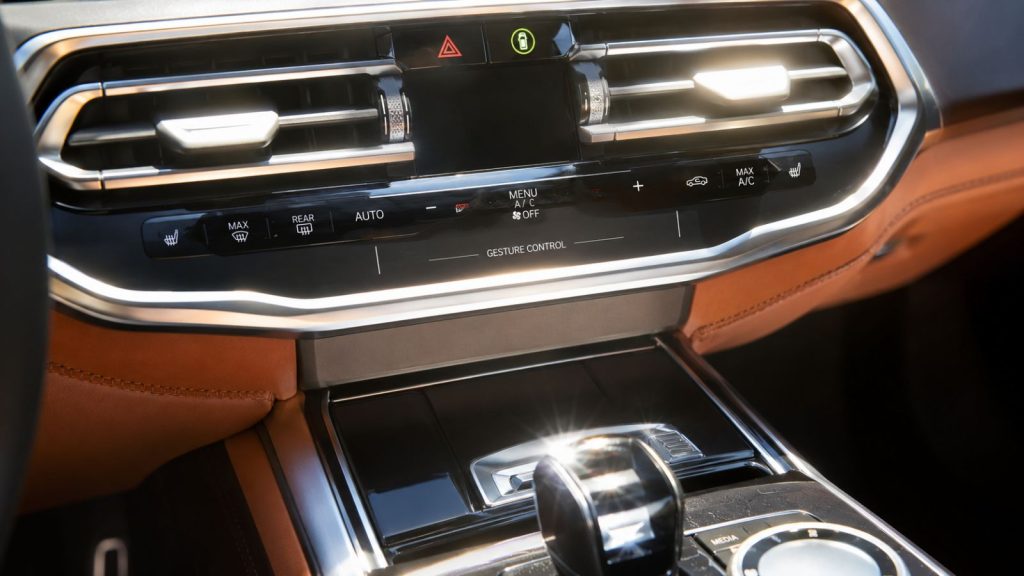
IR sensors use a background baseline reading to filter thermal noise from intentional gesture input. That baseline is factory-programmed for cabin temperatures in the range that European OEM test protocols use. San Antonio July changes that operating assumption entirely.
A vehicle parked in direct sun in Alamo Heights or at The Pearl surface lot reaches 145°F to 160°F inside within 45 to 60 minutes. At those temperatures, background infrared radiation in the sensor field rises above the factory baseline filter threshold. The sensor cannot distinguish a hand gesture from the thermal environment around it. The interface freezes, produces false inputs, or drops out completely.
In European make vehicles we service from Alamo Heights and Castle Hills, we consistently find that touchless HVAC interface complaints arriving in July trace to thermal soak conditions rather than component failure. The vehicle sat in direct sun for 45 to 60 minutes, the cabin reached 150°F to 160°F, and the IR sensor baseline drifted above its factory filter threshold. The driver entered, attempted a gesture input, received no response, and arrived reporting a failed interface. Cabin temperature normalization resolves the symptom. The underlying vulnerability is a sensor calibration baseline that was not set for South Texas summer cabin temperatures.
Diagnostic Verdict: A touchless HVAC interface that restores full gesture recognition within 20 minutes of AC operation after a July thermal soak complaint, with no stored fault codes and stable sensor signal voltage on live data, confirms thermal baseline drift rather than component failure, requiring no parts replacement.
Oak Pollen Lens Contamination and Intermittent Gesture Recognition Failure
Pollen contamination is invisible without sensor removal. A driver reporting intermittent gesture recognition that appears and disappears without a consistent trigger, with no stored fault codes, is describing the exact presentation of IR sensor lens contamination from San Antonio Oak pollen season.
Oak pollen drawn through the HVAC plenum fresh air intake during March through May deposits on interior surfaces including IR sensor lens faces on the center console and instrument panel. At 65% humidity, pollen bonds to the lens surface and attenuates IR signal return. A clean sensor lens at 5 cm gesture distance returns 2.8 V to 3.2 V. A pollen-contaminated lens at the same distance returns typically 0.5 V to 0.8 V, below the gesture recognition threshold on most platforms.
The pattern we see most often in Castle Hills and Shavano Park European make vehicles during March through May is intermittent gesture recognition failure with no stored fault codes and no consistent trigger. These vehicles ventilate through the HVAC plenum fresh air intake on Wurzbach Pkwy and I-410 during peak Oak pollen season. The lens contamination is not visible without removing the sensor assembly. Signal voltage comparison before and after lens cleaning is the only diagnostic step that confirms the cause without replacing a functioning sensor.
Diagnostic Verdict: An IR sensor returning 0.6 V at 5 cm gesture distance before lens cleaning and 3.0 V at the same distance after cleaning confirms pollen-related signal attenuation as the sole cause of gesture recognition failure, with no sensor or module replacement required.
Supply Voltage Sag Under Compressor Load Mimicking Sensor Failure
This is the misdiagnosis that costs the most. A touchless HVAC interface that drops out specifically during AC compressor engagement, clears when the compressor cycles off, and stores a U-code network fault points toward sensor or LIN bus failure on a scan tool readout. The repair path that follows from that interpretation is sensor replacement or module replacement.
Many technicians and vehicle owners assume a touchless HVAC interface dropout during AC operation means a failed IR sensor or a damaged LIN bus connection. The diagnostic reality is different on Shavano Park and Castle Hills vehicles with batteries at 24 to 36 months of age in July heat. Supply voltage measured at the HVAC module connector during compressor engagement reads 11.2 V to 11.6 V on these vehicles, below the 11.8 V minimum required for stable sensor reference output. The sensor reference voltage drops below the 0.5 V minimum signal threshold. The gesture interface drops out. The compressor cycles off, supply voltage recovers to 12.4 V to 12.8 V, and the interface restores.
Battery load testing at the service visit is the correct diagnostic sequence for this presentation. A battery producing adequate open-circuit voltage of 12.4 V to 12.6 V but sagging to 11.2 V to 11.6 V under compressor load confirms a marginal battery that passes a basic voltage check and fails under real operating demand. Replacing the sensor resolves nothing. Replacing the battery eliminates the voltage sag and restores gesture interface stability on every subsequent drive cycle.
Diagnostic Verdict: Supply voltage measured at 11.3 V to 11.5 V at the HVAC module connector during compressor engagement, recovering to 12.5 V to 12.8 V at compressor off, with corresponding gesture interface dropout and restoration, confirms battery-related voltage sag as the root cause before any sensor or LIN bus component is replaced.
Alamo Heights, Castle Hills, and Shavano Park drivers experiencing touchless HVAC interface issues on European makes can schedule a sensor