One zone staying warm while the other cools normally in Shavano Park SUVs points to blend door actuator or sensor drift, not a refrigerant issue. Heat soak combined with rear cabin load variation causes uneven sensor readings and actuator misposition. Vent temperature variance beyond 5 to 7 degrees or actuator feedback deviation past 15 percent confirms imbalance needing inspection.
Set both zones to 72 in your Shavano Park SUV and only one side actually gets there. The passenger side stays warm. The driver’s side is fine. Same setting, same system, different result, and it’s not your imagination.
What’s Actually Happening Behind the Dash
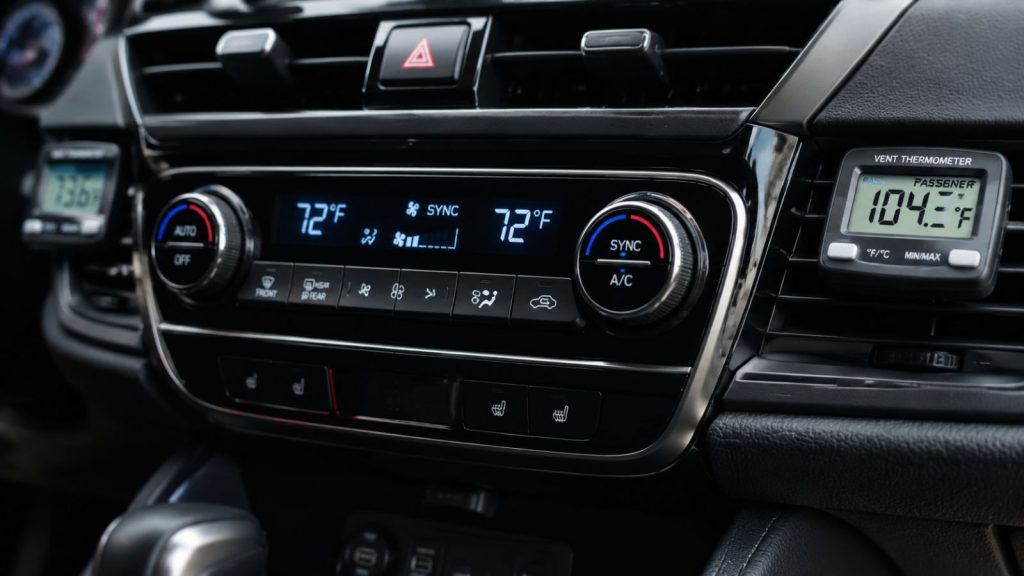
Two things are working against each other here. First, a Texas driveway heat soaks the cabin unevenly before you’ve even started the engine, sun hits one side harder than the other depending on parking angle and time of day. Second, rear cargo or a third row passenger changes airflow demand on one side without changing it on the other.
The system tries to answer both problems with one set of sensors and one blend door per zone. Each door mixes hot and cooled air based on what its sensor reports. When the sensor on one side starts reporting numbers that don’t match reality, the actuator follows bad instructions. It doesn’t seat fully against its housing. Air leaks past it in the wrong ratio, and duct pressure on that side drifts out of balance with the other.
We’ve pulled this apart on enough Shavano Park SUVs to notice the pattern repeats itself. Rear passenger use, cargo runs, driveway parking with heavy sun exposure, all point to the same imbalance showing up on the same side trip after trip.
Where the numbers tell the real story.
A vent thermometer comparison across both zones, same setting, system stabilized, should land within 5 to 7 degrees of each other. Beyond that, we’re not looking at normal variance anymore.
Scan tool data on actuator position backs that up. Commanded position and actual position should sit within 3 to 5 percent of each other. A 15 percent gap or more, consistently on one side, tells us the actuator isn’t seating.
One thing we always check first. How long the imbalance lasts after startup. Five to ten minutes and it closes on its own, that’s just heat soak working itself out. Past fifteen minutes at highway speed and still uneven, that’s sensor drift or actuator wear, not heat soak.
Ignore this long enough and the actuator motor itself starts absorbing the strain from constant mispositioning. A sensor recalibration today is a lot cheaper than an actuator replacement six months from now.
Get Your Zones Checked Before Actuator Wear Sets In
If one side of your Shavano Park SUV keeps running warmer than the other, we can compare zone output and actuator feedback to confirm whether sensor drift or actuator wear is behind it. Ruben’s Auto Repair cooling system experts, 7210 Polar Bear, San Antonio, TX 78238, (210) 647-1148, can trace it back to the source.
Frequently Asked Questions
Why does only one side of my SUV stay warm when both zones are set the same?
Usually a sensor on that side is reporting bad temperature data, which sends the blend door actuator the wrong instructions and leaves it unable to seat correctly.
Could this just be low refrigerant?
Not likely. Refrigerant problems tend to weaken cooling across the whole cabin, not just one zone while the other performs normally. A side by side vent comparison rules that out fast.
Does having cargo or passengers in the back really cause this?
It contributes. Extra load changes airflow demand on that side, and the system has to compensate in a way it wasn’t necessarily calibrated for, which is part of what drives the sensor drift over time.
Does this resolve on its own once the car cools down?
Sometimes, if it’s purely heat soak. That kind of imbalance usually clears within the first several minutes of driving. If it’s still there past fifteen minutes, heat soak isn’t the whole story.
What happens if I just live with it?
The actuator keeps absorbing strain from constant mispositioning. Eventually that turns a quick sensor recalibration into a full actuator replacement.