
A brake inspection looks at the whole system, pads, rotors, calipers, hardware, fluid, and the warning systems, but a good one starts with how you drive. If your commute means constant merging and speed changes on Loop 1604, that shapes what your brakes go through. Knowing your own driving pattern and what you have noticed helps us focus the inspection where it matters most for your vehicle.
Your Commute Is Part of the Inspection
Most people think of a brake inspection as something that happens entirely on the shop’s side. You drop the car off, someone looks at the brakes, you get a verdict. But the most useful inspections start before the car ever goes up on the rack, with what the driver has to say.
You are the only person who feels the brakes every day. You know if the pedal feels different than it did last month, if there is a noise that comes and goes, or if the car does something odd when you slow down on your way onto Loop 1604. That daily familiarity is real diagnostic information, and it is information a technician does not have until you share it.
A good inspection starts with what the driver tells us, not just what we find on the rack. When someone describes their commute and what they have noticed, it tells us where their brakes work hardest and where to look first.
What Loop 1604 Driving Tends to Surface
A Helotes commute onto Loop 1604 has a particular character, and it tends to bring certain brake sensations to the surface. Knowing that helps you pay attention to the right things.
Merging onto the highway means braking and accelerating from higher speeds than you would around a neighborhood. Those higher-speed slowdowns put more heat and load into the brakes in a single event, which is exactly the kind of use that makes pad and rotor symptoms noticeable if something is starting to go. A mixed commute, part highway and part surface streets, blends those higher-speed stops with ordinary city braking.
The point is not that this driving is bad for your brakes. It is that this profile tends to reveal symptoms a gentler pattern might hide. If a rotor is developing an issue, you are more likely to feel it during a firm slowdown at highway speed than a gentle roll to a neighborhood stop sign. That makes your commute a good listening post, if you know what to listen for.
What to Notice Before You Come In
Here is the practical part. Before you request a brake inspection, spend a few of your normal drives paying deliberate attention. These are the things worth noticing and reporting.
Pedal feel is the big one. Does the brake pedal feel softer, spongier, or lower than it used to? Does it feel firm and normal? Any change is worth mentioning.
Sounds matter too. A squeal, a grinding, or a scraping noise, and whether it happens all the time or only during certain stops. Note when you hear it, because that timing is a clue.
Then there is how the car behaves. Does it pull to one side when you brake? Do you feel a vibration or shudder through the pedal or the steering wheel? Have any dashboard warning lights come on, even briefly? Is there a burning smell after a drive? None of these tells the whole story on its own, but each one points us somewhere. We would rather hear what you have noticed than guess at it, because the symptom you feel is a real clue.
What an Inspection Actually Covers
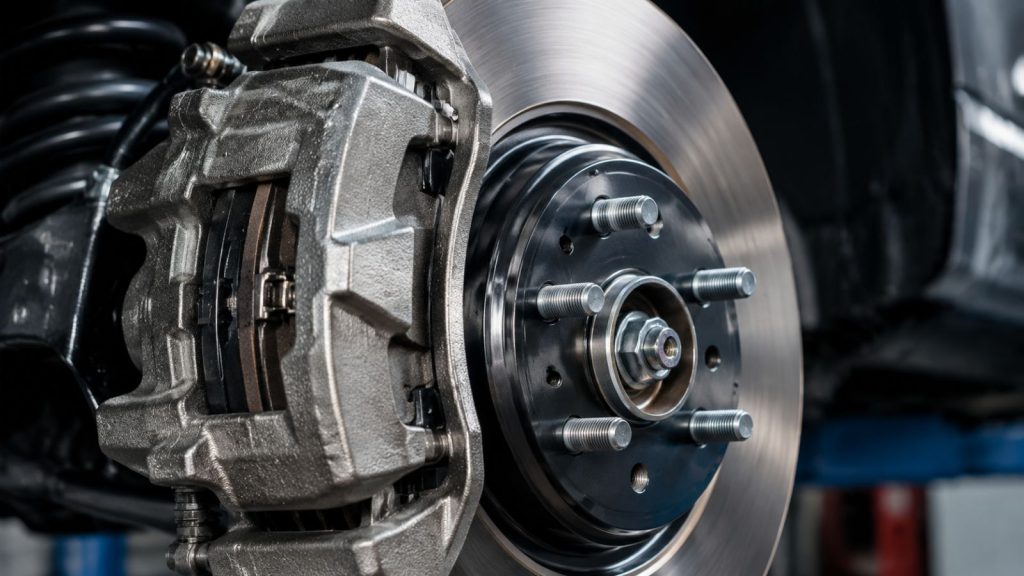
It helps to know, in broad strokes, what a brake inspection looks at, so you know what to expect when you come in.
A thorough inspection covers the whole braking system. That means the pads and rotors that create the friction, the calipers and hardware that apply and release them, the brake fluid and the hoses and lines that carry the pressure, and the warning and anti-lock systems that monitor everything electronically. The idea is to look at the system as a whole rather than just the one part you might be worried about, because brake problems often involve more than one component.
You do not need to understand every piece of that. The reason to know the general scope is simple. It tells you that an inspection is a whole-system look, not just a glance at the pads, and it helps you understand why the shop might check something that was not the thing you came in about.
What to Ask and Share at the Shop
When you bring the car in, a little communication goes a long way. Share how you drive, a Helotes commute with regular Loop 1604 merging and a mix of highway and city miles, and mention any of the symptoms you noticed. Sharing how you drive helps make an inspection more useful, because it tells us where your brakes are working hardest.
It is just as fair to ask questions. If something is flagged, ask what caused it, not only what it costs to fix, since the cause is what keeps the problem from coming back. Ask whether anything is a safety concern to address now versus something to keep an eye on. Ask what to watch for going forward given how you drive.
That back-and-forth turns an inspection into a conversation, and it tends to produce a more accurate result. A brake inspection at Ruben’s Auto Repair is meant to work that way, with what you know about your car and what we find on the vehicle coming together.
Ready to Have Your Brakes Looked At
If you drive Loop 1604 regularly and something about your brakes has caught your attention, or you just want peace of mind before a busy season of commuting, we are glad to take a look. Come in with a sense of how you drive and what you have noticed, and the inspection will be that much more useful. You can schedule an appointment or call the shop at (210) 647-1148.
Frequently Asked Questions
What should I tell the shop before a brake inspection?
Share how you drive and anything you have noticed. Mention your commute, like regular Loop 1604 merging and mixed highway and city miles, and describe any changes in pedal feel, noises, pulling, vibration, warning lights, or smells. Those details help the technician focus the inspection and interpret what they find.
What brake symptoms should I pay attention to on my commute?
Key warning signs include a soft or low brake pedal, squealing or grinding noises, pulling to one side, vibrations through the pedal or steering wheel, dashboard warning lights, or a burning odor after driving. Documenting when these symptoms occur helps isolate the root cause.
Should I mention noises even if the brakes feel fine?
Yes. A noise can show up before you feel any change in how the brakes work, so it is often an early clue. Mentioning it, and when you hear it, gives the technician something specific to check even if everything else seems normal.
How often should I have my brakes inspected with a mixed commute?
There is no single number that fits everyone, because it depends on how much of your driving is higher-speed merging versus gentle city miles. A commute with regular highway braking works the brakes harder, so having them checked a bit more often makes sense. If you are unsure, we can suggest a rhythm based on how you actually drive.