Federal refrigerant regulations are reshaping automotive AC repair nationwide. R134a is under a mandated phasedown while R1234yf has been required in new vehicles since 2021. San Antonio’s long cooling season means local shops and drivers feel this shift sooner, with recharge costs rising and equipment requirements changing for older vehicles still running R134a systems.
We have been watching a shift move through our industry that most drivers have not heard about yet. Federal refrigerant rules are changing what it costs to service an AC system, and San Antonio’s long cooling season puts us closer to the front of that change than most markets.
What The AIM Act Means For Your Car’s AC System
The American Innovation and Manufacturing Act put a federal phasedown in motion for HFC refrigerants, and R134a, still running in a large share of vehicles on the road, sits right in the middle of that phase. The Act calls for an 85 percent cut in HFC production and consumption over time. That cut reaches every shop still keeping R134a on the shelf, ours included. .
R1234yf became the required refrigerant in new light duty vehicles sold in the US starting in 2021. If your vehicle is a 2021 model year or newer, there’s a strong chance it already runs on R1234yf rather than R134a. If it’s older, R134a is still doing the job, but the supply picture behind that refrigerant is shifting.
Why San Antonio Feels This Shift Sooner
San Antonio’s cooling season runs long compared to most of the country. That means local vehicles log more AC run hours per year, and more run hours mean more recharge and repair visits over a vehicle’s life. We see more R134a service requests in a given month than a shop in a shorter summer market would, which puts us closer to the supply and cost pressure sooner.
How We See Shops Adjusting Across The Industry
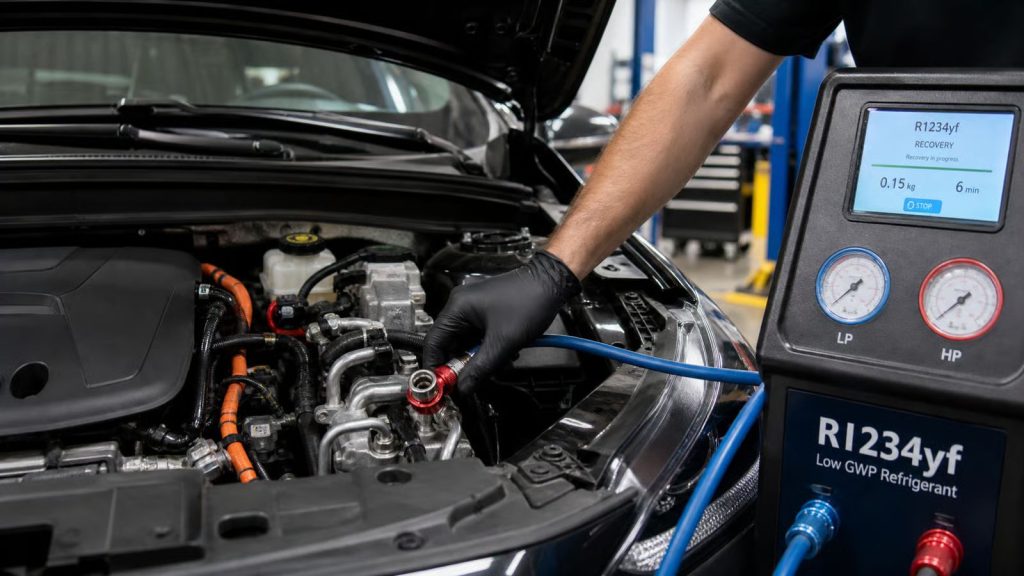
We’ve watched the price gap between R134a and R1234yf narrow from both directions over the past couple years. R1234yf equipment costs have come down as more shops invest in recovery and recharge machines built for it, spreading that cost over more services. R134a prices, on the other hand, have been climbing as production tightens under the federal phasedown.
We’ll be honest, we’ve had to invest in new recovery equipment ourselves to keep up with the R1234yf side of this shift. It’s not cheap, and we know some shops are choosing to turn away R1234yf vehicles rather than make that investment. We didn’t want to be one of them.
What Technicians Need To Legally Service Either Refrigerant
Technicians handling R134a or R1234yf need current EPA Section 609 certification. R1234yf carries an additional training requirement around its mild flammability rating, something R134a never required. We keep our certifications current on both refrigerant types so we can service whatever pulls into our bay, no matter the model year.
Why A Slow Leak Costs More To Ignore Right Now
An unrepaired slow leak on an older R134a system means repeat recharges, and each one costs more than the last as supply tightens further under the phasedown. We’d rather fix the leak once, typically 200 to 500 dollars depending on the failed component, than have a customer pay rising recharge costs every few months chasing the same problem.
What This Means If You’re Buying Or Keeping An Older Vehicle
If you’re holding onto a pre 2021 vehicle, its R134a system will keep working, but expect service costs to trend upward over the next several years as supply continues to shrink. We don’t see this as a reason to panic, but it is a reason to fix leaks properly instead of relying on repeat top offs.
Schedule Your AC Check
Refrigerant rules are shifting, and staying ahead of a slow leak now costs less than chasing rising recharge prices later. Ruben’s Auto Repair cooling system experts are ready to check your system, whatever refrigerant it runs on, at 7210 Polar Bear, San Antonio, TX 78238, or by calling (210) 647-1148.
Frequently Asked Questions
What refrigerant does my car use?
Vehicles from 2021 and later almost always use R1234yf, while most vehicles built before that year still run R134a. A refrigerant identifier check confirms which one is in your system.
Why is R134a getting more expensive?
R134a production is under a federal phasedown mandated by the AIM Act, which reduces HFC production and consumption over time, tightening supply and pushing prices up.
Is R1234yf more dangerous than R134a?
R1234yf carries a mild flammability rating that R134a does not, which is why technicians need additional training and certification to service it safely.
Can my mechanic still service my older R134a system?
Yes, R134a systems can still be serviced, though recharge costs are trending upward as supply continues to tighten under the phasedown.
Should I repair a slow leak now instead of waiting?
Yes, repairing a slow leak once avoids repeat recharge costs that will keep climbing as R134a becomes harder to source.