
Short commutes can be surprisingly hard on brakes, and not from friction. When trips are short, the brakes never fully heat up and dry out, so moisture stays on the rotors and in the hardware. That promotes surface rust and corrosion, which shows up as noise, sticking, and uneven wear at low mileage. That is why we look at how often you drive short trips, not just the odometer.
Two Different Ways Brakes Wear Out
Most people picture brake wear as one thing. The pads grind down against the rotors over time until they need replacing. That is real, and it is friction wear, the kind that comes from the actual work of stopping the car.
But there is a second way brakes wear that gets far less attention, and for a short-trip commuter it can be the bigger factor. That is corrosion wear, the damage that comes from moisture, rust, and the parts not drying out between drives. It has almost nothing to do with how hard you brake and everything to do with the pattern of how you drive.
Here is why that matters. A car that mostly runs short errands around Leon Valley might have very low mileage and still develop brake problems, because the enemy is not friction, it is moisture that never gets a chance to leave. We do not read a low odometer as proof the brakes are fine, because short trips wear brakes in their own quiet way.
Why Short Trips Never Let the Brakes Dry Out
Brakes actually rely on heat to stay healthy, which sounds backwards until you see the mechanism. When you drive normally, the friction of braking warms the rotors and hardware, and that heat dries off any moisture sitting on them.
A short trip does not give the brakes enough time or enough braking to reach and hold that drying heat. You back out of the driveway, drive a few minutes, and park. The brakes barely warmed up, so whatever moisture was on them, from overnight dew, humidity, or a rain shower, is still there. Multiply that by every short trip, day after day, and the brakes spend most of their life slightly damp.
In South Texas that adds up faster than you might think. Our humidity keeps moisture in the air, and our seasonal heavy rains soak everything, including the brakes. A car that only ever drives short distances never gets the sustained heat that would dry it all out.
What Rust Does to Your Rotors
Brake rotors are made of cast iron, and cast iron rusts fast when it stays wet. If you have ever walked out to your car after a rainy night and seen a light orange film on the rotors, that is surface rust, and it formed overnight.
Here is the reassuring part, because we would rather explain the difference than alarm anyone. That light surface rust is usually harmless. On a car that then goes for a normal drive, the pads wipe it right off the rotor surface within the first few stops, and you never think about it again.
The problem is the short-trip car that never drives far enough to clean it off. When rust is allowed to sit and build rather than getting wiped away by regular braking, it can start to pit the rotor surface and cause noise or uneven pad contact. So a little morning rust is nothing. Rust that keeps building because the car never drives it off is the part worth paying attention to.
The Corrosion You Cannot See in the Hardware
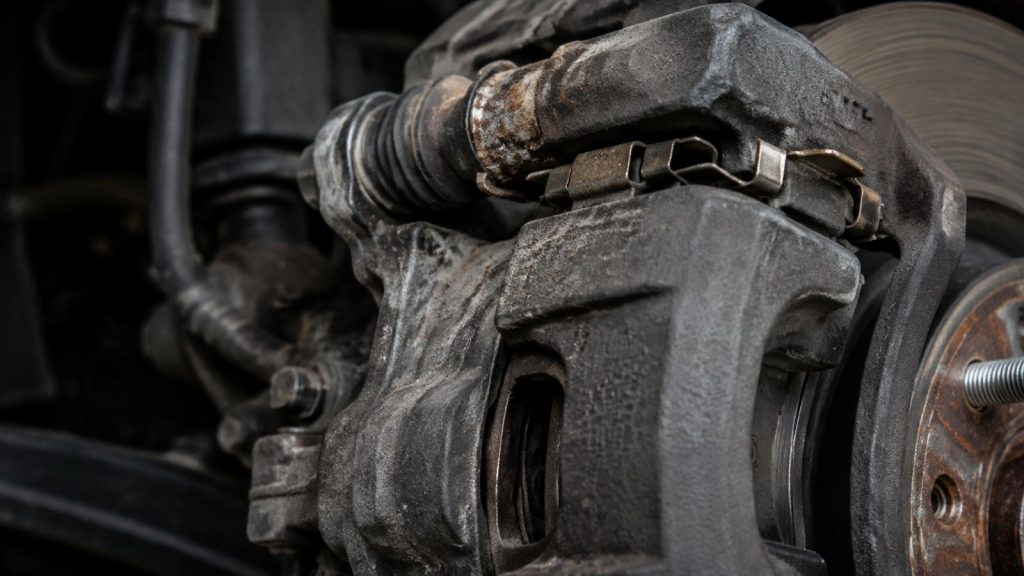
The rotors are visible, so their rust is obvious. The more troublesome corrosion often hides where you cannot see it, in the brake hardware.
Each brake has small moving parts, the slide pins the caliper rides on, plus clips and shims that let the pads move and retract freely. Those parts need to slide smoothly. When moisture works into them and they are never dried out or maintained, they corrode, and corroded hardware binds instead of sliding.
That binding is what turns a moisture problem into a mechanical one. A pad that cannot retract properly drags on the rotor, wears unevenly, and can make noise. We look at the rotors and the hardware together, because the same moisture that rusts the surface you can see is corroding the parts you cannot. If corrosion is bad enough to make a caliper stick, that becomes its own repair, but the root of it here is the short-trip moisture cycle.
Why Low Mileage Can Fool You
This is the part that catches people off guard. Someone brings in a car with very few miles, expecting the brakes to be practically new, and finds rusted rotors, corroded hardware, squealing, or uneven wear.
It feels contradictory, but it makes perfect sense once you think in terms of the driving pattern instead of the miles. Low mileage from short trips is exactly the recipe for corrosion. The car was driven often enough to collect moisture and rarely far enough to dry it off. Miles measure distance, and this problem is about moisture and heat cycles, not distance.
So when someone tells us they only drive a few minutes at a time, that tells us to look for corrosion, not just friction wear. The odometer is genuinely misleading for this kind of driver, and knowing that changes what we check.
Reading Your Brakes by How You Actually Drive
The takeaway is simple. If your driving is mostly short hops, your brakes deserve attention based on that pattern, not on a mileage number that makes them look barely used.
An inspection may include the condition of the hardware and whether it is corroded or dry, along with the rotor surfaces, which tells you far more than the odometer for a short-trip car. Knowing your typical trip length helps make sense of any corrosion-related wear we find. Regular brake system service for a short-trip vehicle is less about worn-out pads and more about staying ahead of rust and keeping the hardware moving freely.
A few habits help too. An occasional longer drive gives the brakes a chance to heat up and dry out. Covered parking keeps some of the overnight moisture off. Neither is complicated, and both work against the exact cycle that causes the trouble.
Noticing Rust or Noise on a Low Mileage Car
If your car has low miles but you are seeing rust, hearing squeals, or noticing your brakes just do not feel right, it is worth a look, because the cause is often corrosion rather than normal wear. We can check the rotors and the hardware and tell you what is harmless surface rust and what actually needs attention. You can reach our San Antonio repair shop to schedule a brake inspection or call the shop at (210) 647-1148.
Frequently Asked Questions
Why are my brakes rusty when the car has low mileage?
Because rust comes from moisture, not miles. Short trips do not let the brakes heat up enough to dry off dew, humidity, and rain, so moisture sits on the rotors and hardware and causes rust. A car driven often but only short distances is the classic case, low mileage but plenty of corrosion.
Is surface rust on my rotors something to worry about?
Usually not. The light orange film you see after a wet night is normal surface rust, and on a car that then drives a normal distance, the pads wipe it off within a few stops. The concern is rust that keeps building because the car never drives far enough to clean it off, or corrosion that reaches the hardware.
Can short trips really damage my brakes?
They can, in a way that surprises people. Short trips still collect moisture but rarely generate enough heat to dry it, so over time that promotes rust on the rotors and corrosion in the slide pins and clips. That corrosion can cause sticking, noise, and uneven wear even on a low-mileage vehicle.
Why do my brakes squeal in the morning then stop?
That is often light surface rust from overnight moisture. As you make your first few stops, the pads scrub the thin rust film off the rotors and the noise goes away. An occasional morning squeal that clears quickly is usually harmless, though a noise that sticks around is worth having checked.