Musty AC odor on startup near SeaWorld San Antonio points to microbial growth on the evaporator surface, not a refrigerant issue. Coastal humidity combined with stagnant airflow during parking lets moisture sit on the coil long enough for mold and bacteria to colonize it. Discoloration past 15 to 20 percent of the coil surface, or drain flow slower than 3 minutes, confirms buildup needing treatment.
That first blast of AC smells like a gym bag that never dried out. It’s strongest right when you start the car, fades a little after a minute, then comes right back the next time you park near SeaWorld and let the car sit. We’ve traced this exact complaint back to the cooling system experts more times than we can count, and it’s rarely the refrigerant.
Why Humidity Near SeaWorld Hits Your Evaporator Differently
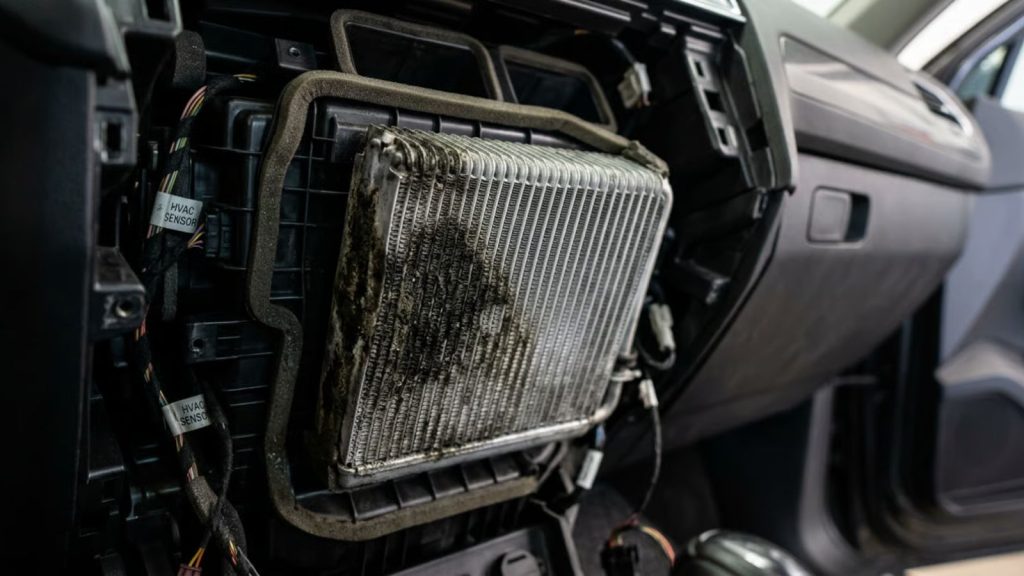
The evaporator core is supposed to stay wet while it’s cooling. That’s normal. Condensate drains off through a dedicated tube, and airflow moving across the coil while you drive car and truck units keeps the surface from sitting stagnant for long stretches at a time. Under typical conditions, that moisture comes and goes without ever becoming a problem.
The SeaWorld area doesn’t play by typical rules. Ambient humidity out there runs closer to coastal conditions than most of San Antonio, and that humidity stays elevated even after you’ve parked and shut the system off. No airflow, no drying, just trapped moisture sitting on a coil that was already damp to begin with. Add a drain pathway that’s picked up some debris over time, partially restricting flow, and water lingers on that surface far longer than it’s designed to.
That combination is exactly what microbial growth needs. Dark, damp, stagnant. Mold and bacteria don’t need much of an invitation once those three conditions line up, especially without special service offers for preventative maintenance.
What happens once the growth actually takes hold
The colonization sits directly on the coil surface itself, which means every single time air passes over it, it’s carrying that smell straight into your cabin. It’s not coming from somewhere else in the car. It’s coming from the exact surface the air has to cross to reach you. Left alone long enough, that buildup doesn’t stay thin either, it thickens, and a thickened coil surface starts restricting airflow on top of producing the odor.
How We Actually Run the Diagnostic
We don’t start by pulling the evaporator out. We start with the numbers that tell us how bad it’s gotten before we contact our team to touch anything.
Cabin humidity gets checked first, immediately after startup. A healthy system, like a Land Rover repair spec, should show that humidity dropping within 2 to 3 minutes as the evaporator pulls moisture out of the air the way it’s supposed to. A flat reading that barely moves tells us the coil isn’t working at full efficiency, which usually means surface buildup is already interfering with its normal function.
From there we test the condensate drain. Introduce water, watch how it clears. Steady drainage in 60 to 90 seconds is normal, even for Toyota repair services. Past 3 minutes, or water backing up instead of draining, and we’ve found a partial clog that’s been letting moisture sit longer than it should on every single cycle.
Last, we get a direct look at the coil itself with a borescope. Minimal or no discoloration means we’re likely dealing with something else entirely, maybe a cabin filter or something outside the HVAC system. Dark discoloration covering more than 15 to 20 percent of the visible surface, though, that’s active microbial growth, confirmed, not suspected.
Why We’d Rather Catch This Before It Spreads Further
An odor by itself is annoying, sure, but it’s not just a smell problem sitting quietly in the background. Every day that colonized surface keeps growing is another day it’s restricting airflow a little more. We’ve seen coils that went untreated long enough that a simple cleaning wasn’t enough anymore, the buildup had gone far enough that replacement made more sense. A drain clog left alone compounds that timeline too, since it just keeps feeding the moisture that’s causing the whole problem in the first place.
Get Your Evaporator Checked Before Odor Turns Into an Airflow Problem
If your AC smells musty on startup after time near SeaWorld, we can inspect the evaporator surface and drain pathway to confirm exactly what’s driving it. Ruben’s Auto Repair cooling system experts, 7210 Polar Bear, San Antonio, TX 78238, (210) 647-1148, catch this one often.
Frequently Asked Questions
Why does the smell hit hardest right when I turn the AC on?
That first blast pushes air directly across the colonized coil surface before airflow has a chance to clear any of it out, which is why the odor is strongest in that first minute and tends to ease up slightly after.
Is this a sign of mold that could affect my health?
Microbial growth on an evaporator coil is a real air quality concern, and if the smell is persistent, we recommend getting it inspected rather than just masking it with air fresheners.
Can I fix this with a cabin air filter replacement alone?
Sometimes a filter is part of the picture, but if the odor is coming directly from the coil surface itself, a filter change alone will not resolve it. We check both to know for sure.
Why does this seem worse near SeaWorld specifically compared to other parts of town?
That area runs more humid than a lot of San Antonio, closer to coastal conditions, and that elevated humidity is exactly what keeps moisture sitting on the coil long enough for growth to take hold.
Will running the AC on max cold clear the smell out on its own?
It might temporarily reduce the odor, but it will not eliminate microbial growth already established on the coil surface. That requires an actual cleaning or treatment, not just running the system harder.