AC that weakens the longer you sit in Loop 410 West construction traffic points to compressor thermal overload from restricted airflow and extended idle. Barriers block airflow the fan needs while congestion stretches idle time well past normal. High side pressure past 300 psi or compressor temps above 250°F after 10 minutes confirms overload needing inspection.
Ten minutes into a Loop 410 West construction backup and the cold air you had at the on ramp is gone. Not weaker, gone. Move past the barrels and it comes back, slow, like the system’s catching its breath. We’ve had more than a few customers describe it exactly that way, and the pattern’s consistent enough that we know what we’re looking at before they finish the sentence.
Why Construction Zones Are Rougher on Your AC Than Regular Traffic
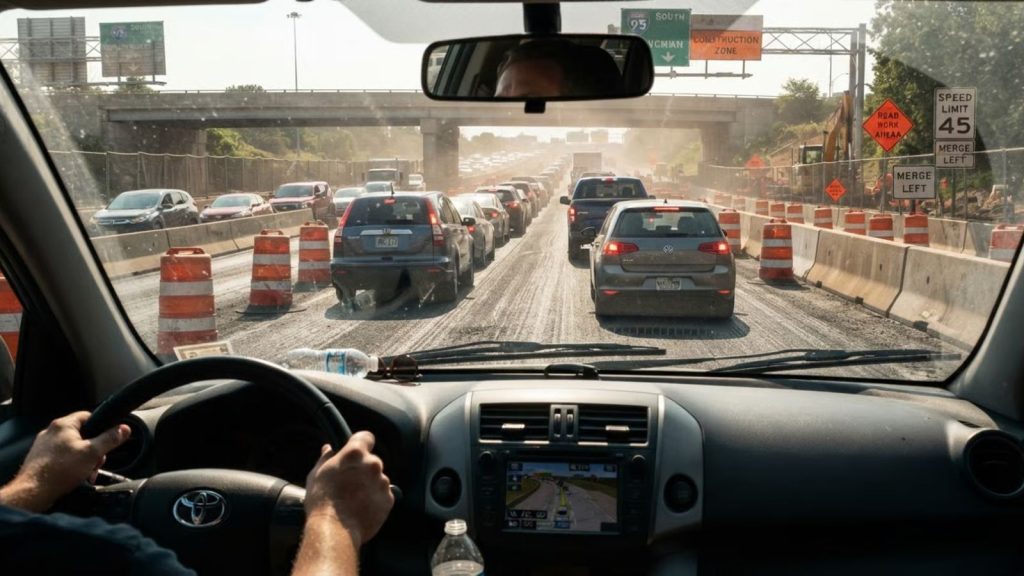
Every compressor and condenser setup counts on some mix of vehicle speed and fan operation to get rid of heat. The system’s built around idle periods being short, a stoplight, a quick backup, airflow resuming within a minute or two either way.
Loop 410 West construction breaks that assumption on two fronts at once. Concrete barriers and equipment sitting right where airflow normally reaches the engine bay choke down what the cooling fan can pull in, even with the fan running at full speed. On top of that, active lane closures stretch idle time way past a normal stoplight wait, we’re talking ten, fifteen minutes some days, not the thirty seconds a system is designed around.
Here’s where it actually breaks down mechanically. Restricted airflow during that extended idle means the condenser can’t shed heat fast enough, so high side pressure climbs and the compressor starts running hotter than it should. That elevated temperature isn’t a one time event either. Every time you sit through that same stretch of construction, the compressor takes another round of thermal stress on top of whatever wear it already picked up the day before.
How We Actually Run the Diagnostic
We don’t just check pressure once and call it done. Construction zone overheating shows a pattern over time, so that’s what we look at first.
We simulate the idle condition, fan running, ten minutes, and track high side pressure the whole way through instead of just checking the final number. Most systems should stay under 275 psi through that window. Climbing past 300 psi and holding there tells us the airflow restriction is beyond what the fan alone can make up for.
From there we check compressor housing temperature with an infrared reader at that same ten minute mark. Under 230°F is typical. Past 250°F and we’re looking at real thermal stress building faster than the system can get rid of it.
The part that actually tells us the most, though, is how fast that pressure and temperature climb in the first three or four minutes rather than just where it ends up. A steep, accelerating climb early on is a different problem than a slow, steady rise that levels off. The steep pattern is what we associate with real barrier interference, not just a longer than usual idle.
Why We’d Rather Check This Now Than After Construction Wraps
Loop 410 West construction isn’t finishing up next week. That means whatever thermal stress your compressor is absorbing during these commutes isn’t a one time thing either, it’s a repeated pattern that’s going to keep happening every time you drive that stretch until the project’s done. A compressor that’s already running hot on a regular basis doesn’t get a break to recover, and that kind of repeated stress tends to shorten its working life well ahead of schedule. Catching it early means an inspection now instead of a compressor replacement mid construction, when you’re already dealing with enough delays as it is.
Get Your Compressor Checked Before Construction Season Wears It Down
If your AC keeps fading the longer you sit in Loop 410 West construction traffic, we can check whether your compressor is running within normal range or already under thermal stress. Get your AC checked at Ruben’s, 7210 Polar Bear, San Antonio, TX 78238, (210) 647-1148, sees this pattern often with drivers on that stretch.
Frequently Asked Questions
Why does my AC get worse the longer I’m stuck in construction traffic specifically?
Construction barriers restrict airflow the cooling fan needs, and the extended idle time from lane closures gives heat more time to build than a normal stoplight wait would allow.
Is this different from regular stop and go traffic overheating?
The underlying mechanism is similar, but construction zones combine longer idle periods with physical airflow restriction from barriers and equipment, which tends to push thermal stress higher than typical congestion.
Will this go away once construction on Loop 410 West finishes?
The trigger will go away, but any wear the compressor picks up during repeated exposure to this pattern doesn’t reverse on its own once conditions improve.
Can I do anything at the moment to reduce the strain?
Running the AC on a lower setting during extended idle can ease demand somewhat, but it doesn’t eliminate the underlying airflow restriction causing the thermal buildup.
How urgent is this if my AC still recovers once I’m past the construction zone?
Recovery afterward is a good sign the system hasn’t failed, but repeated thermal cycling still adds wear over time. Getting it checked before that wear becomes a bigger issue is worth doing sooner rather than later.