
Brakes wear based on how you brake, not just how many miles you drive. In Northwest San Antonio, stop-and-go neighborhood traffic, heavy Loop 410 and 1604 commuting, summer heat, and hilly stretches all add braking events and heat. Two cars with the same mileage can wear very differently. That is why we tie brake inspection timing to how a vehicle is actually driven, not a fixed number alone.
Why Mileage Alone Does Not Tell the Story
Most people think of brakes in terms of miles. Get so many thousand miles out of a set of pads, then replace them. It is a tidy way to think about it, but it misses what actually wears brakes out.
Brakes work by converting motion into heat. Every time you stop, the pads clamp the rotors and turn your momentum into heat that dissipates into the air. So what really wears them is the number of stops you make and how hard and how hot each one is. Distance is only loosely related.
A car that cruises a hundred highway miles with a handful of gentle stops barely touches its brakes. A car that covers twenty stop-and-go miles across town might brake hundreds of times, each stop adding heat. Same trip length on paper, completely different toll on the brakes. Once you think in stops and heat instead of miles, local driving patterns start to matter a lot.
What Loop 410 and 1604 Commuting Does to Your Brakes
The daily commute on Loop 410 or Loop 1604 is one of the harder things you can ask for a set of brakes, and not for the reason most people assume.
It is not the speed, it is the rhythm. Congestion turns a highway into a series of accelerate-and-brake cycles, and each of those stops happens from a higher speed than a neighborhood stop would. Braking from fifty to a crawl, over and over, dumps a lot of energy into the pads and rotors in a short span. The brakes do not get long stretches to cool between stops the way they would on an open highway.
That combination, high-energy stops packed close together, is exactly what accelerates pad and rotor wear. A driver who sits in that pattern twice a day is working their brakes far harder than the odometer suggests.
The Hidden Cost of Short Neighborhood Trips
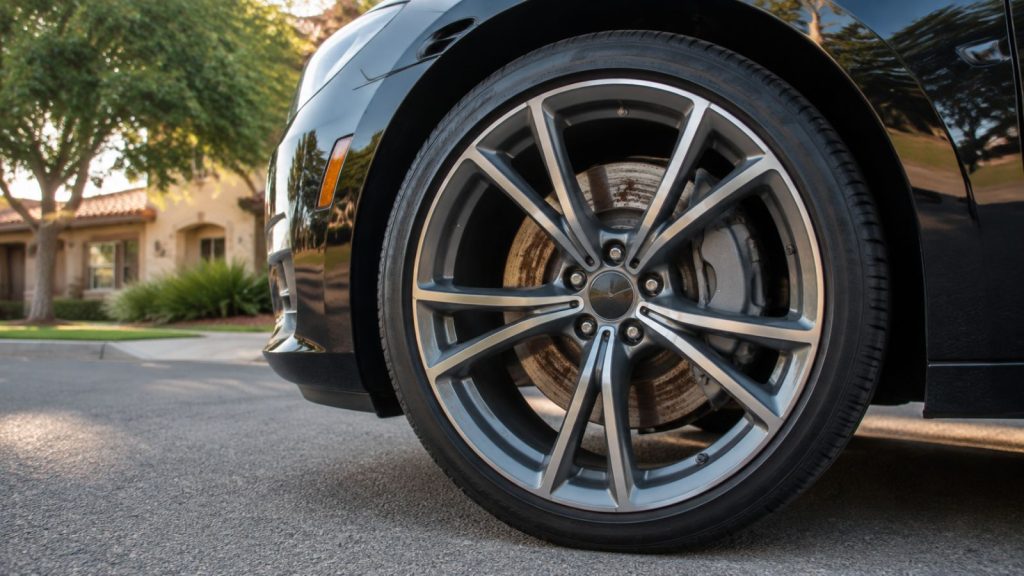
At the other end of the spectrum is the short trip, and it wears brakes in a sneakier way. Running errands around Leon Valley or the Great Northwest, a quick drive to the store and back, feels easy on a car. In some ways it is not.
Short trips are full of low-speed stops, so the braking events still add up. But the bigger issue is that the brakes never fully cool down or dry out between drives. After a short trip, moisture can sit on the rotors and in the brake hardware. In San Antonio’s humidity, that promotes surface rust on the rotors and corrosion in the slides and clips that are supposed to let the brakes move freely.
Over time that corrosion can make hardware bind and pads wear unevenly, on a car that has barely any miles on it. It is a good reminder that an easy-looking driving pattern is not always an easy one for the brakes.
Hills and Heat, the Two Multipliers
Two local conditions quietly multiply everything above.
The first is terrain. Head out toward Helotes or up the grades along Bandera Road, and the descents ask for sustained braking to control your speed downhill. That is different from a quick stop. It is continuous heat going into the brakes for the length of the grade, which raises their temperature more than flat driving does.
The second is our climate. South Texas summer heat means the brakes start out hot before you even touch the pedal. Brakes rely on having thermal headroom, room to absorb heat before performance drops. When the pavement and the air are already baking, that headroom shrinks, so a series of hard stops pushes the brakes closer to their limit than the same stops would on a cool morning. Neither hills nor heat causes wear by itself, but both stack on top of your normal braking and push the totals higher.
Why Two Identical Cars Wear Differently
Put all of this together and you get a fact that surprises people. Two identical cars, same year, same model, same mileage, can need brake attention on completely different schedules.
One belongs to a highway commuter who drives steady miles with easy stops. The other belongs to someone who fights Loop 410 traffic every morning, runs short errands all afternoon, and takes weekend drives into the hills. The odometers might match, but the second car’s brakes have done the work several times. We think about brake wear in terms of how a car is driven, not just the miles on it, precisely because the miles can hide that difference.
That is also why a single fixed replacement mileage is a blunt tool. It treats every car like the average, when almost no one drives the average.
Letting Your Driving Set Your Inspection Timing
The practical takeaway is simple. Instead of waiting for one magic number on the odometer, let how you drive guide how often you have the brakes looked at. Inspection timing can be matched to how a vehicle is driven rather than a fixed mileage, and understanding your own pattern is the first step.
If your days are full of Loop congestion, short humid-weather errands, or hill-country descents, your brakes are working harder than average and are worth checking sooner and more often. A steady highway driver has more leeway. Regular brake maintenance built around your real driving, rather than a generic interval, is what keeps small wear from turning into a rotor or caliper problem. As a local repair shop, that is the way we would rather think about it, around the driver in front of us, not a number on a chart.
Not Sure How Your Driving Is Wearing Your Brakes
If you are not sure whether your commute and errands are wearing your brakes faster than you would expect, we are happy to take a look and talk through your driving pattern. The goal is to match inspection timing to how you actually drive, so you are neither surprised by early wear nor replacing parts before their time. You can visit our shop or call us at (210) 647-1148.
Frequently Asked Questions
Does city driving wear out brakes faster than highway driving?
Usually, yes. City driving means many more stops per mile, and each stop wears the pads and rotors and adds heat. Steady highway driving involves far less braking. That is why a mostly-city driver often needs brake attention sooner than a highway commuter with the same mileage.
Why do my brakes wear faster than my friend’s same car?
Almost always it comes down to how each of you drives. Stop-and-go traffic, short trips, hilly routes, and hard braking all wear brakes faster than steady, gentle driving. Two identical cars with matching mileage can wear very differently based purely on the driver and the routes they take.
Do short trips really affect brake wear?
They can, in a couple of ways. Short trips still involve frequent stops, and they do not give the brakes time to fully cool or dry out. In San Antonio’s humidity, that can lead to surface rust on rotors and corrosion in the brake hardware, even on a car with low mileage.
Does San Antonio heat make brakes wear out faster?
Heat does not wear brakes on its own, but it reduces their thermal headroom. When the air and pavement are already hot, the brakes start hotter and have less margin before heavy braking pushes them toward fade or accelerated wear. So in summer, hard stop-and-go driving is harder on the brakes than the same driving in cooler weather.