
Scheduled brake inspections turn fleet brake problems from surprises into planned maintenance. Because work vehicles run hard and on predictable routes, their brake wear follows patterns you can track. Regular inspections catch that wear early, so a vehicle comes in on your schedule instead of breaking down on a job. For a fleet, that protects uptime, safety, and the budget all at once.
Why Fleet Brakes Wear Predictably
A personal car lives an unpredictable life. Some weeks it barely moves, other weeks it takes a road trip. That makes its brake wear hard to forecast. A fleet vehicle is different, and that difference is the whole reason scheduled inspection works so well for a business.
Work vehicles run consistent duty. A delivery van covers similar routes and similar mileage day after day. A service truck makes roughly the same number of stops on the same kind of roads. That consistency means the brakes wear at a fairly steady, repeatable rate.
When a vehicle runs a consistent route every day, that makes its brake wear something we can anticipate. And anything you can anticipate, you can plan around. That predictability is the foundation everything else in fleet brake care is built on, and it is an advantage a private owner rarely has.
The Real Cost of an Unplanned Brake Failure
To see why scheduling matters, look at what an unplanned brake failure actually costs, because it is never just the brake repair.
When a brake problem takes a vehicle down in the middle of a workday, the repair bill is the small part. The vehicle is off the road, so whatever it was supposed to do that day does not get done. There may be a tow. The repair becomes an emergency rather than a scheduled job, which is harder to slot in. A driver is idle or reassigned. A customer may be waiting on a delivery or a service call that now slips.
Stack all of that against the alternative, a planned inspection that takes a known slot on a day you chose. We think about a fleet in terms of keeping vehicles available, not just fixing them when they stop. The math almost always favors catching the problem early, because the cost of a vehicle going down mid-job dwarfs the cost of looking at it on schedule.
How Wear Tracking Turns Guesswork Into Planning
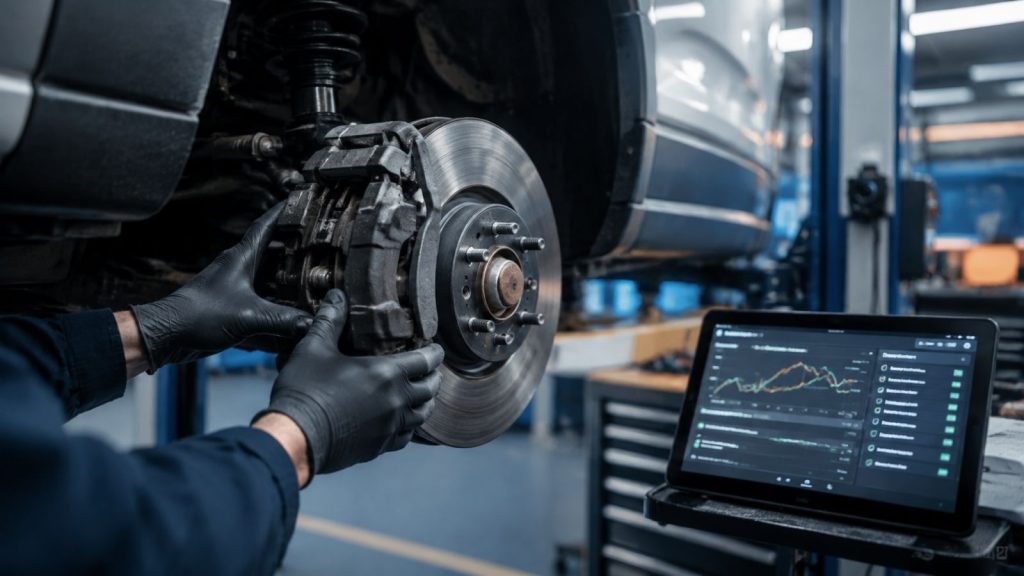
Here is where scheduled inspection becomes more than just looking at the brakes. It becomes a tool for prediction.
When brake condition is checked and written down at each inspection, you start to see a trend for each vehicle. This van’s front pads were at a certain thickness three months ago and a bit less now. That tells you roughly how much life is left and when it will need service, before it ever reaches the limit. Documenting brake condition at each inspection builds a wear history over time, and that history is what turns guesswork into a plan.
Instead of reacting to a warning or a noise, you can look at the trend and say a vehicle will need pads next month, and schedule it for a slow day. What we want to build over time is a picture of each vehicle’s wear, so nothing is a surprise. That kind of forecasting is only possible when someone is tracking the condition consistently, which is exactly what a scheduled inspection cadence provides.
Scheduling Inspections Around Your Operation
The point of a schedule is that it bends to how your business runs, not the other way around. A fleet does not have to stop working to stay maintained.
A scheduled inspection cadence can be set around how a fleet operates, staggering vehicles so you are never short more than one at a time, or timing checks to your slower periods. Higher-mileage or heavier-duty vehicles might come in more often, lighter-duty ones less. The goal is to fit brake care into the rhythm of the operation so it never collides with a busy day. A good fleet services approach starts with understanding how your vehicles are actually used, then builds the inspection timing around that.
We would rather help plan service around your operation than react to a vehicle that went down mid-job. A schedule you control is far easier to live with than an emergency you did not.
Catching Wear Early Protects More Than the Brakes
There is one more payoff to catching wear on schedule, and it shows up on the total repair bill.
Brakes are a system of parts that wear in sequence. Pads are designed to wear down and be replaced, and when they are caught in time, that is a straightforward job. Let them run past their limit, though, and the worn-out pad starts damaging the rotor it rides against. Now a routine pad replacement becomes a pad and rotor job, at a higher cost, on a vehicle that may have already caused the damage while still on the road.
Scheduled inspection catches the pad while it is still just a pad. That protects the rotor, keeps the repair simple, and keeps the cost down. Multiply that across a fleet and the savings from catching wear early, rather than late, add up quickly. A well-timed fleet brake repair done before the damage spreads is almost always cheaper than the one forced on you after a failure.
Keeping Your Fleet on the Road
For a business that depends on its vehicles, brakes are not just a safety item, they are an availability item. Every vehicle in the shop unexpectedly is a vehicle not earning. Scheduled inspection and honest wear tracking are how you keep those surprises to a minimum.
If you run a fleet around San Antonio and want to get ahead of brake wear rather than chase it, we are glad to help set up an inspection rhythm that fits how your vehicles work. You can contact our team or call the shop at (210) 647-1148 to talk through it.
Frequently Asked Questions
How often should fleet vehicles get brake inspections?
There is no single number, because it depends on how each vehicle is used. A heavy-duty van running high daily mileage needs checking more often than a light-duty vehicle. The better approach is to set a cadence based on each vehicle’s duty and mileage, then adjust as the wear history shows how fast that vehicle actually goes through brakes.
Why not just fix brakes when they start making noise?
Because by the time a fleet vehicle is making brake noise, it may already be down or close to it, and often on a workday. Waiting for a symptom turns maintenance into an emergency, with the downtime and towing costs that come with it. Scheduled inspection catches the wear earlier, on your terms rather than the vehicle’s.
How does tracking brake wear help my fleet?
Tracking condition across inspections shows the trend for each vehicle, so you can see roughly when it will need service before it gets there. That lets you schedule the work on a slow day instead of reacting to a breakdown, and it helps you budget for brake service rather than being surprised by it.
Do fleet vehicles wear brakes faster than personal cars?
Often they do, because they run more miles, carry loads, and brake more in daily commercial use. The bigger point for a fleet is not just that they wear faster, but that they wear predictably, which is exactly what makes a scheduled inspection and tracking approach so effective for work vehicles.