
Heavy rain changes braking in normal ways. A thin film of water on the rotors can make the first stop feel slightly less sharp until the pads wipe it off, and wet roads cut tire traction. That much is expected. What we would want to look at is braking that stays off after the roads dry, or a pull, grinding, soft pedal, or ABS light, since those point to something beyond the weather. Learn more about our team and our approach to safety.
Why the First Stop in the Rain Feels Different
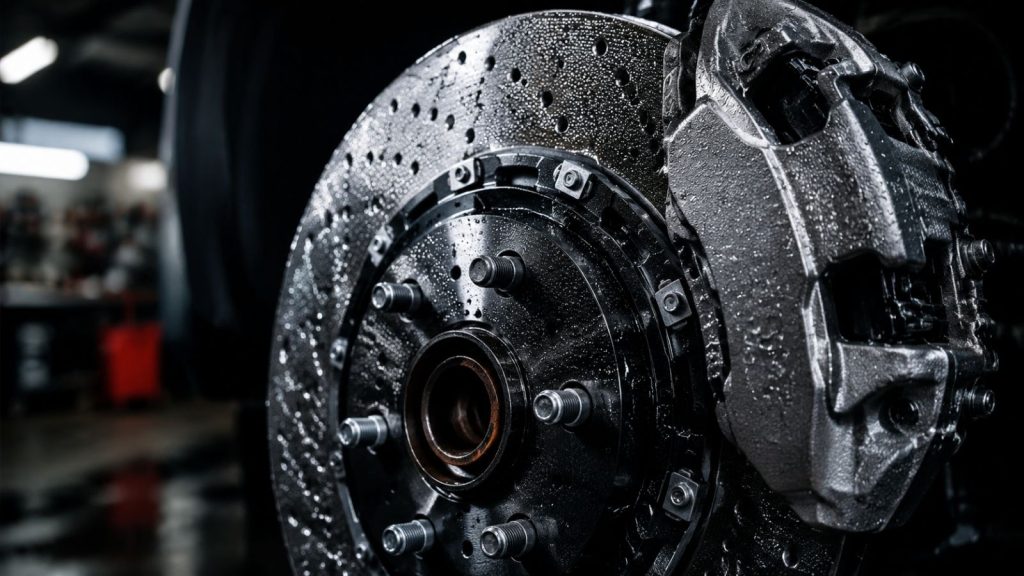
You have probably felt this. You pull out during a downpour, press the brakes for the first time, and the pedal feels a touch less responsive than usual. A stop or two later it is back to normal. That is one of the most common wet-weather sensations, and it is completely normal.
Here is what is happening. When you drive through rain, a thin film of water coats the rotor surfaces. Brakes work by pressing the pads against the rotors to create friction, and a layer of water between them reduces that friction for a moment. So the first stop feels slightly softer or requires a bit more pedal.
It does not last, because the pads themselves wipe the rotors clean. Within a stop or two, the pads have squeezed the water off the rotor surface and friction returns to normal. We would not worry about a single less-sharp stop in the rain that firms right back up. That is physics doing exactly what it should.
Traction and Braking Are Not the Same Thing
This is the distinction that clears up most rain-related confusion. When stopping feels harder in the rain, drivers tend to blame the brakes. Often the real issue is not the brakes at all, it is traction.
Your brakes can be working perfectly and the car can still take longer to stop on a wet road. That is because the tires have less grip on wet pavement than on dry. The brakes can only slow the wheels, the tires are what connect those wheels to the road, and when that connection is compromised by water, the whole car needs more distance to stop.
So there are really two separate things rain affects. One is braking response, the water-film effect on the rotors, which is brief. The other is tire traction, the grip between tire and road, which lasts as long as the road is wet. We separate a traction problem from a braking problem, because rain can look like both. If a car struggles for grip in the wet, that often points more toward the tires than the brakes, and worn tread makes it worse. Checking tire services and tread depth is where that concern belongs. You can also explore our full list of auto care services to keep your vehicle safe.
What Deep Water Does, and What to Do After
A puddle is one thing. Driving through deeper standing water, which San Antonio drivers see during flash-flooding downpours, can affect braking a little more, because more water reaches the brakes at once. Drivers of vehicles like a Subaru AWD vehicle or a Toyota truck platform should take extra care when navigating deep water.
Even then, the effect is usually temporary. The fix is simple and worth knowing. After driving through deep water, apply the brakes gently a few times while moving slowly, in a safe spot. That light friction dries the rotors and pads back out and restores normal feel faster than waiting for them to dry on their own.
The only caution worth adding is that deep water is unpredictable, so give yourself extra stopping room until you have confirmed the brakes feel normal again. That is not a sign anything is wrong with the car, it is just sensible until the brakes have dried.
When It Is the Weather Versus When It Is Not
Here is the dividing line that matters most, and it is an easy one to apply yourself. Normal wet-weather braking effects go away when the weather does. A slightly soft first stop that firms up, a bit more stopping distance while roads are wet, brakes that dry out after gentle use. All of that resolves once things dry.
What we want to know is whether the change went away when the roads dried. If your brakes fell off during the rain and felt completely normal an hour after the roads were dry, that was the weather, and there is nothing to chase. Don’t forget to check our current promotions and discounts for routine checks.
If something lingers after everything has dried out, that is a different story. A symptom that outlasts the weather is the sign that the rain did not cause it, it may have just made you notice it. That is the point where the actual parts are worth looking at rather than blaming the storm.
The Symptoms That Deserve a Closer Look
So what specifically should outlast-the-weather symptoms look like? A few stand out, and each points somewhere different.
A pull to one side when braking that continues after the roads dry is not a rain effect. It points toward the brakes or tires and is worth checking with a computerized wheel alignment. Grinding or a harsh scraping is never normal wet-weather behavior and suggests the pads or rotors need attention. A brake pedal that feels soft or low even on dry roads points at the hydraulic system, not the weather, and may require checking essential fluid levels.
Then there is the ABS light. Heavy standing water can occasionally reach the low-mounted wheel-speed sensors and connectors, and on some vehicles that can trigger an ABS warning. Sometimes it clears, but if it stays on, that is worth a scan, because it means the anti-lock system found a fault it wants looked at. Water can also reach lower components like your air conditioning system. That kind of electronic concern is where vehicle diagnostics come in. When a symptom sticks around after the roads dry, a brake repair inspection can sort out whether it is the pads, tires, hardware, or the ABS system, so you are not left guessing.
Did Your Brakes Feel Off After the Rain
If your brakes felt different during a storm and went right back to normal, that was almost certainly just the weather. But if something stuck around after the roads dried, a pull, a grinding noise, a soft pedal, or an ABS light, we are glad to take a look and tell you what is actually going on. Visit our San Antonio shop or contact our team directly. You can also view our pinned shop location or call us at (210) 647-1148 for comprehensive car and truck care.
Frequently Asked Questions
Why do my brakes feel weak in the rain?
Usually it is a thin film of water on the rotors reducing friction for the first stop or two. As you brake, the pads wipe the rotors clean and normal feel returns quickly. A brief soft stop that firms right back up is normal. If the weak feeling lasts after the roads dry, that is worth checking.
Is it normal for brakes to feel different after driving through water?
Yes, temporarily. Water on the rotors briefly reduces braking friction, and deeper water can extend that a bit. It should return to normal within a few gentle stops as the brakes dry. Persistent changes after everything is dry are not a weather effect and deserve a look.
How can I dry my brakes after driving through deep water?
While moving slowly in a safe spot, apply the brakes gently a few times. The light friction warms and dries the rotors and pads, restoring normal feel faster than letting them air-dry. Give yourself extra stopping distance until you have confirmed the brakes feel normal again.
Can rain cause my ABS light to come on?
It can, occasionally. Heavy standing water can reach the low-mounted wheel-speed sensors and their connectors, which on some vehicles triggers an ABS light. It sometimes clears on its own, but if it stays on after things dry, have it scanned, since it means the anti-lock system flagged a fault worth confirming.